 뒤로
Chapter 3: Molecules, Compounds, and Chemical Nomenclature – General Chemistry Study Notes
스터디 가이드 - 스마트 노트
 자료에 맞춘 맞춤형 노트, 핵심 정의, 예시, 맥락을 확장해 제공합니다.
Chapter 3: Molecules and Compounds
Introduction to Molecules and Compounds
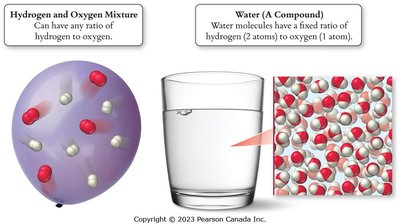
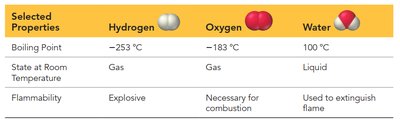
Molecules and compounds are fundamental concepts in chemistry, describing how atoms combine to form substances with unique properties. The properties of compounds are often very different from those of the elements that compose them.
Molecule: A group of atoms bonded together, representing the smallest fundamental unit of a chemical compound.
Compound: A substance formed when two or more elements are chemically bonded.
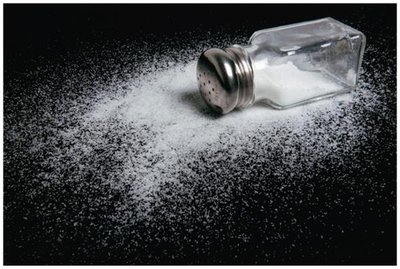
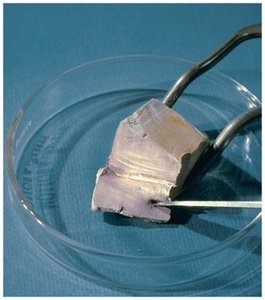
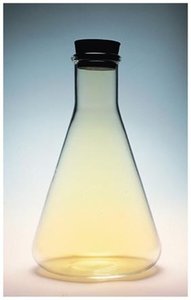
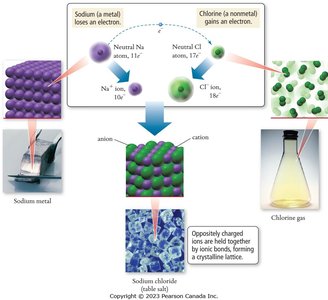
Example: Sodium chloride (NaCl) is a compound formed from sodium (a reactive metal) and chlorine (a poisonous gas), yet it is stable and safe as table salt.
Properties of Compounds vs. Elements
The properties of compounds are generally very different from the properties of the elements that compose them. This is due to the nature of chemical bonding and the arrangement of atoms in compounds.
Example: Table salt (NaCl) is safe to eat, while sodium is highly reactive and chlorine is toxic.
Chemical Bonds
Types of Chemical Bonds
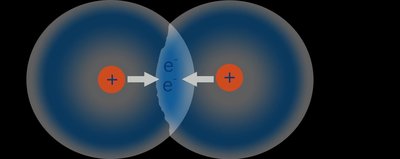
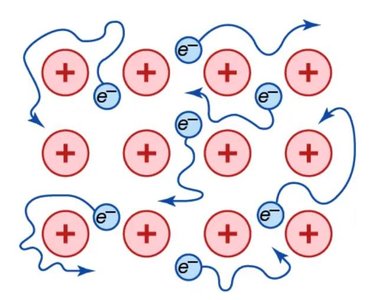
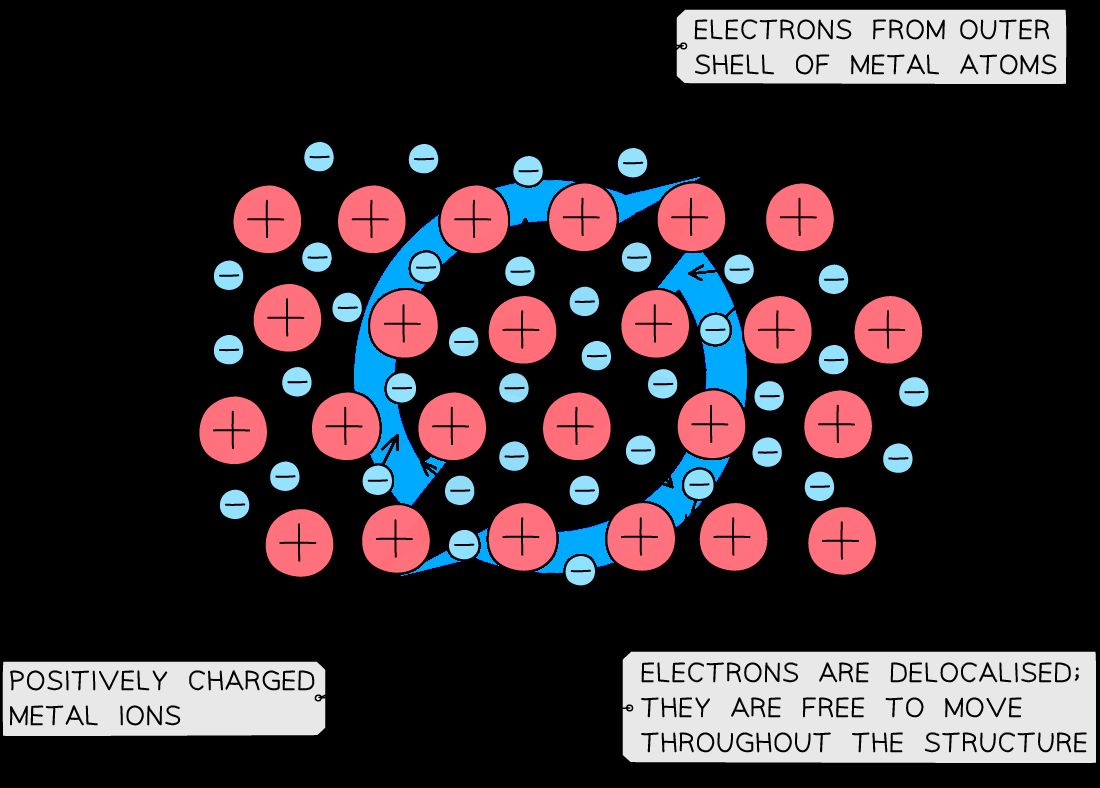
Chemical bonds are forces that hold atoms together in compounds. The main types are ionic, covalent, and metallic bonds, each with distinct characteristics and formation mechanisms.
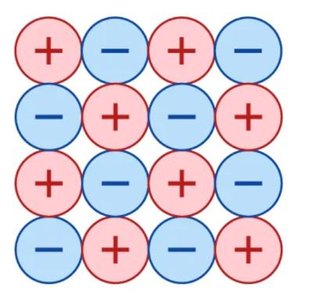
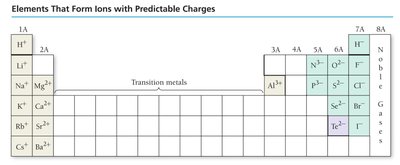
Ionic Bonds: Formed between metals and nonmetals by the transfer of electrons, resulting in the formation of ions.
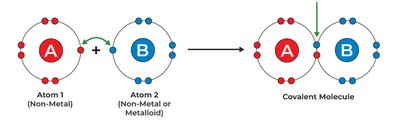
Covalent Bonds: Formed between nonmetals by the sharing of electrons, resulting in the formation of molecules.
Metallic Bonds: Formed between metals, where electrons are shared and free to move among a structure of cations.
Representing Compounds
Chemical Formulas
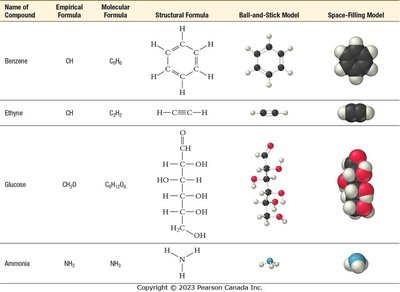
Chemical formulas indicate the elements present in a compound and the number of atoms or ions of each element. There are several types of formulas:
Empirical Formula: Shows the simplest whole-number ratio of atoms in a compound.
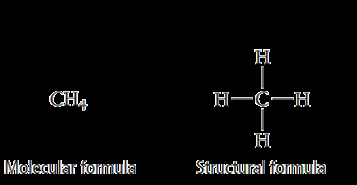
Molecular Formula: Shows the actual number of atoms of each element in a molecule.
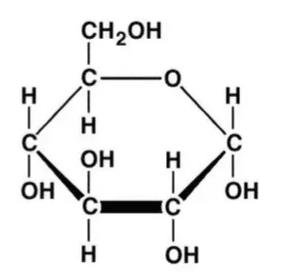
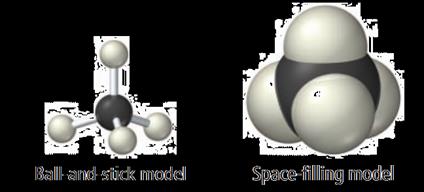
Structural Formula: Shows how atoms are connected in a molecule, often using lines to represent bonds.

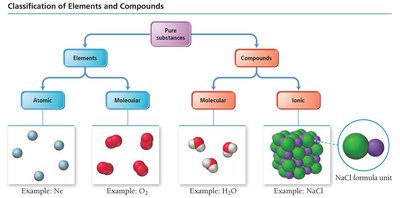
Classification of Elements and Compounds
Atomic and Molecular Elements
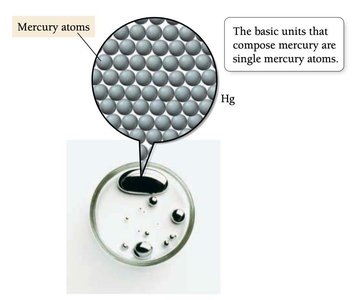
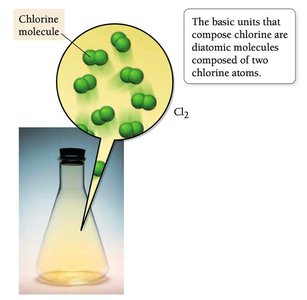
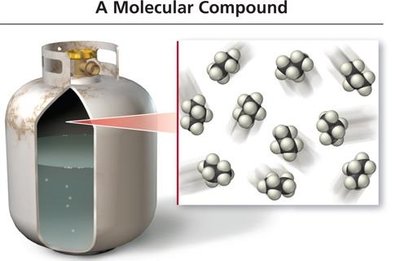
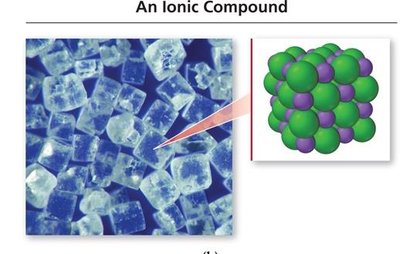
Elements can exist as single atoms (atomic elements) or as molecules (molecular elements). Compounds can be molecular or ionic.
Atomic Elements: Exist in nature as single atoms (e.g., Ne, Hg).
Molecular Elements: Exist as diatomic or polyatomic molecules (e.g., H2, O2, S8).
Molecular Compounds: Composed of two or more covalently bonded nonmetals.
Ionic Compounds: Composed of a metal ionically bonded to a nonmetal; basic unit is the formula unit.
Polyatomic Ions
Definition and Examples
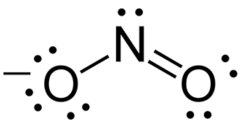
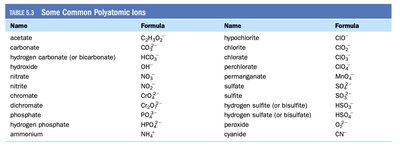
Polyatomic ions are groups of covalently bonded atoms with an overall charge, behaving as a single unit in ionic compounds.
Examples: Phosphate (PO43–), Carbonate (CO32–), Nitrite (NO2–), Sulfate (SO42–).
Writing Formulas for Ionic Compounds
General Steps
To write the formula for an ionic compound:
Write the symbol for the metal and its charge, followed by the symbol of the nonmetal and its charge.
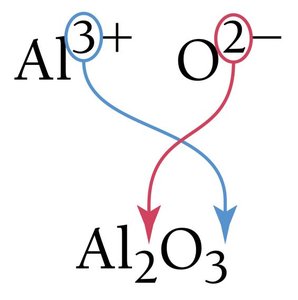
Make the magnitude of the charge on each ion become the subscript for the other ion.
Reduce subscripts to the smallest whole-number ratio.
Ensure the sum of the charges of cations cancels the sum of the charges of anions.
Inorganic Nomenclature
Naming Ionic Compounds
The rules for naming ionic compounds are determined by IUPAC. Names provide information about the composition of the compound.
Binary Ionic Compounds: Name of cation (metal) followed by name of anion (nonmetal) with suffix –ide.
Example: MgBr2 – magnesium bromide; FeCl3 – iron(III) chloride.
Polyatomic Ionic Compounds: Name of cation followed by name of polyatomic anion.
Cations with Invariant and Variant Charges
Cations may have a single (invariant) or multiple (variant) possible charges. Variant charge cations require Roman numerals in their names.
Invariant charge: Only one type of cation (e.g., Na+).
Variant charge: More than one type of cation (e.g., Fe2+, Fe3+).
Naming Ionic Compounds with Polyatomic Anions
Many polyatomic anions contain different numbers of oxygen atoms. The naming conventions are:
-ate: More oxygen atoms
-ite: Fewer oxygen atoms
Prefixes: hypo- (less than), per- (more than)
Example: NO2– (nitrite), NO3– (nitrate)
Naming Hydrated Ionic Compounds
Hydrates are ionic compounds containing a specific number of water molecules associated with each formula unit. Prefixes indicate the number of water molecules.
Example: MgSO4·7H2O – magnesium sulfate heptahydrate
Prefixes: mono-, di-, tri-, tetra-, penta-, hexa-, hepta-, octa-
Naming Molecular Compounds
Rules and Prefixes
Molecular compounds are named using prefixes to indicate the number of atoms. The prefix mono- is omitted for the first element if only one atom is present.
Example: NO2 – nitrogen dioxide; N2O – dinitrogen monoxide
Prefixes: mono-, di-, tri-, tetra-, penta-, hexa-, hepta-, octa-
Acids
Definition and Naming
Acids are molecular compounds that release hydrogen ions (H+) when dissolved in water. They are named based on their composition:
Binary Acids: Composed of hydrogen and a nonmetal; named as hydro- + base name + -ic acid (e.g., HCl – hydrochloric acid).
Oxyacids: Composed of hydrogen and an oxyanion; named based on the oxyanion (e.g., H2SO4 – sulfuric acid).
Formula Mass and Molar Mass
Definitions and Calculations
The formula mass is the mass of a molecule in atomic mass units (amu), while the molar mass is the mass of one mole of molecules in grams per mole (g/mol). The molar mass is numerically equivalent to the molecular mass but expressed in grams per mole.
Formula Mass: Sum of the atomic masses of all atoms in a molecule.
Molar Mass: Used as a conversion factor between mass and number of moles.
Example: If the formula mass of CO2 is 61.98 amu, the molar mass is 61.98 g/mol.
Mass Percent Composition
Definition and Calculation
Mass percent composition indicates the relative quantities of each element in a compound. It is calculated as:
Formula:
Example: Calculate the mass percent of Cl in CCl2F2.
Conversion Factors from Formulas
Mole Ratios and Mass Calculations
Chemical formulas provide mole ratio information, which can be used to determine the number of moles or grams of an element in a given amount of compound.
Example: How many moles of Cl are in 38.5 mol of CCl2F2?
Example: How many grams of P are in 25.0 grams of glyphosate (C3H8NO5P)?
Summary: Understanding molecules, compounds, and their nomenclature is essential for mastering general chemistry. The ability to write formulas, name compounds, and calculate mass relationships forms the foundation for further study in chemical reactions and quantitative analysis.
