 뒤로
Chapter 5: Introduction to Solutions and Aqueous Reactions – Study Notes
스터디 가이드 - 스마트 노트
 자료에 맞춘 맞춤형 노트, 핵심 정의, 예시, 맥락을 확장해 제공합니다.
Introduction to Solutions and Aqueous Reactions
Solution Concentration
Definitions and Types of Solutions
A solution is a homogeneous mixture of two or more substances. The solvent is the component present in the largest amount, while the solute is present in a smaller amount. When water is the solvent, the solution is termed aqueous.
Concentrated vs. Dilute Solutions
Solutions are described as dilute or concentrated based on the relative amount of solute:
Dilute solution: Small amount of solute compared to solvent.
Concentrated solution: Large amount of solute compared to solvent.
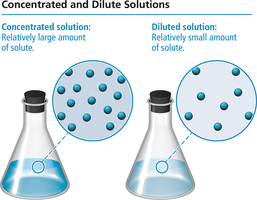
Quantifying Solution Concentration: Molarity
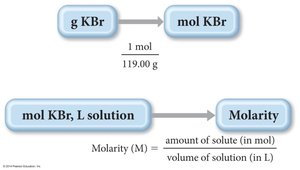
Molarity (M) is the most common unit for expressing solution concentration. It is defined as the number of moles of solute per liter of solution:
Formula:
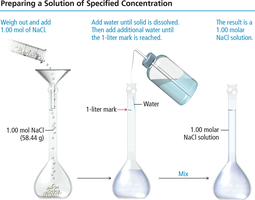
Preparing a Solution of Specified Concentration
To prepare a solution of known molarity, weigh the required amount of solute, dissolve it in water, and dilute to the desired final volume.
Calculating Molarity from Mass and Volume
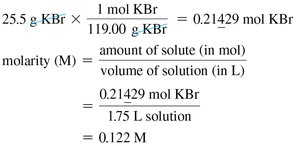
To calculate molarity, convert the mass of solute to moles using its molar mass, then divide by the volume of solution in liters.
Example: Dissolving 25.5 g KBr in 1.75 L of solution:
Using Molarity in Calculations
Molarity as a Conversion Factor
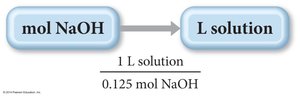
Molarity allows conversion between moles of solute and volume of solution:


Example: Calculating Volume from Moles and Molarity
To find the volume of solution needed for a given amount of solute, use the molarity as a conversion factor:

Solution Dilution
Concept and Equation
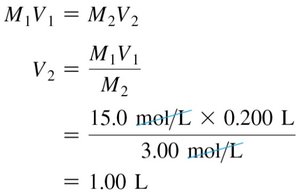
Stock solutions are often diluted to prepare solutions of lower concentration. The amount of solute remains constant; only the volume changes. The dilution equation is:
Visual Representation of Dilution
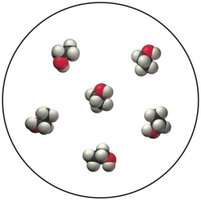
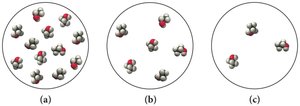
When a solution is diluted, the number of solute particles per unit volume decreases, but the total number of solute particles remains the same.
Solution Stoichiometry
Conceptual Plan for Calculations
In aqueous reactions, the volume and concentration of reactants or products can be used to calculate their amounts in moles. Stoichiometric coefficients from the balanced equation allow conversion between different substances.

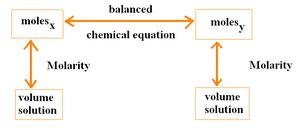
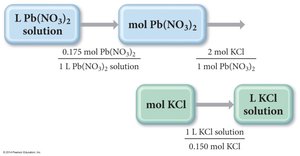
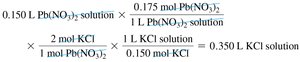
Example: Solution Stoichiometry Calculation
To determine the volume of one solution required to react with another, use molarity and the balanced chemical equation to convert between volumes and moles.
Types of Aqueous Solutions and Solubility
Solute-Solvent Interactions
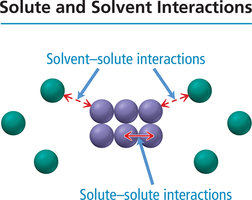
Solids dissolve in water when the attraction between solute and solvent is strong enough to overcome solute-solute and solvent-solvent interactions.
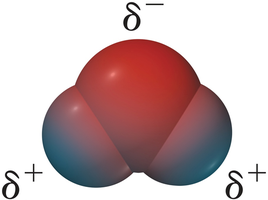
Charge Distribution in Water Molecule
Water molecules have an uneven charge distribution, with the oxygen atom carrying a partial negative charge and the hydrogen atoms carrying partial positive charges. This polarity is crucial for dissolving ionic compounds.
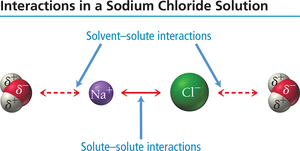
Solute and Solvent Interactions in Sodium Chloride Solution
When NaCl dissolves in water, Na+ and Cl− ions are attracted to water molecules, which insulate them from each other, allowing the ions to move freely and conduct electricity.
Summary Table: Solution Types and Properties
Type | Solute | Solvent | Conductivity |
|---|---|---|---|
Electrolyte | Ions | Water | Conducts electricity |
Nonelectrolyte | Molecules | Water | Does not conduct electricity |
Strong Electrolyte | Completely dissociates | Water | Good conductor |
Weak Electrolyte | Partially dissociates | Water | Poor conductor |
*Additional info: The notes above expand on the original lecture slides by providing definitions, formulas, and stepwise explanations for solution concentration, dilution, stoichiometry, and solubility, as well as including relevant images to reinforce key concepts.*
