 뒤로
Chapter 6: Ionic and Molecular Compounds – Study Guide
스터디 가이드 - 스마트 노트
 자료에 맞춘 맞춤형 노트, 핵심 정의, 예시, 맥락을 확장해 제공합니다.
Chapter 6: Ionic and Molecular Compounds
6.1 Ions: Transfer of Electrons
This section introduces the formation of ions through the transfer of electrons, the octet rule, and the distinction between ionic and covalent bonds. Atoms seek stable electron configurations, often achieved by gaining or losing electrons.
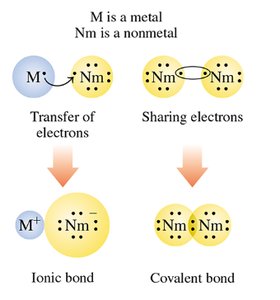
Ionic Bonds: Formed when electrons are transferred from metals to nonmetals, resulting in positive (cations) and negative (anions) ions.
Covalent Bonds: Formed when electrons are shared between nonmetals, creating molecules.
Octet Rule: Atoms tend to gain, lose, or share electrons to achieve eight electrons in their valence shell.
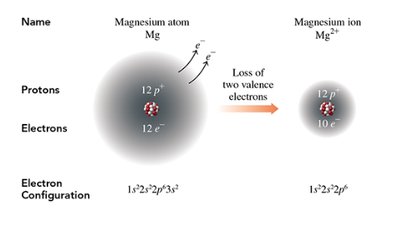
Cations: Metals lose electrons (e.g., Na → Na+, Mg → Mg2+).
Anions: Nonmetals gain electrons (e.g., Cl → Cl-).
Charge Determination: The charge of an ion is determined by the difference between the number of protons and electrons.
Periodic Table Trends: The group number helps predict the charge of ions formed by elements.
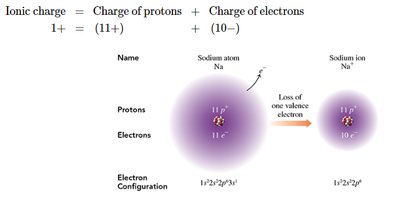
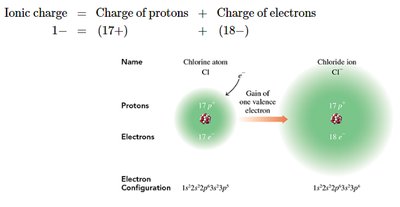
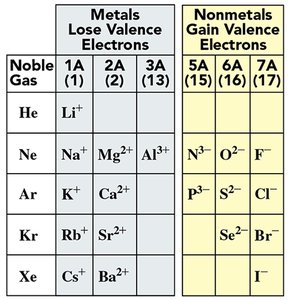
Example: Sodium (Na) loses one electron to become Na+, while chlorine (Cl) gains one electron to become Cl-.
6.2 Ionic Compounds
Ionic compounds are formed from the electrostatic attraction between cations and anions. Their chemical formulas reflect the lowest whole-number ratio of ions needed to balance charges.
Common Examples: NaCl (table salt), NaHCO3 (baking soda), Mg(OH)2 (Milk of Magnesia), CaCO3 (calcium carbonate).
Properties: High melting points due to strong ionic attractions.
Formula Writing: The total positive charge must equal the total negative charge.
Subscripts: Indicate the number of each ion required for charge neutrality.
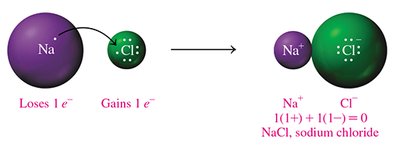
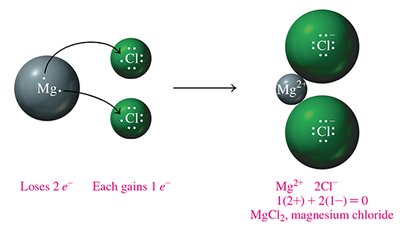
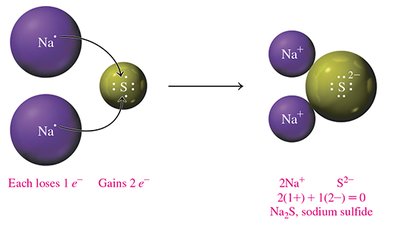
Example: In MgCl2, two Cl- ions are needed to balance the +2 charge of Mg2+.
6.3 Naming and Writing Ionic Formulas
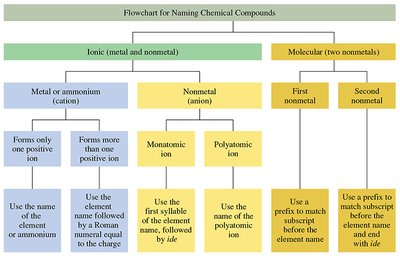
Ionic compounds are named using systematic rules. The metal ion is named first, followed by the nonmetal ion with the suffix "-ide." Transition metals require Roman numerals to indicate their charge.
Binary Ionic Compounds: Name = Metal + Nonmetal (with "-ide").
Transition Metals: Use Roman numerals to indicate charge (e.g., iron(II), iron(III)).
Charge Balance: Subscripts are determined by the need to balance charges.
Formula Writing: Write element symbols and add subscripts to balance charge.
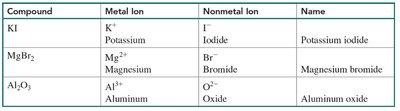
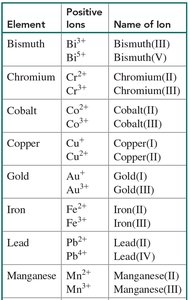
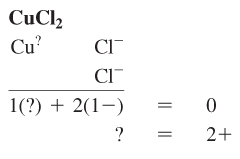
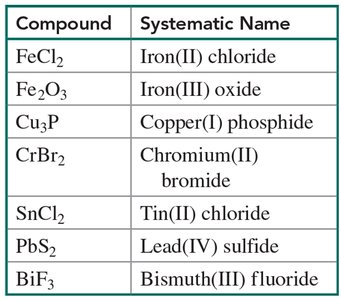
Example: FeCl2 is named iron(II) chloride, while Fe2O3 is iron(III) oxide.
6.4 Polyatomic Ions
Polyatomic ions are groups of covalently bonded atoms with an overall charge. They are commonly found in ionic compounds and follow specific naming conventions.
Common Polyatomic Ions: Most end in "-ate" or "-ite" (e.g., phosphate, phosphite).
Charge and Formula: The charge and formula must be memorized for common polyatomic ions.
Examples: CO32- (carbonate), HCO3- (hydrogen carbonate), ClO4- (perchlorate).
Usage: Polyatomic ions are used in both naming and writing formulas for compounds.
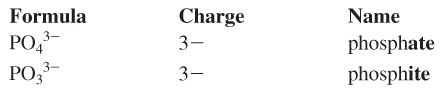
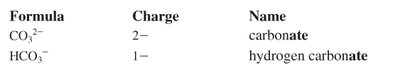
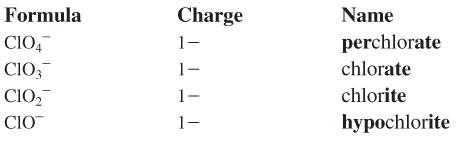
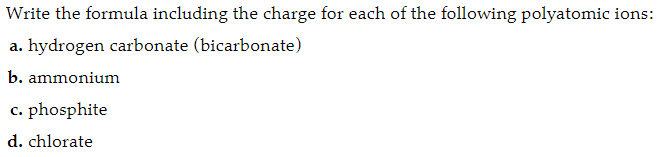
Example: The formula for hydrogen carbonate (bicarbonate) is HCO3-.
6.5 Molecular Compounds: Sharing Electrons
Molecular compounds are formed by the sharing of electrons between nonmetals, resulting in covalent bonds. Their naming uses prefixes to indicate the number of atoms.
Covalent Bonds: Atoms share electrons to form molecules (e.g., H2O, CO2).
Naming: The first element is named by its element name; the second uses the root plus "-ide." Prefixes indicate the number of atoms (mono-, di-, tri-, etc.).
Formula Writing: Prefixes are used to write formulas from names.
Examples: NCl3 (nitrogen trichloride), SiBr4 (silicon tetrabromide).
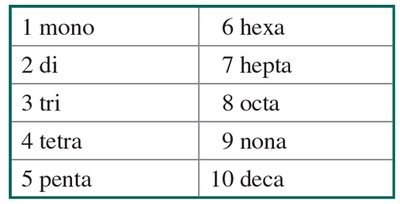
Example: Carbon dioxide (CO2) is named using the prefix "di-" for two oxygen atoms.
Practice and Application
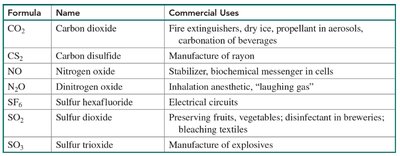
Practice problems and tables reinforce the concepts of naming and writing formulas for ionic and molecular compounds, as well as identifying polyatomic ions and their uses.
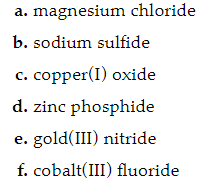
Practice Naming: Magnesium chloride, sodium sulfide, copper(I) oxide, zinc phosphide, gold(III) nitride, cobalt(III) fluoride.
Polyatomic Ion Formulas: Hydrogen carbonate (HCO3-), ammonium (NH4+), phosphite (PO33-), chlorate (ClO3-).
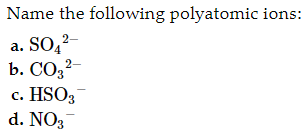
Polyatomic Ion Names: SO42- (sulfate), CO32- (carbonate), HSO3- (hydrogen sulfite), NO3- (nitrate).
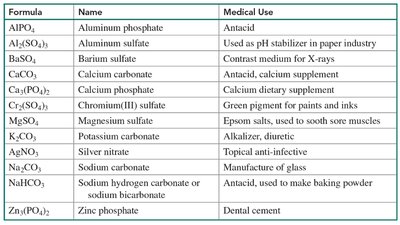
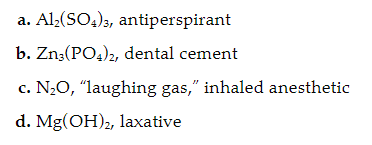
Commercial Uses: AlPO4 (antacid), Zn3(PO4)2 (dental cement), N2O (inhaled anesthetic), Mg(OH)2 (laxative).
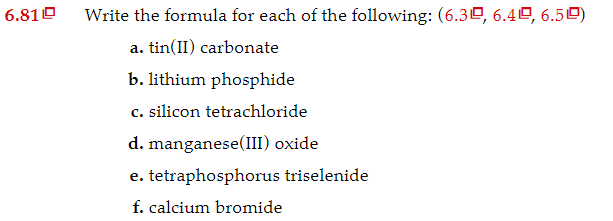
Formula Writing: Tin(II) carbonate (SnCO3), lithium phosphide (Li3P), silicon tetrachloride (SiCl4), manganese(III) oxide (Mn2O3), tetraphosphorus triselenide (P4Se3), calcium bromide (CaBr2).
Key Equations and Concepts
Ionic Charge Calculation:
Charge Balance in Ionic Compounds:
Additional info: The notes include tables and flowcharts for systematic naming, charge determination, and commercial/medical uses of compounds, providing a comprehensive overview for exam preparation.
