 뒤로
Chapter 7: Thermochemistry – Energy, Heat, and Enthalpy in Chemical Reactions
스터디 가이드 - 스마트 노트
 자료에 맞춘 맞춤형 노트, 핵심 정의, 예시, 맥락을 확장해 제공합니다.
Thermochemistry: The Study of Energy in Chemical Reactions
Introduction to Thermochemistry
Thermochemistry is a branch of chemistry that focuses on the energy changes, particularly heat, that occur during chemical reactions. Understanding these changes is essential for predicting reaction behavior and for practical applications such as energy production and material synthesis.
The Nature of Energy: Work and Heat
Definitions and Concepts
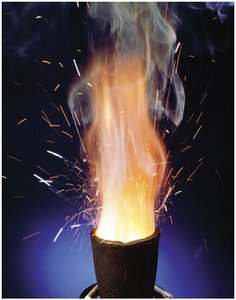
Energy: The capacity to do work or produce heat.
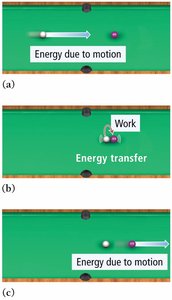
Work: The result of a force acting through a distance.
Heat: The flow of energy caused by a temperature difference.
Objects possess energy, while heat and work are mechanisms for energy exchange between objects.

Types of Energy
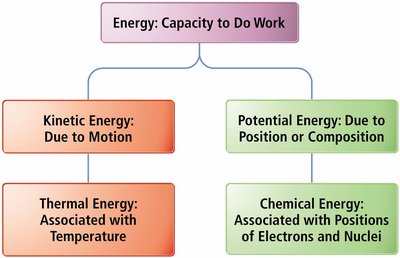
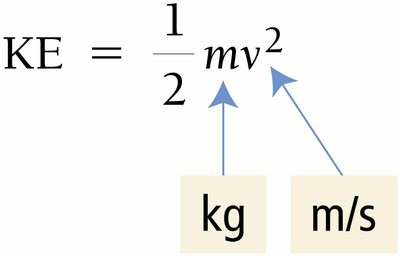
Kinetic Energy: Energy due to motion.
Thermal Energy: A form of kinetic energy associated with temperature.
Potential Energy: Energy due to position or composition.
Chemical Energy: Potential energy stored in chemical bonds.
Energy Conservation and Energy Transfer
Law of Conservation of Energy
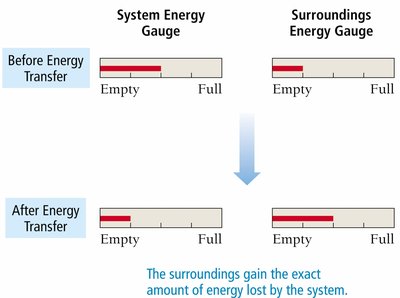
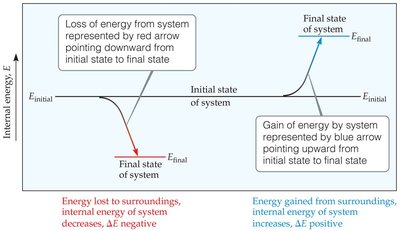
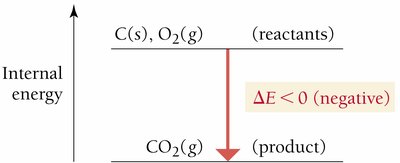
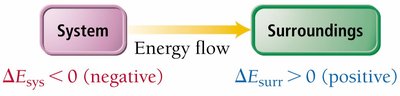
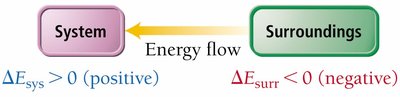
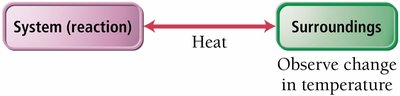
The law of conservation of energy states that energy can neither be created nor destroyed, only transferred or transformed. In chemical reactions, energy lost by the system is gained by the surroundings and vice versa.
System: The part of the universe under study.
Surroundings: Everything outside the system.
Units of Energy
SI and Common Units
The SI unit for energy is the joule (J).
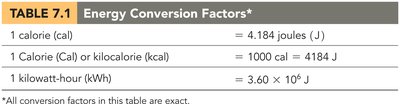
Other units include calorie (cal) and kilowatt-hour (kWh).
Energy conversions are often necessary in calculations.
Kinetic Energy Formula
Kinetic energy is calculated as:
The First Law of Thermodynamics
Principle and Application
The first law of thermodynamics is the law of energy conservation: the total energy of the universe is constant. Energy lost by a system is gained by the surroundings.
Internal Energy (E) and State Functions
Definition and Properties
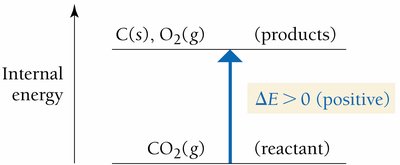
Internal Energy (E): The sum of kinetic and potential energies of all particles in a system.
Internal energy is a state function, meaning it depends only on the current state, not the path taken to reach it.

Internal Energy Change (ΔE)
ΔE is the difference in internal energy between final and initial states.
Heat and Work in Thermochemistry
Relationship Between Heat, Work, and Internal Energy
The change in internal energy is the sum of heat transferred and work done:
Heat (q) is positive when flowing into the system; work (w) is positive when done on the system.

Quantifying Heat and Work
Heat Capacity
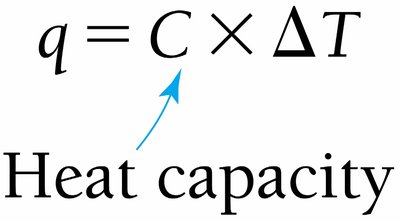
Heat capacity (C): The amount of heat required to raise the temperature of a system by 1°C.
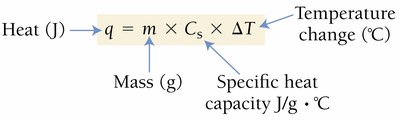
Formula:
Specific Heat and Molar Heat Capacity
Specific heat capacity (Cs): Heat capacity per gram of substance.
Molar heat capacity: Heat capacity per mole of substance.
Formula:

Thermal Energy Transfer and Calorimetry
Thermal Equilibrium
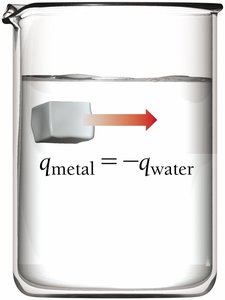
When two substances are thermally isolated, heat lost by one equals heat gained by the other.
Formula:
Measuring Internal Energy: Bomb Calorimetry
Constant-Volume Calorimetry
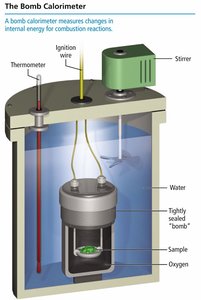
Bomb calorimeter measures changes in internal energy for combustion reactions at constant volume.
Formula:
Enthalpy: Heat Evolved at Constant Pressure
Definition and Calculation
Enthalpy (H): The sum of internal energy and the product of pressure and volume.
Formula:
Change in enthalpy:
At constant pressure:
Endothermic and Exothermic Processes
Definitions and Examples
Endothermic: Absorbs heat from surroundings; ; feels cold.
Exothermic: Releases heat to surroundings; ; feels hot.


Stoichiometry and Enthalpy Changes
Enthalpy of Reaction (ΔHrxn)
ΔHrxn reflects the stoichiometric amounts of reactants and products.
Example:
Constant-Pressure Calorimetry: Measuring ΔHrxn
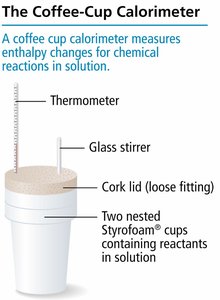
Coffee-Cup Calorimeter
Measures enthalpy changes for reactions in solution at constant pressure.
Formula:
Heat lost by solution equals heat gained by reaction:

Relationships Involving Change in Enthalpy for a Reaction (ΔHrxn)
Quantitative Relationships
If a chemical equation is multiplied by a factor, ΔHrxn is multiplied by the same factor.
If a chemical equation is reversed, ΔHrxn changes sign.
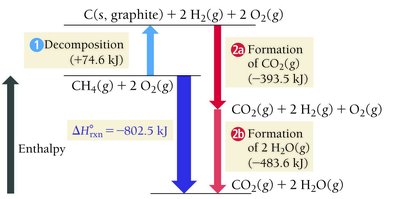
If a reaction is the sum of several steps, ΔHrxn is the sum of the enthalpy changes for each step (Hess's Law).
Standard States and Standard Enthalpy Changes
Definitions
Standard State: Pure substance at 1 atm pressure and 25°C (for most cases).
Standard Enthalpy Change (ΔH°): Enthalpy change when reactants and products are in their standard states.
Standard Enthalpy of Formation (ΔH°f): Enthalpy change for forming 1 mole of a compound from its elements in their standard states; for elements in their standard state, ΔH°f = 0.
Calculating Standard Enthalpy Change for a Reaction
Formula and Example
Formula:
Example: Combustion of methane
Summary Table: Energy Conversion Factors
Unit | Equivalent in Joules (J) |
|---|---|
1 calorie (cal) | 4.184 J |
1 Calorie (kcal) | 4184 J |
1 kilowatt-hour (kWh) | 3.60 × 10⁶ J |
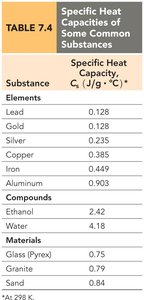
Summary Table: Specific Heat Capacities of Common Substances
Substance | Specific Heat Capacity, Cs (J/g·°C) |
|---|---|
Lead | 0.128 |
Gold | 0.128 |
Silver | 0.235 |
Copper | 0.385 |
Iron | 0.449 |
Aluminum | 0.903 |
Ethanol | 2.42 |
Water | 4.18 |
Glass (Pyrex) | 0.75 |
Granite | 0.79 |
Sand | 0.84 |
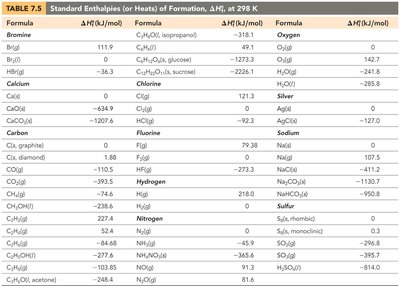
Summary Table: Standard Enthalpies of Formation (ΔHf) at 298 K
Formula | ΔHf (kJ/mol) |
|---|---|
Br2(l) | 0 |
CO2(g) | -393.5 |
H2O(l) | -285.8 |
O2(g) | 0 |
NaCl(s) | -411.2 |
NH3(g) | -45.9 |
CH4(g) | -74.6 |
C2H5OH(l) | -277.0 |
H2(g) | 0 |
NaOH(s) | -425.6 |
SO2(g) | -296.8 |
HCl(g) | -92.3 |
Additional info: These notes expand on brief points from the original material, providing full academic context, definitions, formulas, and relevant examples for General Chemistry students.
