 뒤로
Chapter 9: Chemical Reactions and Solution Stoichiometry – Study Notes
스터디 가이드 - 스마트 노트
 자료에 맞춘 맞춤형 노트, 핵심 정의, 예시, 맥락을 확장해 제공합니다.
Chapter 9: Chemical Reactions and Solution Stoichiometry
9.1 Types of Chemical Reactions
Chemical reactions are processes in which substances (reactants) are transformed into new substances (products) through the breaking and forming of chemical bonds. Understanding the types of chemical reactions is fundamental to predicting products and balancing equations.
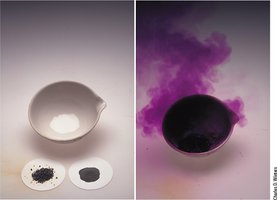
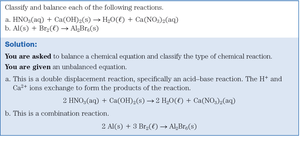
Combination Reaction: Two or more reactants combine to form a single product. Example:
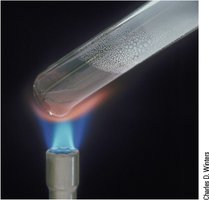
Decomposition Reaction: A single compound breaks down into two or more products, often requiring energy input (thermal or electrical). Example:
Displacement Reactions: The number of reactants equals the number of products. Includes single and double displacement reactions.
Single Displacement: One molecular fragment is exchanged for another. Example:
Double Displacement (Metathesis): Two ions or molecular fragments exchange. Example:
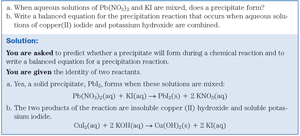
Precipitation Reaction: Double displacement resulting in an insoluble product (precipitate).
Acid–Base Reaction: Double displacement resulting in salt and water (neutralization).
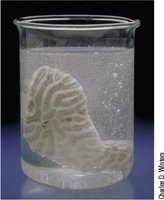
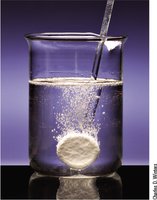
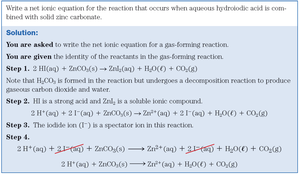
Gas-Forming Reaction: Double displacement where a gas is produced, often involving carbonates and acids.
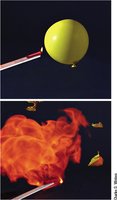
Combustion Reaction: Reaction with O2 producing CO2, H2O, and heat; always a redox reaction.
9.2 Aqueous Solutions
Aqueous solutions are homogeneous mixtures where water acts as the solvent. The behavior of compounds in water is crucial for understanding solution chemistry.
Solvent: The substance in which solutes are dissolved (usually present in greater amount).
Solute: The substance dissolved in the solvent (usually present in lesser amount).
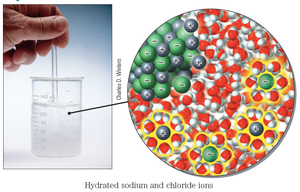
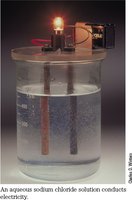
Electrolytes: Compounds that dissociate into ions in water, increasing conductivity.
Strong Electrolytes: Dissociate completely (e.g., NaCl, HCl).
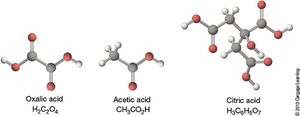
Weak Electrolytes: Partially dissociate (e.g., acetic acid).
Nonelectrolytes: Dissolve as intact molecules, do not conduct electricity (e.g., sugar).
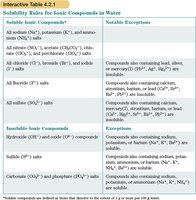
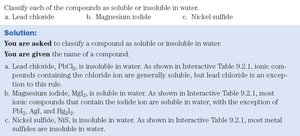
Solubility: The ability of a compound to dissolve in water, governed by solubility rules.
9.3 Reactions in Aqueous Solution
Many important chemical reactions occur in aqueous solution, including precipitation, acid–base, and gas-forming reactions. Understanding how to write molecular, ionic, and net ionic equations is essential.
Precipitation Reaction: Formation of an insoluble product when two solutions are mixed.
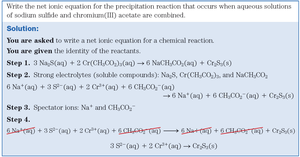
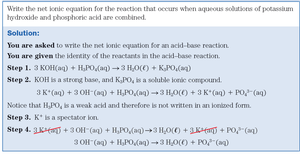
Net Ionic Equation: Shows only the species that participate in the reaction, omitting spectator ions.
Acid–Base Reaction: Acid produces H+, base produces OH–; neutralization forms water and salt.
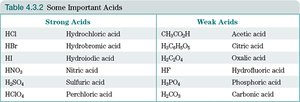
Strong Acids: Ionize completely (e.g., HCl, HNO3).
Weak Acids: Partially ionize (e.g., acetic acid).
Strong Bases: Hydroxides of Group 1 and 2 metals (e.g., NaOH, Ca(OH)2).
Weak Bases: Often contain nitrogen (e.g., NH3).
9.4 Oxidation–Reduction Reactions
Oxidation–reduction (redox) reactions involve the transfer of electrons between chemical species. These reactions are fundamental to processes such as combustion, corrosion, and biological metabolism.
Oxidation: Loss of electrons.
Reduction: Gain of electrons.
Oxidizing Agent: Causes oxidation, is itself reduced.
Reducing Agent: Causes reduction, is itself oxidized.
Half-Reaction: Shows only the oxidation or reduction process, including electron transfer.
Oxidation Numbers: Assigned to atoms to track electron transfer; sum equals charge of ion or zero for neutral compounds.
Guidelines: Pure elements have oxidation number zero; monoatomic ions equal their charge; oxygen usually –2, hydrogen +1 (with nonmetals), halogens –1.
9.5 Stoichiometry of Reactions in Aqueous Solution
Stoichiometry allows quantitative analysis of chemical reactions, including calculation of reactant and product amounts, solution concentrations, and titration results.
Solution Concentration: Expressed as molarity (M), weight percent, or ppm.
Molarity (M):
Preparation of Solutions: Use volumetric glassware for accuracy; direct addition or dilution methods.
Dilution: (concentration decreases as solvent is added).
Titration: Analytical technique to determine concentration using a solution of known concentration and an indicator.
Acid–Base Titration: Equivalence point reached when moles of acid equal moles of base.
Oxidation–Reduction Titration: Uses color change to indicate equivalence point.
Example: Calculating molarity, ion concentration, and grams of solute using stoichiometric relationships.
Summary Table: Solubility Rules for Ionic Compounds in Water
Soluble Ionic Compounds | Notable Exceptions |
|---|---|
All sodium (Na+), potassium (K+), and ammonium (NH4+) compounds | None |
All nitrates (NO3–), acetates (CH3COO–), and perchlorates (ClO4–) | None |
All chlorides (Cl–), bromides (Br–), and iodides (I–) | Compounds containing Ag+, Pb2+, and Hg22+ |
All sulfates (SO42–) | Compounds containing Ba2+, Pb2+, Ca2+, and Sr2+ |
Insoluble Ionic Compounds | Exceptions |
Hydroxide (OH–) and oxide (O2–) compounds | Compounds containing Na+, K+, or Ba2+ |
Carbonate (CO32–) and phosphate (PO43–) compounds | Compounds containing Na+, K+, or NH4+ |
Summary Table: Strong and Weak Acids
Strong Acids | Weak Acids |
|---|---|
HCl (Hydrochloric acid) | CH3COOH (Acetic acid) |
HBr (Hydrobromic acid) | H3C6H5O7 (Citric acid) |
HI (Hydroiodic acid) | H2C2O4 (Oxalic acid) |
HNO3 (Nitric acid) | HF (Hydrofluoric acid) |
H2SO4 (Sulfuric acid) | H3PO4 (Phosphoric acid) |
HClO4 (Perchloric acid) | H2CO3 (Carbonic acid) |
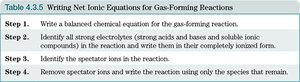
Summary Table: Writing Net Ionic Equations for Gas-Forming Reactions
Step | Description |
|---|---|
1 | Write a balanced chemical equation for the gas-forming reaction. |
2 | Identify all strong electrolytes and write them in their completely ionized form. |
3 | Identify the spectator ions in the reaction. |
4 | Remove spectator ions and write the reaction using only the species that remain. |
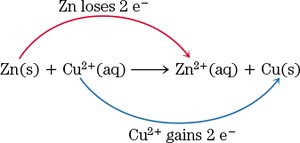
Summary Table: Redox Reaction Example
Reaction | Electron Transfer |
|---|---|
Zn(s) + Cu2+(aq) → Zn2+(aq) + Cu(s) | Zn loses 2 e–; Cu2+ gains 2 e– |
Additional info: These notes expand on the original slides and problems, providing definitions, examples, and tables for clarity and completeness. All equations are presented in LaTeX format as required.
