 뒤로
Chemical Bonding and Molecular Geometry: Study Notes for General Chemistry
스터디 가이드 - 스마트 노트
 자료에 맞춘 맞춤형 노트, 핵심 정의, 예시, 맥락을 확장해 제공합니다.
Chemical Bonding I: Lewis Structures and Molecular Shapes
Bonding Theories and Their Importance
Bonding theories explain how and why atoms attach together to form molecules, and why some combinations are stable while others are not. These theories are essential for predicting molecular shapes and the chemical and physical properties of compounds.
Key Point: Bonding theories help simulate drug interactions by predicting molecular shapes.
Example: Morphine mimics endorphins due to similar molecular shape, allowing it to bind to opioid receptors.
Lewis Bonding Theory
The Lewis theory is a foundational model that emphasizes valence electrons to explain chemical bonding. It predicts molecular stability, shape, size, and polarity.
Key Point: Atoms bond to lower their potential energy, considering nucleus-to-nucleus repulsions, electron-to-electron repulsions, and nucleus-to-electron attractions.
Types of Chemical Bonds and Bond Polarity
Classification of Bonds
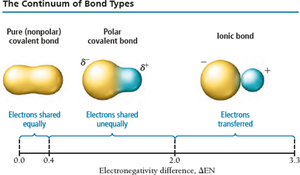
Bonds are classified based on the types of atoms involved and the nature of electron sharing or transfer.
Pure Covalent Bonds: Electrons are shared equally between atoms.
Polar Covalent Bonds: Electrons are shared unequally, resulting in partial charges.
Ionic Bonds: Electrons are transferred from one atom to another, creating ions.
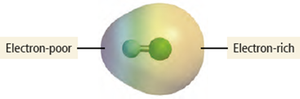
Bond polarity arises when the sharing of electrons is unequal, producing a dipole with partial positive and negative ends.
Electronegativity
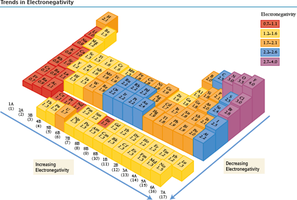
Electronegativity is the ability of an atom to attract electrons in a chemical bond. It increases across a period and decreases down a group. Fluorine is the most electronegative element, while francium is the least.
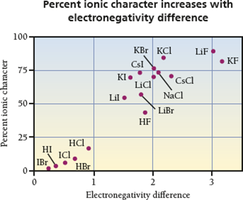
Key Point: The larger the difference in electronegativity, the more polar the bond.
Bond Dipole Moments
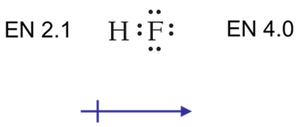
A dipole moment measures bond polarity and is proportional to the size of partial charges and the distance between them. It is measured in Debyes (D).
Percent Ionic Character
The percent ionic character compares a bond’s measured dipole moment to what it would be if electrons were completely transferred. It indicates the degree of electron transfer.
Writing Lewis Structures
Steps for Writing Lewis Structures
Lewis structures predict the distribution of valence electrons in a molecule and are useful for understanding bonding and molecular shapes.
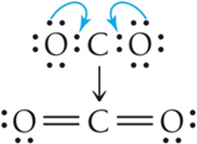
Write the correct skeletal structure, placing the less electronegative atom at the center.
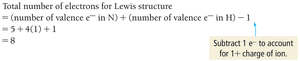
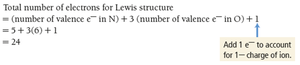
Determine the total number of valence electrons.
Distribute electrons to give octets (or duets for hydrogen) to as many atoms as possible.
If any atoms lack an octet, form double or triple bonds as necessary.
Check that the total number of electrons matches the calculated value.
Lewis Structures for Polyatomic Ions
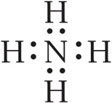
For polyatomic ions, adjust the total electron count for the ion’s charge and enclose the structure in brackets with the charge indicated.
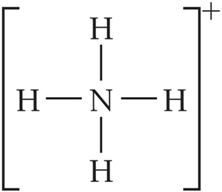
Resonance and Formal Charge
Resonance Structures
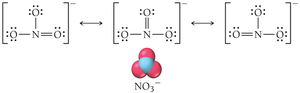
Resonance occurs when two or more valid Lewis structures can be drawn for the same compound, differing only in electron positions. The actual molecule is a resonance hybrid, intermediate between the contributing structures.
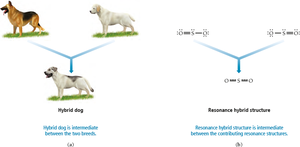
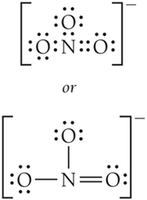
Rules for Resonance Structures
Resonance structures must have the same connectivity; only electron positions change.
Second-row elements have a maximum of eight electrons; third-row can have expanded octets.
Formal charges must sum to the net charge.
More stable structures have fewer and smaller formal charges, with negative charges on more electronegative atoms.
Formal Charge Calculation
Formal charge helps distinguish between competing skeletal or resonance structures. It is calculated as:
Exceptions to the Octet Rule
Odd-Electron Species (Radicals)
Some molecules or ions have an odd number of electrons and cannot satisfy the octet rule. These are called free radicals and are typically unstable and reactive.
Incomplete Octets
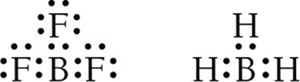
Some elements, such as hydrogen and boron, prefer fewer than eight electrons. Hydrogen accommodates only two electrons (duet), and boron often prefers six.
Expanded Octets
Nonmetals in the third period and below can have more than eight electrons around the central atom, using empty valence d orbitals.
Bond Energies and Bond Lengths
Bond Energies
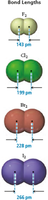
Bond energy is the amount of energy required to break one mole of a bond in the gaseous state. The more electrons two atoms share, the stronger the bond. Shorter bonds are generally stronger.
Bond Lengths
Bond length is the distance between the nuclei of bonded atoms. Triple bonds are shorter than double bonds, which are shorter than single bonds.
VSEPR Theory and Molecular Geometry
Valence Shell Electron Pair Repulsion (VSEPR) Theory
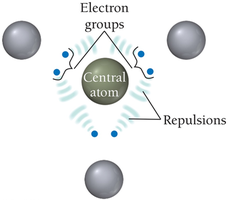
VSEPR theory states that electron groups around a central atom will be most stable when they are as far apart as possible, determining the shape and bond angles in a molecule.
Electron Group Geometry
There are five basic arrangements of electron groups: linear, trigonal planar, tetrahedral, trigonal bipyramidal, and octahedral.
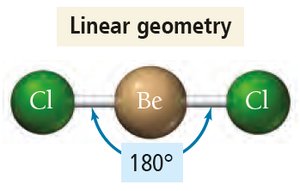
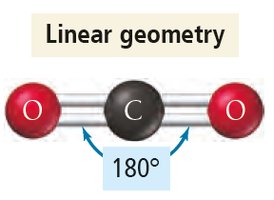
Linear Geometry
Two electron groups around the central atom result in a linear geometry with a bond angle of 180°.
Trigonal Planar Geometry
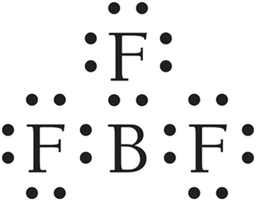
Three electron groups form a trigonal planar geometry with bond angles of 120°.
Tetrahedral Geometry
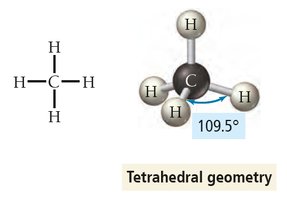
Four electron groups form a tetrahedral geometry with bond angles of 109.5°.
Trigonal Bipyramidal Geometry
Five electron groups form a trigonal bipyramidal geometry with bond angles of 90° and 120°.
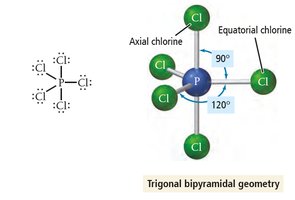
Octahedral Geometry
Six electron groups form an octahedral geometry with bond angles of 90°.
Effect of Lone Pairs on Molecular Structure
Lone pairs occupy more space than bonding pairs, causing bond angles to be smaller than ideal. This leads to derivatives of basic geometries, such as bent and trigonal pyramidal shapes.
Polarity of Molecules
Determining Molecular Polarity
A molecule is polar if it contains polar bonds and the bond dipole moments do not cancel due to the molecular shape.
Key Point: Vector addition of dipole moments determines if a molecule is polar or nonpolar.
Vector Addition of Dipole Moments
Dipole moments are vectors; their sum determines the overall polarity of the molecule. If vectors cancel, the molecule is nonpolar; if they add to a net dipole, the molecule is polar.
Geometry | Bond Dipoles | Polarity |
|---|---|---|
Linear (CO2) | Opposite directions | Nonpolar |
Bent (H2O) | Angle less than 180° | Polar |
Tetrahedral (CH4) | Symmetrical | Nonpolar |
Trigonal pyramidal (NH3) | Not symmetrical | Polar |
Summary Table: Electron and Molecular Geometries
Electron Groups | Electron Geometry | Molecular Geometry | Bond Angle |
|---|---|---|---|
2 | Linear | Linear | 180° |
3 | Trigonal planar | Trigonal planar / Bent | 120° / <120° |
4 | Tetrahedral | Tetrahedral / Trigonal pyramidal / Bent | 109.5° / <109.5° |
5 | Trigonal bipyramidal | Trigonal bipyramidal / Seesaw / T-shaped / Linear | 90°, 120°, 180° |
6 | Octahedral | Octahedral / Square pyramidal / Square planar | 90°, 180° |
