 뒤로
Chemical Bonding, Compounds, and Formula Calculations: Study Notes for General Chemistry
스터디 가이드 - 스마트 노트
 자료에 맞춘 맞춤형 노트, 핵심 정의, 예시, 맥락을 확장해 제공합니다.
Chemical Compounds and Their Formation
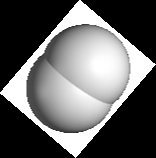
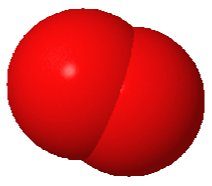
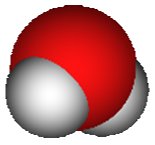
Hydrogen, Oxygen, and Water: Properties and Formation
Chemical compounds are formed when two or more elements combine in fixed, definite proportions, resulting in new substances with distinct properties. Water (H2O) is a classic example, formed from hydrogen and oxygen gases.
Formation Equation:
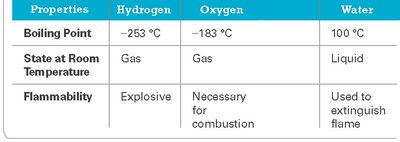
Properties Comparison: Water has very different physical and chemical properties compared to its constituent elements.
Properties | Hydrogen | Oxygen | Water |
|---|---|---|---|
Boiling Point | -253 °C | -183 °C | 100 °C |
State at Room Temperature | Gas | Gas | Liquid |
Flammability | Explosive | Necessary for combustion | Used to extinguish flame |
Types of Chemical Bonds
Chemical Bonding: Ionic, Covalent, and Metallic Bonds
Chemical bonds are forces that hold atoms together in compounds, lowering their potential energy and often achieving a noble-gas electron configuration.
Ionic Bonds: Formed by electrostatic attraction between ions (metal + nonmetal), resulting in a lattice structure.
Covalent Bonds: Formed by sharing electrons between nonmetals, resulting in molecules.
Metallic Bonds: Bonded to several neighboring atoms, electrons are delocalized.
Lewis symbols represent valence electrons as dots around element symbols.
Representing Compounds: Chemical Formulas and Molecular Models
Types of Chemical Formulas
Chemical formulas indicate the elements present and their ratios in a compound.
Empirical Formula: Shows the simplest whole-number ratio of atoms.
Molecular Formula: Shows the actual number of atoms of each element in a molecule.
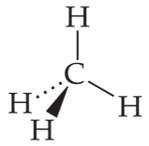
Structural Formula: Uses lines to represent covalent bonds and shows how atoms are connected.
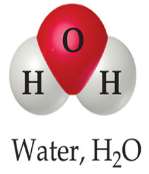
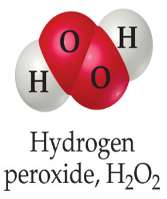
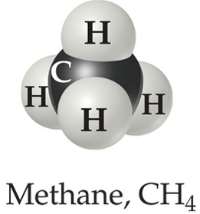
Molecular Models
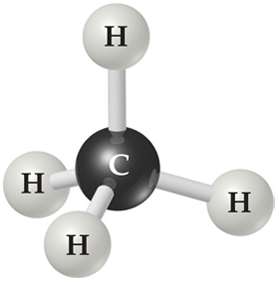
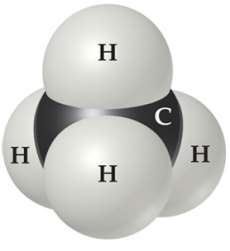
Molecular models help visualize the geometry and bonding in molecules.
Ball-and-stick model: Shows atoms as spheres and bonds as sticks.
Space-filling model: Shows the relative sizes and spatial arrangement of atoms.
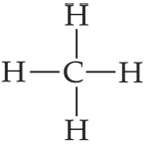
The Lewis Model and Octet Rule
Lewis Structures and the Octet Rule
Lewis structures use dots to represent valence electrons. The octet rule states that atoms tend to gain, lose, or share electrons to achieve eight valence electrons, mimicking noble gas configurations.
Octet Rule: Applies to most main group elements.
Duet Rule: Applies to hydrogen and helium (two electrons).
Ionic Bonding: The Lewis Model and Lattice Energies
Formation and Properties of Ionic Compounds
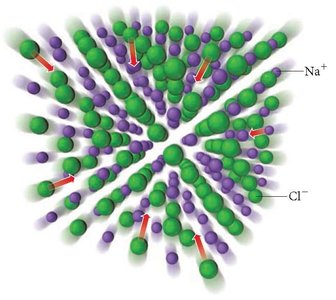
Ionic compounds are formed by the transfer of electrons from metals to nonmetals, resulting in cations and anions arranged in a lattice.
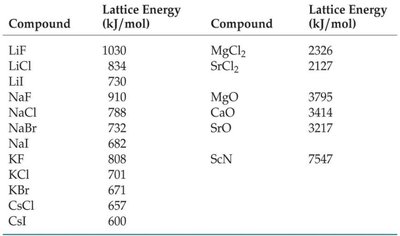
Lattice Energy: The energy required to separate a mole of an ionic solid into gaseous ions. High lattice energy indicates strong ionic bonding.
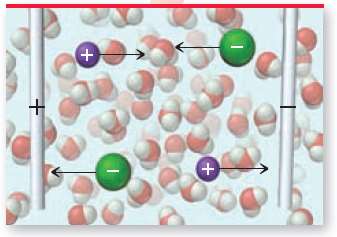
Properties: High melting/boiling points, non-conductive as solids, conductive in aqueous solution.
Compound | Lattice Energy (kJ/mol) |
|---|---|
LiF | 1030 |
NaCl | 788 |
MgO | 3795 |
ScN | 7547 |
Ionic Compounds: Formulas and Names
Writing and Naming Ionic Compounds
Ionic compounds contain positive (cation) and negative (anion) ions. The formula reflects the smallest whole-number ratio of ions, and the sum of charges must equal zero.
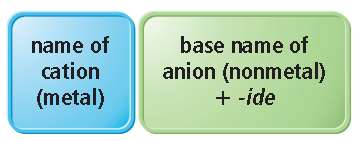
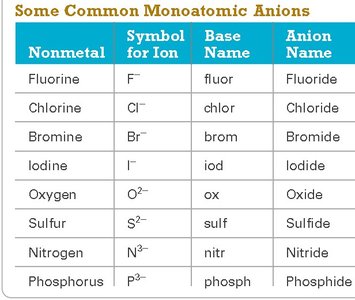
Binary Ionic Compounds: Metal + nonmetal. Name: cation name + anion base name + '-ide'.
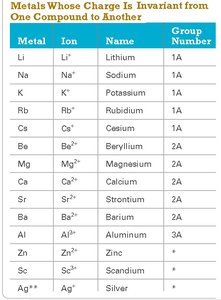
Metals with Invariant Charge: Do not specify charge (e.g., Na+, Ca2+).
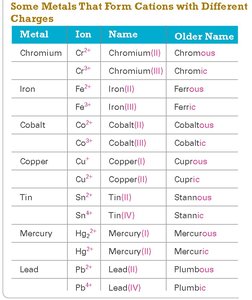
Metals with Variable Charge: Specify charge with Roman numerals (e.g., Fe(II), Cu(I)).
Metal | Ion | Name | Group Number |
|---|---|---|---|
Na | Na+ | Sodium | 1A |
Ca | Ca2+ | Calcium | 2A |
Metal | Ion | Name | Older Name |
|---|---|---|---|
Fe | Fe2+ | Iron(II) | Ferrous |
Fe | Fe3+ | Iron(III) | Ferric |
Nonmetal | Symbol for Ion | Base Name | Anion Name |
|---|---|---|---|
Fluorine | F- | fluor | Fluoride |
Oxygen | O2- | ox | Oxide |
Polyatomic Ions and Oxyanions
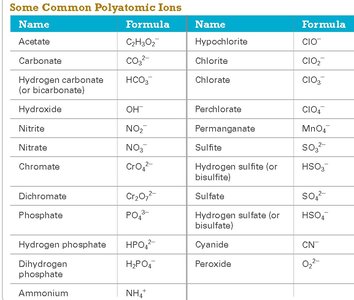
Polyatomic ions are composed of two or more atoms. Oxyanions contain oxygen and another element, with naming conventions based on the number of oxygens.
-ate: Most common oxyanion (e.g., nitrate NO3-).
-ite: One oxygen less (e.g., nitrite NO2-).
hypo- ... -ite: Two oxygens less.
per- ... -ate: One oxygen more.
Name | Formula |
|---|---|
Acetate | C2H3O2- |
Nitrate | NO3- |
Sulfate | SO42- |
Ammonium | NH4+ |
Hydrated Ionic Compounds
Hydrates are ionic compounds containing a specific number of water molecules per formula unit. Naming includes prefixes for the number of waters (e.g., pentahydrate).
Example: CuSO4·5H2O is copper(II) sulfate pentahydrate.
Covalent Bonding: Simple Lewis Structures
Covalent Bonds and Multiple Bonds
Covalent bonds are formed by sharing pairs of electrons between atoms. Single, double, and triple bonds correspond to one, two, or three shared pairs, respectively.
Single Bond: One pair shared (e.g., H2).
Double Bond: Two pairs shared (e.g., O=C=O in CO2).
Triple Bond: Three pairs shared (e.g., N≡N in N2).
Bond Length: Decreases as the number of shared pairs increases.
Molecular Compounds: Formulas and Names
Naming Molecular Compounds
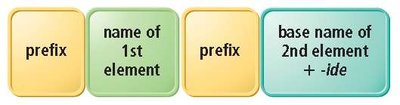
Molecular compounds are composed of two or more nonmetals. Naming uses prefixes to indicate the number of atoms.
Prefixes: mono-, di-, tri-, tetra-, penta-, etc.
Example: N2O is dinitrogen monoxide.

Formula Mass and the Mole Concept for Compounds
Calculating Formula Mass and Molar Mass
The formula mass is the sum of atomic masses of all atoms in a chemical formula. Molar mass is the mass in grams of one mole of a compound, numerically equivalent to its formula mass.
Formula Mass Example: CO2:
Molar Mass Example: Ca(NO3)2:

Using Molar Mass for Conversions
Molar mass is used as a conversion factor between grams and moles.
Example: How many molecules of CO2 in 10.800 g?
Composition of Compounds
Mass Percent Composition
Mass percent composition expresses the percentage by mass of each element in a compound.
Formula:
Example: Ca(NO3)2: Ca = 24.42%, N = 17.07%, O = 58.50%
Conversion Factors from Chemical Formulas
Subscript numbers in chemical formulas represent mole ratios, useful for stoichiometric calculations.
Example: 1 mole of CCl2F2 contains 2 moles of Cl.
Determining a Chemical Formula from Experimental Data
Empirical and Molecular Formulas
Empirical formulas are calculated from mass composition, and molecular formulas are whole-number multiples of empirical formulas.
Empirical Formula Calculation: Divide moles of each element by the smallest value to get ratios.
Molecular Formula Calculation:
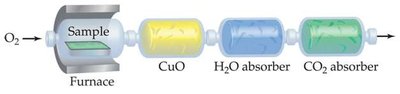
Combustion Analysis
Combustion analysis is used to determine the empirical formula of organic compounds by measuring the masses of CO2 and H2O produced.
Organic Compounds
Organic vs. Inorganic Compounds
Organic compounds originate from living organisms and are mainly composed of carbon and hydrogen, sometimes with oxygen, nitrogen, or sulfur. Inorganic compounds originate from the Earth.
Examples of Organic Compounds: Methane (CH4), Ethanol (C2H5OH)
Examples of Inorganic Compounds: NaCl, NaHCO3
Alkanes and Alcohols
Alkanes have the general formula CnH2n+2, while alcohols have CnH2n+1OH.
Isomers and Functional Groups
Isomers are compounds with the same formula but different structures. Functional groups are specific groups of atoms within molecules that determine their chemical properties.
Examples: 1-pentanol, 2-pentanol, 3-pentanol (isomers); carboxylic acid group (COOH), ether group (O).
