 뒤로
Chemical Bonding: Theory, Structure, and Properties
스터디 가이드 - 스마트 노트
 자료에 맞춘 맞춤형 노트, 핵심 정의, 예시, 맥락을 확장해 제공합니다.
Chemical Bonding Theories
Introduction to Bonding Theories
Chemical bonding theories explain how and why atoms attach together to form molecules, predict molecular shapes, and determine chemical and physical properties. The structure of a molecule directly influences its properties. One of the simplest and most widely used bonding theories is the Lewis theory, which emphasizes the role of valence electrons in bonding and predicts molecular stability, shape, size, and polarity.
Why Do Atoms Bond?
Potential Energy and Bond Formation
A chemical bond forms when the potential energy of the bonded atoms is less than that of the separate atoms. The calculation of this potential energy involves considering nucleus-to-nucleus repulsions, electron-to-electron repulsions, and nucleus-to-electron attractions. Atoms bond to achieve a more stable, lower-energy configuration.
Bond Polarity and Electronegativity
Bond Polarity
Most chemical bonds exhibit some degree of electron sharing and ion formation. Covalent bonding between unlike atoms results in unequal sharing of electrons, leading to bond polarity. One atom pulls the electrons closer, resulting in a partial negative charge, while the other becomes electron-deficient and acquires a partial positive charge. This is known as a polar covalent bond.
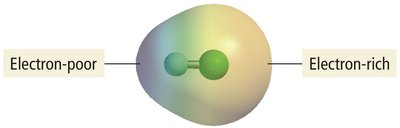
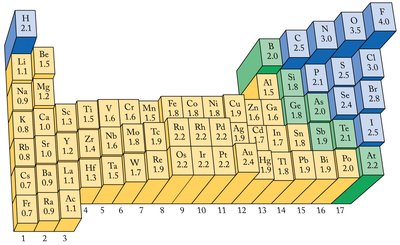
Electronegativity
Electronegativity is the ability of an atom to attract bonding electrons. The larger the difference in electronegativity between two atoms, the more polar the bond. The negative end of the bond points toward the more electronegative atom.
Types of Bonds
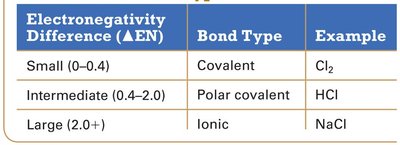
Bonds are classified based on the difference in electronegativity (ΔEN):
Electronegativity Difference (ΔEN) | Bond Type | Example |
|---|---|---|
Small (0–0.4) | Covalent | Cl2 |
Intermediate (0.4–2.0) | Polar covalent | HCl |
Large (2.0+) | Ionic | NaCl |
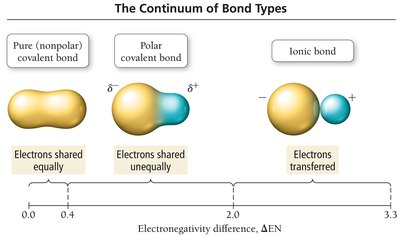
The Continuum of Bond Types
Bonds range from pure covalent (electrons shared equally) to polar covalent (electrons shared unequally) to ionic (electrons transferred). The degree of sharing or transfer depends on the electronegativity difference.
Bond Dipole Moment
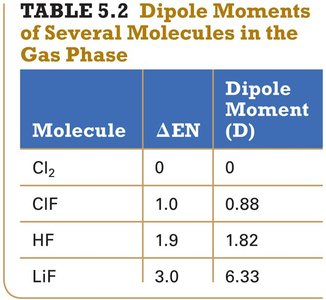
The dipole moment (μ) measures bond polarity and is directly proportional to the size of the partial charges and the distance between them. The unit is Debye (D). The more electrons shared and the larger the atoms, the greater the dipole moment.
Molecule | ΔEN | Dipole Moment (D) |
|---|---|---|
Cl2 | 0 | 0 |
ClF | 1.0 | 0.88 |
HF | 1.9 | 1.82 |
LiF | 3.0 | 6.33 |
Lewis Structures and the Octet Rule
The Octet Rule
Atoms bond to achieve a noble gas-like configuration, typically eight valence electrons (the octet rule). Exceptions include expanded octets (central atom accommodates more than eight electrons), hydrogen (forms a duet), and boron (incomplete octet).
Drawing Lewis Structures
Steps to draw Lewis structures:
Determine the total number of valence electrons.
Arrange atoms in a skeletal structure.
Distribute electrons among atoms.
If any atoms lack an octet, form double or triple bonds as needed.
Bonding Pairs and Lone Pairs
Bonding pairs are shared between atoms (single, double, triple bonds), while lone pairs are unshared electrons on an atom.
Resonance and Formal Charge
Resonance
Resonance occurs when two or more valid Lewis structures can be drawn for the same compound, differing only in the position of electrons. Resonance structures stabilize molecules by delocalizing charge.

Formal Charge
Formal charge helps distinguish between competing skeletal or resonance structures. The sum of all formal charges in a neutral molecule must be zero; in an ion, it must equal the ion's charge. Small or zero formal charges are preferred, and negative formal charge should reside on the most electronegative atom.
Formal charge formula:
Bond Energy and Bond Length
Bond Energy
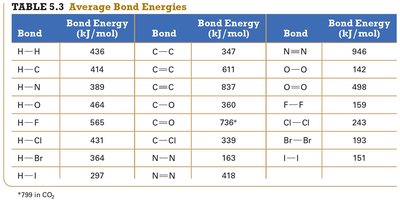
Bond energy is the energy required to break one mole of a bond in a compound. Generally, the more electrons two atoms share, the stronger the covalent bond. Shorter bonds are stronger, and bond strength increases across a period and decreases down a group.
Bond | Bond Energy (kJ/mol) |
|---|---|
H–H | 436 |
C–C | 347 |
C≡C | 837 |
N≡N | 946 |
O=O | 498 |
F–F | 159 |
Br–Br | 193 |
Bond Length
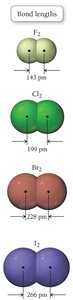
Bond length is the distance between the nuclei of bonded atoms. Triple bonds are shorter than double bonds, which are shorter than single bonds. Bond length decreases across a period and increases down a group.
VSEPR Theory and Molecular Geometry
Valence Shell Electron Pair Repulsion (VSEPR) Theory
VSEPR theory predicts the shapes of molecules by considering electron groups around the central atom. Electron groups (bonding pairs and lone pairs) repel each other and arrange themselves as far apart as possible to minimize repulsion.
Basic Electron Group Geometries
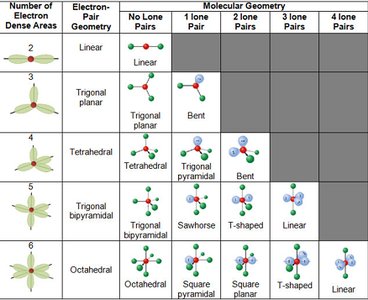
There are five basic arrangements of electron groups:
Linear: 2 electron groups, bond angle 180°
Trigonal planar: 3 electron groups, bond angle 120°
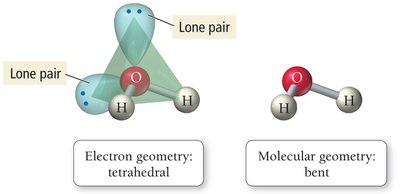
Tetrahedral: 4 electron groups, bond angle 109.5°
Trigonal bipyramidal: 5 electron groups, bond angles 90°, 120°
Octahedral: 6 electron groups, bond angle 90°
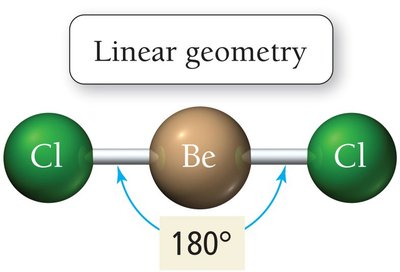
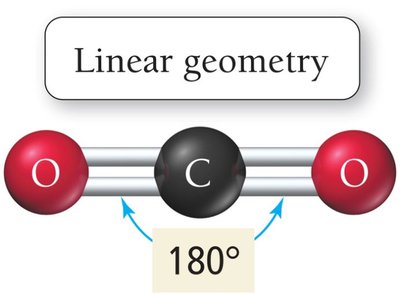
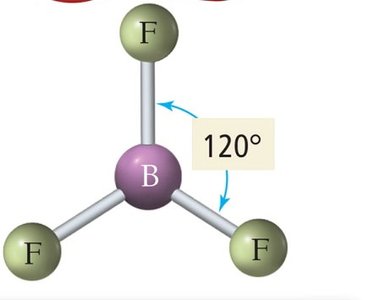
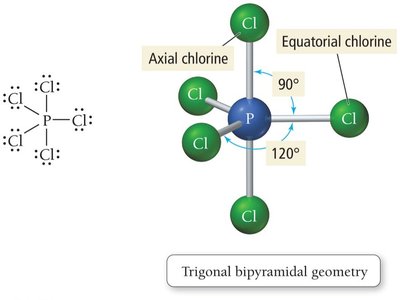
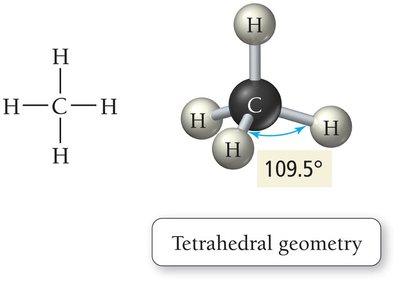
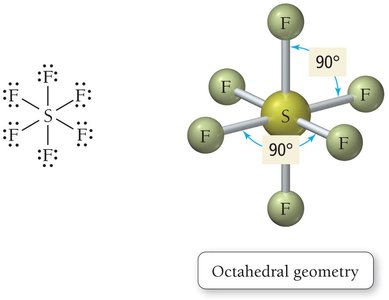
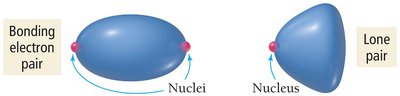
Derivatives of Basic Geometries
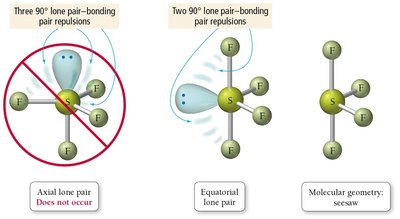
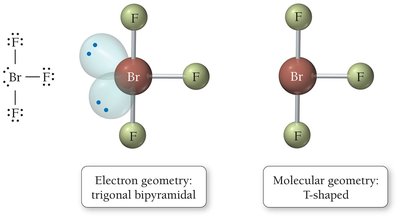
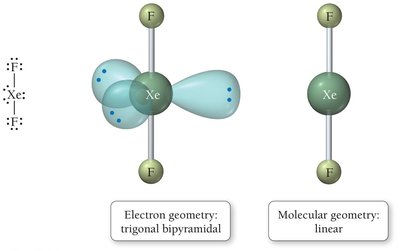
When lone pairs are present, the molecular geometry differs from the electron-pair geometry:
Trigonal pyramidal: 4 electron groups, 1 lone pair
Bent: 4 electron groups, 2 lone pairs
Seesaw: 5 electron groups, 1 lone pair
T-shaped: 5 electron groups, 2 lone pairs
Linear (trigonal bipyramidal): 5 electron groups, 3 lone pairs
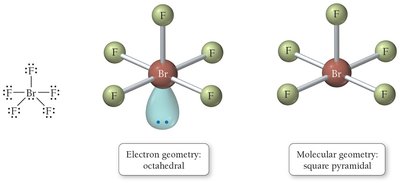
Square pyramidal: 6 electron groups, 1 lone pair
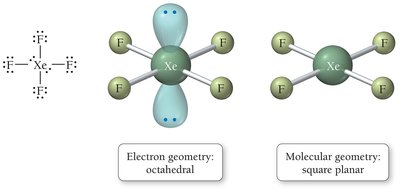
Square planar: 6 electron groups, 2 lone pairs
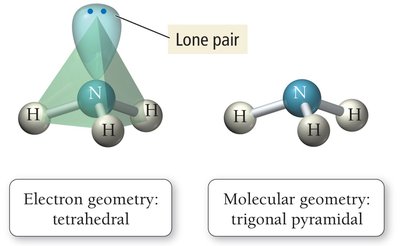
Representing 3D Shapes on Paper
To represent 3D molecular shapes on paper, use straight lines for bonds in the plane, solid wedges for bonds coming out of the page, and hatched wedges for bonds going into the page.

Polarity of Molecules
Determining Molecular Polarity
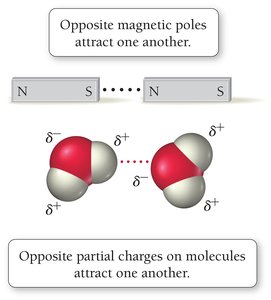
A molecule is polar if it contains polar bonds and has an unsymmetrical shape. Polarity affects intermolecular forces and solubility. Nonbonding pairs (lone pairs) can influence molecular polarity.
Polarity and Solubility
Polar molecules are attracted to other polar molecules and dissolve in water, as do ionic compounds. Some molecules, such as soap, have both polar and nonpolar parts, allowing them to interact with both water and oils.
Summary Table: Electron-Pair and Molecular Geometry
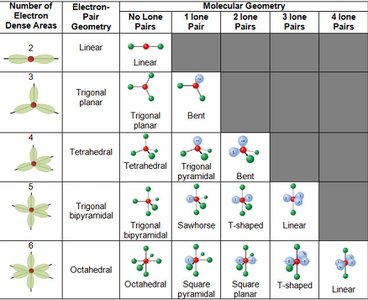
The following table summarizes the relationship between the number of electron dense areas, electron-pair geometry, and molecular geometry:
Number of Electron Dense Areas | Electron-Pair Geometry | No Lone Pairs | 1 Lone Pair | 2 Lone Pairs | 3 Lone Pairs | 4 Lone Pairs |
|---|---|---|---|---|---|---|
2 | Linear | Linear | ||||
3 | Trigonal planar | Trigonal planar | Bent | |||
4 | Tetrahedral | Tetrahedral | Trigonal pyramidal | Bent | ||
5 | Trigonal bipyramidal | Trigonal bipyramidal | Seesaw | T-shaped | Linear | |
6 | Octahedral | Octahedral | Square pyramidal | Square planar | Linear |
Additional info: Academic context and examples were added to clarify and expand upon brief points in the original material.
