 뒤로
Chemical Quantities and Reactions: Structured Study Notes
스터디 가이드 - 스마트 노트
 자료에 맞춘 맞춤형 노트, 핵심 정의, 예시, 맥락을 확장해 제공합니다.
Chemical Quantities and Reactions
The Mole and Avogadro’s Number
The mole is a fundamental unit in chemistry that allows chemists to count atoms, molecules, or ions by weighing them. Avogadro’s number, 6.022 × 10²³, represents the number of particles in one mole of a substance.
Mole: A quantity representing 6.022 × 10²³ particles (atoms, molecules, ions).
Avogadro’s Number: The number of particles in one mole.
Relationship: $\text{moles} = \frac{\text{number of molecules}}{6.022 \times 10^{23}}$
Molar Mass (MM): The mass of one mole of a substance, expressed in grams per mole.
Relationship: $\text{moles} = \frac{\text{mass (g)}}{\text{MM (g/mol)}}$
Balancing Chemical Equations
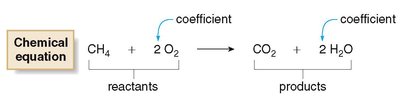
Balancing chemical equations ensures the conservation of mass and atoms. Coefficients are used to adjust the number of molecules, while subscripts indicate the number of atoms in each molecule.
Count each element on both sides of the equation.
Use coefficients to balance each element.
Subscripts cannot be changed.
Check that coefficients are the lowest possible ratio.
Types of Chemical Reactions
Chemical reactions are classified based on the rearrangement of atoms and molecules. Understanding these types helps predict products and reaction behavior.
Combination: Two or more reactants form one product. Format: A + B → AB
Decomposition: One reactant breaks into two or more products. Format: AB → A + B
Single Replacement: One element replaces another in a compound. Format: AB + C → A + CB
Double Replacement: Reactants exchange partners. Format: AB + CD → AD + CB
Combustion: Carbon-containing reactant reacts with O2 to form CO2 and H2O, releasing energy.
Redox: Involves transfer of electrons between reactants.
Oxidation-Reduction (Redox) Reactions
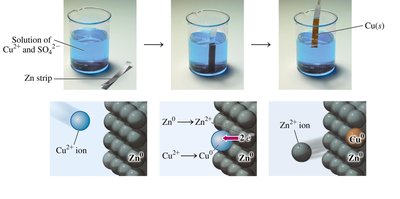
Redox reactions involve the transfer of electrons. Oxidation is the loss of electrons, while reduction is the gain of electrons. These reactions are essential in biological processes and energy production.
Oxidation: Loss of electrons.
Reduction: Gain of electrons.
Half-Reactions: Redox reactions can be split into oxidation and reduction half-reactions.
Mneumonics: OIL RIG (Oxidation Is Loss, Reduction Is Gain); LEO goes GER (Loss of Electrons is Oxidation, Gain of Electrons is Reduction).
Redox in Biological Processes
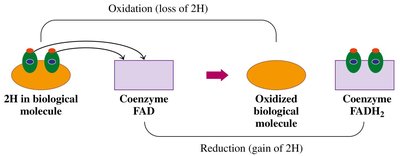
Biological redox reactions often involve the transfer of hydrogen atoms. Coenzymes like FAD are reduced to FADH2 by accepting hydrogen atoms.
Oxidation: Addition of O or loss of H.
Reduction: Addition of H or loss of O.
Mole Relationships in Chemical Equations
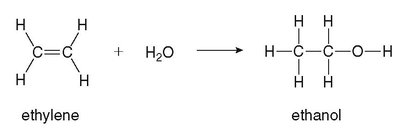
Chemical equations indicate the mole ratios of reactants and products. These ratios are used to calculate the mass of substances involved in reactions.
Solid reagents are weighed and converted to moles.
Mole ratios from balanced equations relate reactants to products.
Mass of product is determined by converting moles back to grams.
Theoretical Yield, Actual Yield, and Percent Yield
Theoretical yield is the maximum amount of product predicted by stoichiometry. Actual yield is the amount obtained experimentally. Percent yield measures efficiency.
Theoretical Yield: Calculated maximum product.
Actual Yield: Experimentally obtained product.
Percent Yield: $\text{Percent yield} = \frac{\text{actual yield (g)}}{\text{theoretical yield (g)}} \times 100\%$

Energy in Chemical Reactions
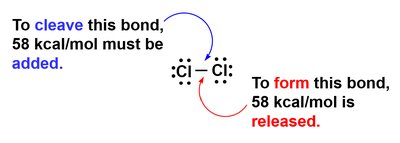
Energy changes accompany chemical reactions. Bond breaking requires energy (endothermic), while bond formation releases energy (exothermic).
Bond Dissociation Energy: Energy required to break a bond.
Bond Formation: Energy released when a bond forms.
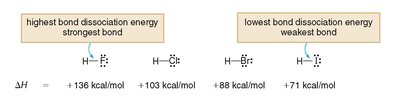
Bond Dissociation Energies
Bond dissociation energies vary by bond type and element. Stronger bonds require more energy to break.
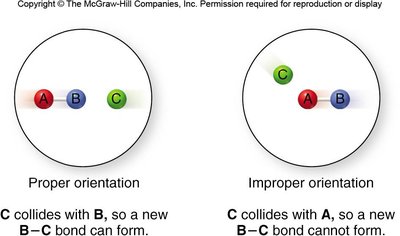
Collision Theory and Reaction Conditions
For a reaction to occur, molecules must collide with proper orientation and sufficient energy (activation energy).
Collision: Reactants must collide.
Orientation: Proper alignment is needed for bond formation.
Energy: Collisions must provide activation energy (Ea).

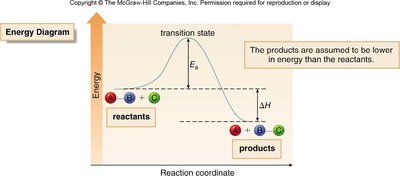
Energy Diagrams and Reaction Rates
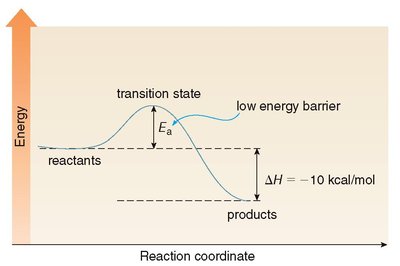
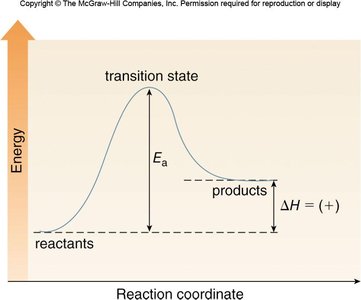
Energy diagrams illustrate the energy changes during a reaction. The activation energy (Ea) is the energy barrier that must be overcome. The enthalpy change (ΔH) indicates whether the reaction is exothermic or endothermic.
Exothermic: ΔH is negative; energy is released.
Endothermic: ΔH is positive; energy is absorbed.
Catalysis and Reaction Rates
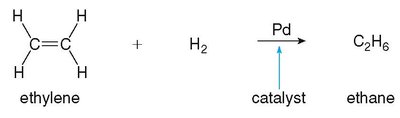
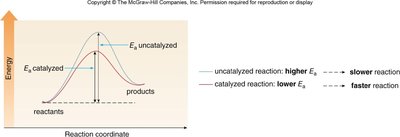
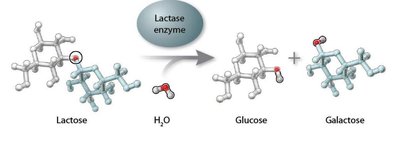
Catalysts increase reaction rates by lowering the activation energy without affecting the enthalpy change. Biological catalysts, called enzymes, are highly specific and efficient.
Catalyst: Substance that speeds up a reaction and is recovered unchanged.
Enzyme: Biological catalyst, usually a protein.
Effect: Lower activation energy, faster reaction rate.
Factors Affecting Reaction Rate
Several factors influence the rate of a chemical reaction:
Factor | Reason |
|---|---|
Increase temperature | More collisions, more collisions with energy of activation |
Increase reactant concentration | More collisions |
Add a catalyst | Lowers energy of activation, Ea |
Summary: Chemical quantities and reactions are central to understanding stoichiometry, energy changes, and reaction mechanisms in general chemistry. Mastery of these concepts is essential for predicting reaction outcomes and optimizing laboratory processes.
