 뒤로
Chemical Reactions and Chemical Quantities: Stoichiometry, Limiting Reactants, and Yield
스터디 가이드 - 스마트 노트
 자료에 맞춘 맞춤형 노트, 핵심 정의, 예시, 맥락을 확장해 제공합니다.
Chemical Reactions and Chemical Quantities
Introduction to Chemical Reactions
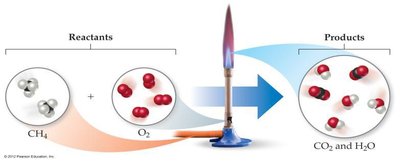
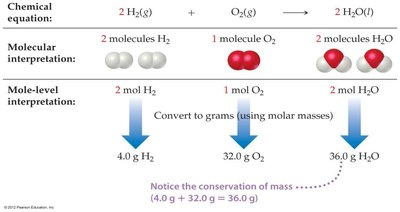
Chemical reactions involve the reorganization of atoms in one or more substances, resulting in the formation of new substances. Atoms are neither created nor destroyed during a chemical reaction, in accordance with the law of conservation of mass. Chemical reactions are represented by chemical equations, which show the reactants (on the left) and products (on the right) separated by an arrow.
Reactants: Substances present before the reaction.
Products: Substances formed as a result of the reaction.
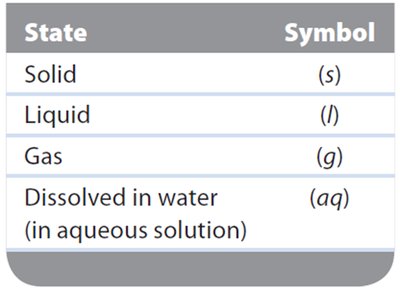
Physical States: Indicated by symbols: (s) for solid, (l) for liquid, (g) for gas, and (aq) for aqueous solution.
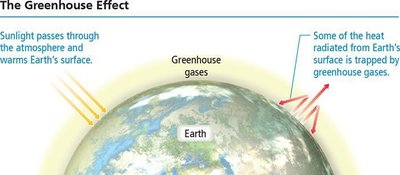
The Greenhouse Effect and Global Warming
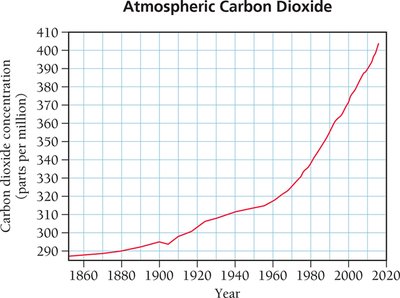
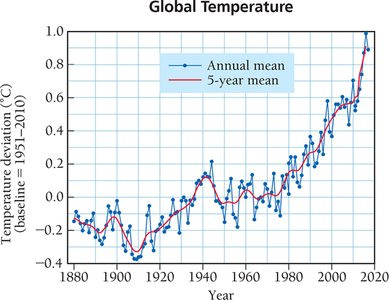
Greenhouse gases such as CO2, H2O, and CH4 play a significant role in warming Earth's surface by trapping some of the heat radiated from the planet. This process is known as the greenhouse effect. Since 1860, atmospheric CO2 levels have risen by approximately 38%, correlating with a measured increase in global average temperature of about 1°C.
Balancing Chemical Equations
Conservation of Mass in Chemical Equations
Balancing chemical equations ensures that the number of atoms of each element is the same on both sides of the equation, reflecting the conservation of mass. This is achieved by adjusting the coefficients (the numbers in front of chemical formulas), not the subscripts (which would change the identity of the substance).
Coefficients: Indicate the relative number of molecules or moles of each substance.
Subscripts: Indicate the number of atoms in a molecule and must not be changed when balancing equations.
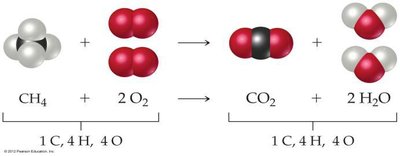
Example: Combustion of Methane
When methane (CH4) combusts in oxygen (O2), the products are carbon dioxide (CO2) and water (H2O):
Balanced equation:
Each side has 1 C, 4 H, and 4 O atoms.
Stoichiometry
Stoichiometric Relationships
Stoichiometry is the study of the quantitative relationships between the amounts of reactants and products in a chemical reaction. The coefficients in a balanced equation provide the ratios of moles (or molecules) of each substance involved.
Mole Ratio: The ratio of the coefficients of any two substances in a balanced equation.
Example: In the combustion of octane:
For every 2 moles of octane, 25 moles of oxygen react to produce 16 moles of carbon dioxide and 18 moles of water.
Stoichiometry: Problem Solving Strategy
Balance the chemical equation.
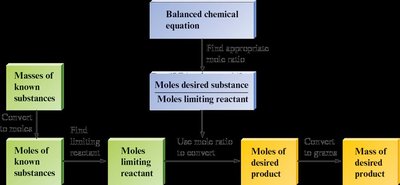
Convert the known mass of a reactant or product to moles.
Use the balanced equation to set up the appropriate mole ratios.
Calculate the number of moles of the desired substance.
Convert moles back to grams if required.
Limiting Reactant and Theoretical Yield
Limiting Reactant Concept
In reactions where reactants are not present in exact stoichiometric proportions, one reactant will be used up before the others. This reactant is called the limiting reactant because it determines the maximum amount of product that can be formed. The other reactants are in excess.
Limiting Reactant: The reactant that is completely consumed first, limiting the amount of product formed.
Theoretical Yield: The maximum amount of product that can be formed from the limiting reactant, calculated using stoichiometry.
Analogy: Making Pizzas
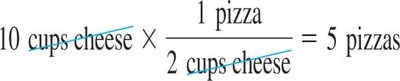
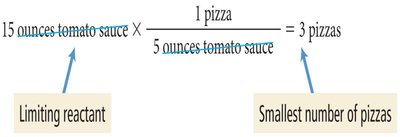
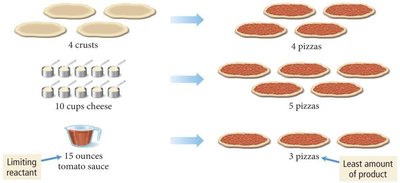
Suppose you have 4 crusts, 10 cups of cheese, and 15 oz of tomato sauce. The recipe requires 1 crust, 2 cups of cheese, and 5 oz of tomato sauce per pizza. The number of pizzas you can make is limited by the ingredient you have in the smallest proportional amount (the limiting reactant).
Determining the Limiting Reactant
Convert all given reactant amounts to moles.
Use the balanced equation to determine the mole ratio required.
Calculate how much product each reactant could produce.
The reactant that produces the least amount of product is the limiting reactant.
Theoretical Yield, Actual Yield, and Percent Yield
The theoretical yield is the calculated maximum amount of product possible from the limiting reactant. The actual yield is the amount of product actually obtained from the reaction. The percent yield is calculated as:
Summary Table: Physical States in Chemical Equations
State | Symbol |
|---|---|
Solid | (s) |
Liquid | (l) |
Gas | (g) |
Dissolved in water (aqueous solution) | (aq) |
Stoichiometry Flowchart
The following flowchart summarizes the steps for solving stoichiometry problems, from known masses to the mass of the desired product, including identification of the limiting reactant.
Additional info:
When balancing equations, always check that the number of atoms for each element is equal on both sides.
In limiting reactant problems, always compare the amount of product each reactant can produce, not just the initial amounts of reactants.
Percent yield is often less than 100% due to side reactions, incomplete reactions, or loss of product during recovery.
