 뒤로
Chemical Reactions: Evidence, Equations, and Balancing
스터디 가이드 - 스마트 노트
 자료에 맞춘 맞춤형 노트, 핵심 정의, 예시, 맥락을 확장해 제공합니다.
Chemical Reactions
Chemical and Physical Changes
Chemical reactions are fundamental processes in chemistry where substances are transformed into new substances. It is important to distinguish between chemical changes and physical changes:
Physical Change: The chemical composition remains constant. Examples include melting ice or boiling water.
Chemical Change: The chemical composition changes, resulting in the formation of new substances.
Example: Melting ice is a physical change, while burning wood is a chemical change.
Evidence for Chemical Reactions
There are four main observations that indicate a chemical reaction is taking place:
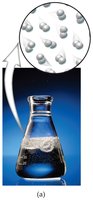
1. Gas Production
The formation of gas can be observed as fizzing or bubbling during a reaction. For example, when magnesium reacts with acid, hydrogen gas is released.
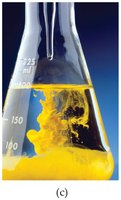
2. Formation of an Insoluble Solid (Precipitate)
When two aqueous solutions are mixed, the production of an insoluble solid, called a precipitate, may occur. This is a clear sign of a chemical reaction.
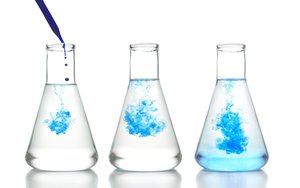
3. Permanent Color Change
A permanent color change often indicates the formation of a new substance. This is commonly observed in many chemical reactions.
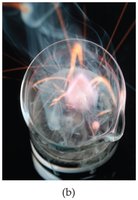
4. Energy Change
Chemical reactions may release or absorb energy, usually in the form of heat. An exothermic reaction releases heat, while an endothermic reaction absorbs heat.
Writing Chemical Equations
Chemical Equations
A chemical equation uses formulas and symbols to describe a chemical reaction. The general form is:
Reactants: Substances present at the start (A and B).
Products: Substances formed (C and D).
Example: The reaction of acetic acid and sodium bicarbonate:
Aqueous acetic acid + solid sodium bicarbonate → aqueous sodium acetate + liquid water + carbon dioxide gas.
States of Matter in Equations
Physical states are specified in chemical equations:
(s): Solid
(l): Liquid
(g): Gas
(aq): Aqueous solution (dissolved in water)
Diatomic Molecules
Seven Diatomic Elements
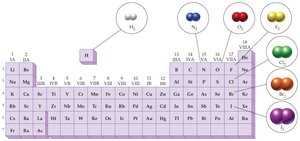
Seven nonmetals naturally occur as diatomic molecules. These elements are written as two-atom molecules in chemical reactions:
Hydrogen (H2)
Nitrogen (N2)
Oxygen (O2)
Fluorine (F2)
Chlorine (Cl2)
Bromine (Br2)
Iodine (I2)
These elements form a "7" shape on the periodic table.
Subscripts and Coefficients in Chemical Equations
Understanding Subscripts and Coefficients
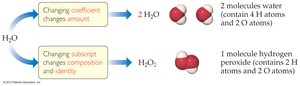
Subscripts indicate the number of atoms of each element in a molecule, while coefficients indicate the number of molecules. Changing a coefficient changes the amount, while changing a subscript changes the composition and identity of the substance.
Balancing Chemical Equations
Principles of Balancing
Balancing chemical equations ensures the number of atoms of each element is the same on both sides of the equation. The process involves:
Placing whole number coefficients in front of substances that are deficient.
Never changing subscripts to balance an equation.
Balancing each element, starting with the most complex formula.
Balancing polyatomic ions as a single unit if they appear on both sides.
Ensuring coefficients are whole numbers; if fractions appear, multiply the equation by the denominator.
Checking that the smallest whole number ratio of coefficients is used.
Example: Balancing the equation for the formation of water:
There are 4 hydrogen atoms and 2 oxygen atoms on each side.
Step | Description |
|---|---|
Write correct formulas | Ensure all reactants and products are written correctly |
Balance elements | Start with the most complex formula |
Balance polyatomic ions | As a unit if present on both sides |
Use whole number coefficients | Multiply by denominator if fractions appear |
Check atom counts | Verify equal numbers on both sides |
Use smallest ratio | Divide coefficients by common factor if possible |
Additional info: Balancing equations is essential for obeying the law of conservation of mass, which states that matter cannot be created or destroyed in a chemical reaction.
