 뒤로
Classification and Types of Chemical Reactions
스터디 가이드 - 스마트 노트
 자료에 맞춘 맞춤형 노트, 핵심 정의, 예시, 맥락을 확장해 제공합니다.
Classifying Chemical Reactions
Overview of Reaction Types
Chemical reactions can be classified into several main types based on the nature of the reactants and products. Understanding these classifications helps predict the outcomes of reactions and their practical applications in chemistry.
Combination (Synthesis) Reactions: Two or more simpler substances combine to form a more complex compound.
Decomposition Reactions: A single compound breaks down into two or more simpler substances, often requiring heat.
Single-Replacement Reactions: An element replaces another element in a compound, typically involving metals.
Double-Replacement Reactions: Two compounds exchange ions to form two new compounds.
Neutralization Reactions: An acid and a base react to form water and a salt.
Combination Reactions
Definition and General Characteristics
A combination reaction (also called a synthesis reaction) involves the joining of two or more substances to form a single product. These reactions are fundamental in the formation of compounds from elements.
General Equation:
Example: Formation of water from hydrogen and oxygen:
Metals with Oxygen
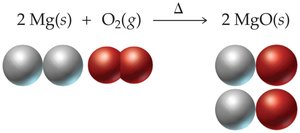
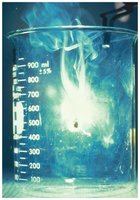
When a metal reacts with oxygen, a metal oxide is produced. This is a common type of combination reaction.
Example: Magnesium reacts with oxygen to form magnesium oxide:
Nonmetals with Oxygen
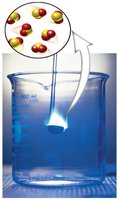
Nonmetals also react with oxygen to form nonmetal oxides. These reactions are important in environmental and industrial chemistry.
Example: Sulfur reacts with oxygen to produce sulfur dioxide:
Metal and Nonmetal Reactions
Metals and nonmetals can react in combination reactions to form ionic compounds. This process is essential in the formation of salts.
Example: Lithium reacts with bromine gas to produce lithium bromide:

Decomposition Reactions
Definition and General Characteristics
A decomposition reaction involves breaking down a single compound into two or more simpler substances. These reactions often require energy input, such as heat.
General Equation:
Example: Decomposition of water:
Examples of Decomposition Reactions
Mercury(II) oxide decomposition:
Calcium carbonate decomposition:

Single-Replacement Reactions
Activity Series Concept
In a single-replacement reaction, a more active metal displaces a less active metal from a compound or solution. The activity series ranks metals by their ability to participate in these reactions.
General Equation:
Activity Series: Metals higher in the series are more likely to replace those below them.

Aqueous Acid Displacements
Metals that are more active than hydrogen react with acids to produce hydrogen gas and an ionic compound. Less active metals do not react with acids.
Example: Zinc reacts with hydrochloric acid:

Active Metals and Water
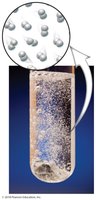
Some metals are active enough to react directly with water, producing a metal hydroxide and hydrogen gas. These are called active metals.
Example: Sodium reacts with water:
Summary Table: Types of Chemical Reactions
The following table summarizes the main types of chemical reactions discussed:
Reaction Type | General Equation | Example |
|---|---|---|
Combination | ||
Decomposition | ||
Single-Replacement | ||
Double-Replacement | ||
Neutralization | Acid + Base Salt + Water |
Additional info:
These classifications are foundational for understanding chemical reactivity, predicting products, and designing laboratory experiments in general chemistry.
