 뒤로
General Chemistry Exam 1 Comprehensive Study Guide
스터디 가이드 - 스마트 노트
 자료에 맞춘 맞춤형 노트, 핵심 정의, 예시, 맥락을 확장해 제공합니다.
Chemical Tools: Experimentation & Measurement
Scientific Method and Measurement
The scientific method is a systematic approach to investigation, involving observation, hypothesis formation, experimentation, and theory/law development. Measurements in chemistry require precision and accuracy, and understanding the difference between qualitative and quantitative observations is essential.
Scientific Method: Steps include observation, hypothesis, experiment, theory, and law.
Qualitative vs. Quantitative: Qualitative describes qualities (color, texture), quantitative involves numbers (mass, volume).
Hypothesis: A testable statement, often in "If..., then..." format.
Theory: An explanation supported by evidence.
Law: A statement describing consistent natural phenomena.
Domains: Macroscopic (visible), microscopic (atomic/molecular), symbolic (chemical notation).
Units, SI System, and Prefixes
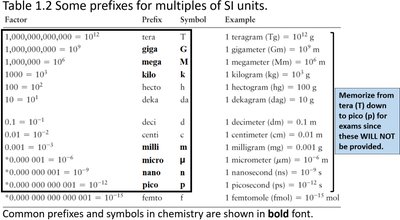
Chemistry uses the International System of Units (SI) for measurement. Prefixes indicate multiples or fractions of base units, and conversion between units is a fundamental skill.
Base Units: Gram (g), meter (m), liter (L), second (s).
Prefixes: Used to express multiples/fractions of units (e.g., kilo-, milli-, micro-).
Conversion Factors: Used in dimensional analysis to convert between units.
Significant Figures and Scientific Notation
Significant figures reflect the precision of a measurement. Scientific notation is used to express very large or small numbers.
Significant Figures: Rules for zeros (leading, captive, trailing).
Scientific Notation: Expresses numbers as .
Exact vs. Measured Numbers: Exact numbers have infinite sig figs; measured numbers are limited by instrument precision.
Calculation Rules: Addition/subtraction: least decimal places; multiplication/division: least sig figs.
Precision, Accuracy, and Error
Precision refers to the consistency of measurements, while accuracy is how close a measurement is to the true value. Errors can be systematic or random.
Precision: Consistency of repeated measurements.
Accuracy: Closeness to the true value.
Systematic Error: Consistent bias in measurement.
Random Error: Variability due to unpredictable factors.
Glassware, Meniscus, and Volume Measurement
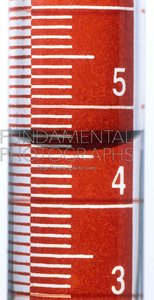
Reading volumes accurately requires attention to the meniscus and the precision of the instrument.
Meniscus: The curve at the surface of a liquid; read at the lowest point.
Volume Precision: Determined by the number of imprinted digits on glassware.
Volume by Displacement: Used for irregular objects; difference in liquid volume before and after immersion.
Fundamental Conversion Factors
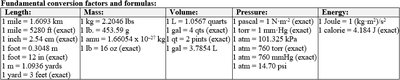
Conversion factors are essential for translating between units of length, mass, volume, pressure, and energy.
Length: 1 inch = 2.54 cm (exact), 1 mile = 1.609 km.
Mass: 1 lb = 453.59 g.
Volume: 1 L = 1.057 qt.
Pressure: 1 atm = 760 mmHg.
Energy: 1 calorie = 4.184 J.
Atoms, Molecules & Ions
Atomic Structure and History
The concept of the atom has evolved through scientific discoveries. Key experiments and scientists contributed to our understanding of atomic structure.
Atom: Smallest unit of matter retaining chemical properties.
Key Scientists: Democritus, Dalton, Thomson, Rutherford, Millikan, Chadwick, Nagaoka, Goldstein.
Experiments: Cathode Ray (Thomson, discovered electron), Oil Drop (Millikan, measured electron charge), Gold Foil (Rutherford, discovered nucleus).
Nuclear Atomic Model: Electrons in cloud, protons and neutrons in nucleus.
Subatomic Particles
Atoms are composed of electrons (e–), protons (p+), and neutrons (n0). Their arrangement determines atomic properties.
Electron: Negative charge, found in electron cloud.
Proton: Positive charge, found in nucleus.
Neutron: Neutral, found in nucleus.
Atomic Number (Z): Number of protons.
Mass Number (A): Protons + neutrons.
Isotopes: Atoms of same element with different neutron numbers.
Ions: Atoms/molecules with net charge (cations: positive, anions: negative).
Periodic Table and Element Classification
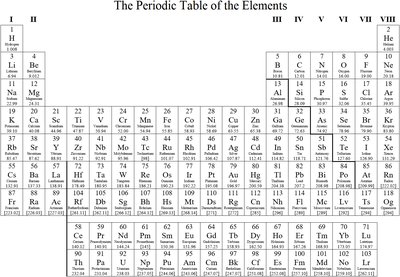
The periodic table organizes elements by atomic number and properties. Groups/families and periods indicate similarities.
Groups/Families: Vertical columns (e.g., Alkali metals, Halogens).
Periods: Horizontal rows.
Metals, Nonmetals, Metalloids: Classified by properties and location.
Diatomic Elements: H2, N2, O2, F2, Cl2, Br2, I2.
Atomic Mass and Isotopic Abundance
Atomic mass is calculated from the masses and abundances of isotopes. The unit is atomic mass unit (amu).
Atomic Mass: Weighted average of isotopic masses.
Fractional Abundance: Proportion of each isotope.
Calculation:
Mass Relationships in Chemical Reactions
Law of Conservation of Mass and Matter
Mass is conserved in chemical reactions; atoms are neither created nor destroyed.
Law of Conservation of Mass: Total mass remains constant during a reaction.
Law of Definite Proportions: A compound always contains the same elements in the same ratio.
Law of Multiple Proportions: Elements combine in simple ratios.
Formulas and Nomenclature
Chemical formulas represent the composition of compounds. Nomenclature rules differ for ionic, covalent, and acid compounds.
Ionic Compounds: Metal + nonmetal, use crisscross method for formula.
Covalent Compounds: Nonmetals, use Greek prefixes for naming.
Acids: Binary (hydro-root-ic), oxyacids (-ous, -ic).
Polyatomic Ions: Charged groups of atoms (e.g., NO3–, SO42–).
Calculations: Density, Percent Error, and Dimensional Analysis
Density, percent error, and dimensional analysis are key calculations in chemistry.
Density:
Percent Error:
Dimensional Analysis: Use conversion factors to solve unit problems.
Lab Techniques and Procedures
Separation Techniques
Mixtures can be separated by physical methods such as filtration, crystallization, distillation, chromatography, and mass spectroscopy.
Filtration: Separates solids from liquids.
Crystallization: Forms pure solid from solution.
Distillation: Separates based on boiling points.
Chromatography: Separates based on movement through a medium.
Mass Spectroscopy: Identifies compounds by mass.
Reading Measuring Devices
Proper reading of measuring devices is crucial for accuracy. The meniscus and imprinted digits indicate precision.
Graduated Cylinder: Read at the bottom of the meniscus.
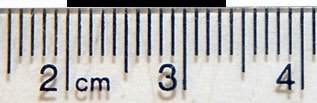
Metric Ruler: Read to the nearest marked division.
Mathematical Operations and Functions
Temperature Conversions
Temperature can be converted between Celsius, Fahrenheit, and Kelvin using specific formulas.
Celsius to Fahrenheit:
Celsius to Kelvin:
Practice with Calculations
Practice problems include unit conversions, density calculations, and significant figure application.
Unit Conversion: Use conversion factors to change units (e.g., microseconds to seconds).
Density Calculation:
Significant Figures: Apply rules for addition/subtraction and multiplication/division.
Appendix: SI Prefixes Table
Factor | Prefix | Symbol | Example |
|---|---|---|---|
1,000,000,000,000 | tera | T | 1 teragram (Tg) = 1012 g |
1,000,000,000 | giga | G | 1 gigameter (Gm) = 109 m |
1,000,000 | mega | M | 1 megameter (Mm) = 106 m |
1,000 | kilo | k | 1 kilogram (kg) = 103 g |
100 | hecto | h | 1 hectogram (hg) = 102 g |
10 | deka | da | 1 dekagram (dag) = 101 g |
0.1 | deci | d | 1 decimeter (dm) = 0.1 m |
0.01 | centi | c | 1 centimeter (cm) = 0.01 m |
0.001 | milli | m | 1 milligram (mg) = 0.001 g |
0.000001 | micro | μ | 1 microsecond (μs) = 10-6 s |
0.000000001 | nano | n | 1 nanosecond (ns) = 10-9 s |
0.000000000001 | pico | p | 1 picosecond (ps) = 10-12 s |
Additional info: Students should memorize prefixes from tera (T) down to pico (p) for exams.
