 뒤로
General Chemistry Fundamentals: Matter, Measurement, Atomic Structure, and Nomenclature
스터디 가이드 - 스마트 노트
 자료에 맞춘 맞춤형 노트, 핵심 정의, 예시, 맥락을 확장해 제공합니다.
Introduction to Chemistry
Definition and Scope
Chemistry is an experimental science that studies the interactions of matter and energy, as well as the changes that matter undergoes. It is foundational to understanding the physical world and is closely tied to technology and society.
Matter: Anything that has mass and occupies space.
Energy: The capacity to do work; cannot be created or destroyed (Law of Conservation of Energy).
Classification of Matter
Matter exists in three primary forms:
Solid: Fixed volume and shape (e.g., desk).
Liquid: Fixed volume, adopts container shape (e.g., juice).
Gas: Adopts both container's shape and volume (e.g., air).
Elements and Compounds
Element: Simplest stable form of matter; cannot be broken down by physical means.
Compound: Pure substance formed from elements via chemical reactions.
Mixture: Combination of substances that can be separated by physical means.
Measurement and Units
SI Units and Metric System
The International System of Units (SI) provides a universal set of measurements for reproducibility in science.
Mass: gram (g)
Length: meter (m)
Time: second (s)
Temperature: kelvin (K)
Volume: liter (L)
Amount of substance: mole (mol)
Metric Prefixes
Metric prefixes indicate orders of magnitude and are essential for expressing measurements conveniently. 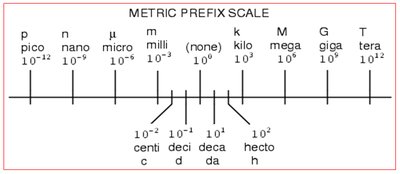
Scientific Notation
Scientific notation is used to express very large or small numbers efficiently.
Example: atoms in 1 mole.
Example: kg (mass of an electron).
Temperature and Its Measurement
Temperature Scales
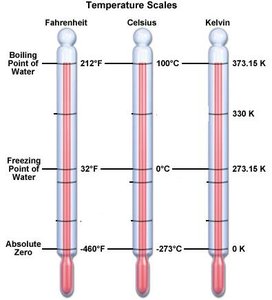
There are three main temperature scales: Fahrenheit, Celsius, and Kelvin.
Fahrenheit (°F): Based on freezing and boiling points of water, and human body temperature.
Celsius (°C): Based on water's freezing (0°C) and boiling (100°C) points.
Kelvin (K): Absolute scale, starts at absolute zero (0 K).
Temperature Conversion Formulas
Dimensional Analysis and Derived Units
Dimensional Analysis
Dimensional analysis is a method for converting between units using conversion factors.
Example: Converting hours to seconds, feet to yards, etc.
For squared and cubed conversions, square or cube the conversion factor.
Derived Units
Area:
Volume:
Density:
Significant Figures and Measurement Uncertainty
Significant Figures
Significant figures reflect the precision of a measurement.
Non-zero digits are always significant.
Zeros between non-zeros are significant.
Zeros to the right of a decimal and non-zero are significant.
Leading zeros are not significant.
Rules for Calculations
Addition/Subtraction: Answer has the same number of decimal places as the least precise measurement.
Multiplication/Division: Answer has the same number of significant figures as the measurement with the fewest significant figures.
Atomic Theory and Structure
Dalton's Atomic Theory
Dalton proposed that elements are made of atoms, all atoms of an element are identical, and atoms combine to form compounds. Atoms are not created or destroyed in chemical processes. 
Structure of the Atom
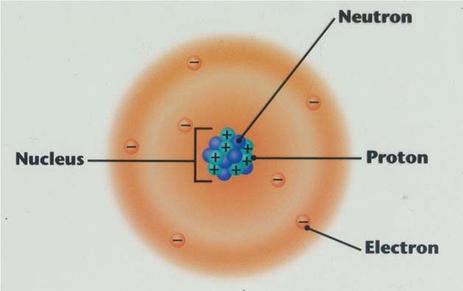
Atoms consist of a nucleus (protons and neutrons) surrounded by electrons.
Proton (P+): Charge +1, mass ≈ 1 amu
Neutron (N): No charge, mass ≈ 1 amu
Electron (e-): Charge -1, mass ≈ g
Experimental Proofs
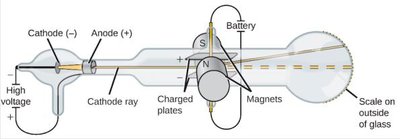
Cathode Ray Tube (Thomson): Demonstrated the existence of electrons and measured their charge-to-mass ratio.
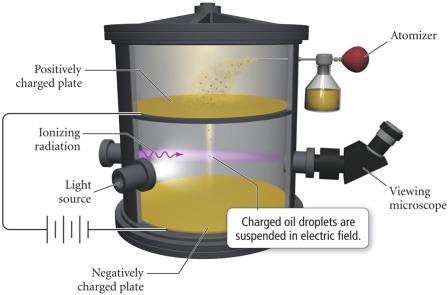
Millikan Oil Drop Experiment: Determined the charge of the electron.
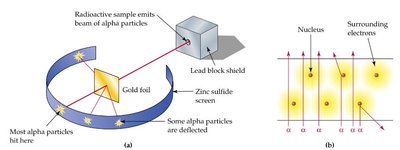
Rutherford Gold Foil Experiment: Revealed the existence of the atomic nucleus.
Isotopes and Atomic Mass
Isotopes
Isotopes are atoms of the same element with different numbers of neutrons. 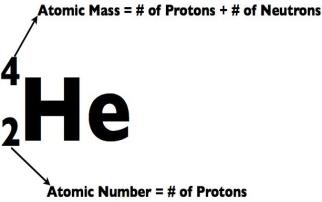
Atomic Mass Calculation
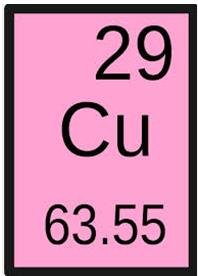
Atomic mass is the weighted average of all naturally occurring isotopes.
Isotope | Percent Abundance | Atomic Mass (g/mol) |
|---|---|---|
Cu | 69.17% | 62.9396 |
Cu | 30.83% | 64.9278 |
Weighted Average: g/mol | ||
The Mole and Avogadro's Number
Definition of the Mole
The mole is a counting unit in chemistry, defined as the number of atoms in exactly 12 g of C.
1 mole = entities (Avogadro's number)
Atomic mass in amu is numerically equal to grams per mole.
Periodic Table and Periodic Properties
Organization of the Periodic Table
Ordered by increasing atomic number.
Metals on the left, non-metals on the right.
Vertical columns are called Groups (families).
Group 8: Noble gases (unreactive, 0 charge).
Group 7: Halogens (want -1 charge, diatomic).
Group 6: Chalcogens (want -2 charge).
Periodic Trends: Typical Charges
Group | Charge | Family Name |
|---|---|---|
I | +1 | Alkali metals |
II | +2 | Alkaline earth metals |
III | +3 | Boron family |
IV | +/-4 | Carbon family |
V | -3 | Nitrogen family |
VI | -2 | Oxygen family (chalcogens) |
VII | -1 | Halides (halogens) |
VIII | 0 | Noble gases |
Ions and Ionic Compounds
Formation of Ions
Metals lose electrons to form cations (positive charge).
Nonmetals gain electrons to form anions (negative charge).
Charge is determined by the difference between protons and electrons.
Ionic Compounds
Ionic compounds are formed by pairing oppositely charged ions to achieve a net charge of zero.
Held together by Coulombic force:
Binary ionic compounds: NaCl, CaO, MgS, RbBr
Polyatomic Ions
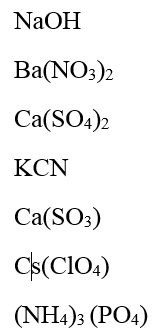
Polyatomic ions are groups of atoms that carry a charge and can form ionic compounds.
Examples: CN- (cyanide), HCO3- (bicarbonate), OH- (hydroxide), NH4+ (ammonium)
Molecular Compounds and Covalent Bonds
Molecular Compounds
Molecular compounds are typically composed of nonmetal atoms bound together via covalent bonds, where electrons are shared.
Electronegativity difference < 2.0
Examples: H2O, CH4, PF3, PF5
Mixtures and Their Types
Types of Mixtures
Homogeneous: Uniform throughout (e.g., air, martini, bronze).
Heterogeneous: Components visible (e.g., granite, blood).
Colloids: Intermediate, particles not visible to naked eye (e.g., milk, jello, fog).
Nomenclature of Compounds
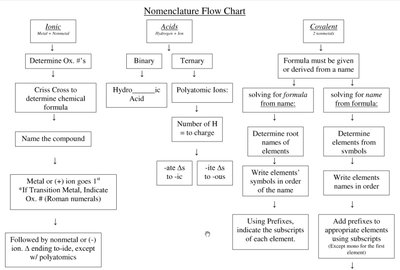
Naming Ionic Compounds
Cation name first (same as metal name).
If transition metal, include oxidation state in Roman numerals.
Anion name: root of non-metal + "-ide".
Example: NaCl (sodium chloride), Fe2O3 (iron(III) oxide).
Naming Nonmetallic Binary Compounds
Name element with lowest group number first.
Second element named as anion with "-ide".
Use Greek prefixes to indicate number of each element.
Example: CO2 (carbon dioxide), N2O5 (dinitrogen pentoxide).
Naming Hydrate Compounds
Name compound as above.
Add Greek prefix in front of "hydrate" to indicate number of water molecules.
Example: CuSO4·2H2O (copper(II) sulfate dihydrate).
Polyatomic Ion Nomenclature
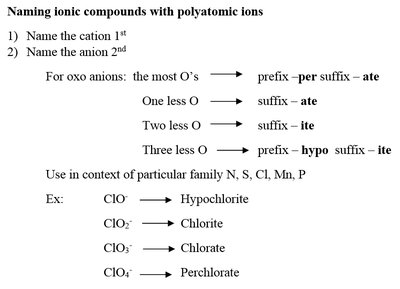
For oxo anions:
Most O's: prefix "per" + suffix "ate"
One less O: suffix "ate"
Two less O: suffix "ite"
Three less O: prefix "hypo" + suffix "ite"
Example: ClO- (hypochlorite), ClO2- (chlorite), ClO3- (chlorate), ClO4- (perchlorate)
Summary Table: Key Concepts
Concept | Definition/Formula | Example |
|---|---|---|
Density | Water: | |
Scientific Notation | ||
Temperature Conversion | ||
Mole | Atoms in 12 g C | |
Atomic Mass | Weighted average of isotopes | Cu: 63.55 g/mol |
Additional info:
Some context and examples were expanded for clarity and completeness.
Tables and images were recreated and included only when directly relevant to the explanation.
