 뒤로
General Chemistry Study Guide: Atomic Radii, Bond Lengths, Ionization Energies, and Periodic Trends
스터디 가이드 - 스마트 노트
 자료에 맞춘 맞춤형 노트, 핵심 정의, 예시, 맥락을 확장해 제공합니다.
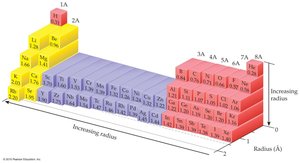
Q1. Use Figure 7.7 to predict the lengths of the C—S, C—H, and S—H bonds in methyl mercaptan (CH3SH).
Background
Topic: Bond Lengths and Atomic Radii
This question tests your ability to estimate bond lengths in a molecule using the concept of bonding atomic radii. The bond length between two atoms is often approximated as the sum of their bonding atomic radii.
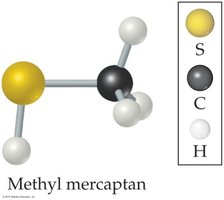
Key Terms and Formulas:
Bonding atomic radius: The effective size of an atom when it is bonded to another atom.
Bond length: The distance between the nuclei of two bonded atoms.
Formula:
Step-by-Step Guidance
Identify the atoms involved in each bond: C—S, C—H, and S—H.
Refer to Figure 7.7 to find the bonding atomic radii for C, S, and H.
Set up the calculation for each bond length using the formula above.
For example, for the C—S bond:
Repeat for C—H and S—H bonds, but do not compute the final values yet.
Try solving on your own before revealing the answer!
Final Answer:
C—S bond length = 0.76 Å + 1.05 Å = 1.81 Å
C—H bond length = 0.76 Å + 0.31 Å = 1.07 Å
S—H bond length = 1.05 Å + 0.31 Å = 1.36 Å
These values are close to experimentally measured bond lengths, but bonds involving hydrogen often show larger deviations from predicted values.
Q2. Hypothetical elements X and Y form a molecule XY2. The X—X distance in elemental X is 2.04 Å, and the Y—Y distance in elemental Y is 1.68 Å. What would you predict for the X—Y distance in the XY2 molecule?
Background
Topic: Estimating Bond Lengths Using Atomic Radii
This question tests your ability to estimate the bond length between two different atoms in a molecule based on their atomic radii, which can be inferred from the bond distances in their elemental forms.
Key Terms and Formulas:
Bonding atomic radius: Half the bond distance in the elemental form (for diatomic molecules).
Bond length: The sum of the bonding atomic radii of the two atoms.
Formula:
Step-by-Step Guidance
Calculate the bonding atomic radius for X:
Calculate the bonding atomic radius for Y:
Set up the calculation for the X—Y bond length:
Compare your result to the answer choices provided.
Try solving on your own before revealing the answer!
Final Answer:
X—Y bond length = 1.02 Å + 0.84 Å = 1.86 Å
The predicted X—Y bond length is closest to answer choice (c) 1.86 Å.
Q3. Using Figure 7.7, predict which is longer: the P—Br bond in PBr3 or the As—Cl bond in AsCl3.
Background
Topic: Comparing Bond Lengths Using Atomic Radii
This question tests your ability to use atomic radii to compare the lengths of two different bonds in two molecules.
Key Terms and Formulas:
Bonding atomic radius: The effective size of an atom when bonded.
Bond length: The sum of the bonding atomic radii of the two atoms.
Formula:
Step-by-Step Guidance
Find the atomic radii for P, Br, As, and Cl using Figure 7.7.
Calculate the bond length for P—Br:
Calculate the bond length for As—Cl:
Compare the two calculated bond lengths to determine which is longer.
Try solving on your own before revealing the answer!
Final Answer:
The P—Br bond in PBr3 is longer than the As—Cl bond in AsCl3, because both P and Br have larger atomic radii than As and Cl, respectively.
