 뒤로
General Chemistry Study Guide: Atoms, Measurement, Quantum Mechanics, and Periodic Properties
스터디 가이드 - 스마트 노트
 자료에 맞춘 맞춤형 노트, 핵심 정의, 예시, 맥락을 확장해 제공합니다.
Ch.E - Essentials: Units, Measurement, and Problem Solving
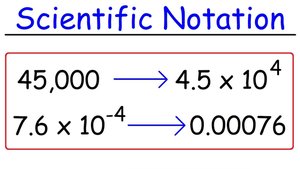
Scientific Notation
Scientific notation is a method used to express very large or very small numbers in a compact form, which is essential for reporting measurements in chemistry.
Format: Numbers are written as a product of a coefficient and a power of ten.
Example: 45,000 is written as ; 0.00076 is written as .
Prefix Multipliers and Unit Conversions
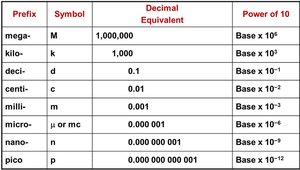
Chemistry uses a variety of prefixes to indicate multiples or fractions of base units. Understanding these is crucial for converting between units.
Common Prefixes: Mega (M), kilo (k), deci (d), centi (c), milli (m), micro (μ), nano (n), pico (p).
Conversion: Use the decimal equivalent or power of ten to convert between units.
Prefix | Symbol | Decimal Equivalent | Power of 10 |
|---|---|---|---|
mega- | M | 1,000,000 | Base x 106 |
kilo- | k | 1,000 | Base x 103 |
deci- | d | 0.1 | Base x 10-1 |
centi- | c | 0.01 | Base x 10-2 |
milli- | m | 0.001 | Base x 10-3 |
micro- | μ or mc | 0.000001 | Base x 10-6 |
nano- | n | 0.000000001 | Base x 10-9 |
pico- | p | 0.000000000001 | Base x 10-12 |
Temperature Scales and Conversions
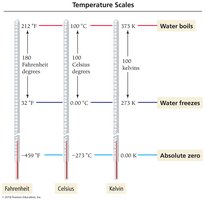
Temperature is measured in Fahrenheit, Celsius, and Kelvin. Understanding their relationships is important for thermochemical calculations.
Conversion formulas:
Celsius to Kelvin:
Celsius to Fahrenheit:
Fahrenheit to Celsius:
Absolute zero: 0 K is the lowest possible temperature.
Ch.1 - Atoms
Classification of Matter
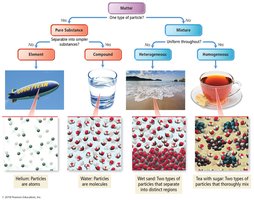
Matter can be classified based on its composition and properties. Understanding these classifications is foundational in chemistry.
Pure substances: Elements and compounds.
Mixtures: Homogeneous (uniform) and heterogeneous (non-uniform).
States of Matter
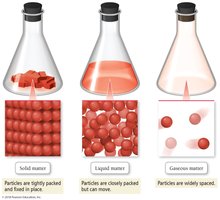
Matter exists in three primary states: solid, liquid, and gas. Each state has distinct particle arrangements and properties.
Solids: Particles are tightly packed and fixed.
Liquids: Particles are closely packed but can move.
Gases: Particles are widely spaced and move freely.
Atomic Structure and Notation
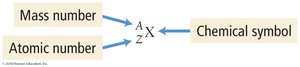
Atoms are composed of protons, neutrons, and electrons. Atomic notation helps identify elements and their isotopes.
Mass number (A): Total number of protons and neutrons.
Atomic number (Z): Number of protons.
Chemical symbol (X): Represents the element.
The Periodic Table
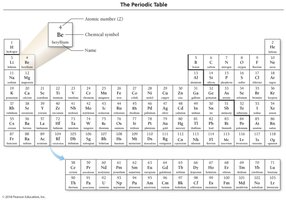
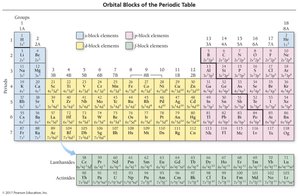
The periodic table organizes elements by increasing atomic number and groups them by similar properties.
Groups: Vertical columns with similar chemical properties.
Periods: Horizontal rows.
Element identification: Based on atomic number, symbol, and name.
Atoms, Moles, and Particles
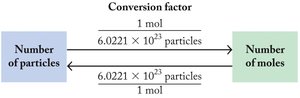
The mole is a fundamental unit in chemistry for counting particles. Avogadro's number () relates moles to particles.
Conversion:
Particles to moles:
Moles to particles:
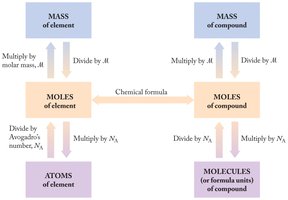
Mass, Moles, Atoms, and Molecules Relationships
Chemical calculations often require converting between mass, moles, atoms, and molecules using molar mass and Avogadro's number.
Molar mass (M): Mass of one mole of a substance.
Avogadro's number (NA): Number of particles in one mole.
Ch.2 - The Quantum-Mechanical Model of the Atom
Wave Nature of Light
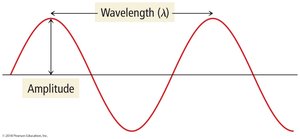
Light exhibits both wave-like and particle-like properties. Key characteristics include wavelength, amplitude, and frequency.
Wavelength (λ): Distance between two consecutive wave crests.
Amplitude: Height of the wave from the center line.
Frequency (ν): Number of wave cycles per second.
Interference and Diffraction
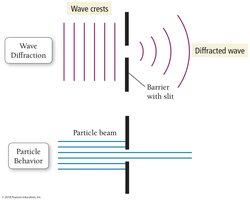
Light waves can interfere and diffract, demonstrating their wave nature. Diffraction occurs when waves bend around obstacles or through slits.
Interference: When two waves overlap, they can reinforce or cancel each other.
Diffraction: Bending of waves around a barrier or through a slit.
Electromagnetic Spectrum
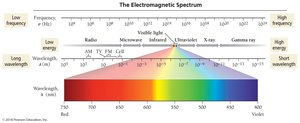
The electromagnetic spectrum includes all types of electromagnetic radiation, from radio waves to gamma rays. Visible light is a small portion of this spectrum.
Long wavelength: Low frequency, low energy (e.g., radio waves).
Short wavelength: High frequency, high energy (e.g., gamma rays).
Frequency, Wavelength, and Energy Relationships
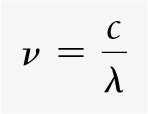
Frequency and wavelength are inversely related, and energy is directly proportional to frequency.
Equation: , where is the speed of light.
Energy of a photon: or , where is Planck's constant.
Ch.2 - Quantum Numbers and Atomic Orbitals
Quantum Numbers
Quantum numbers describe the properties of atomic orbitals and the electrons within them.
Principal quantum number (n): Indicates energy level.
Angular momentum quantum number (l): Defines orbital type (s, p, d, f).
Magnetic quantum number (ml): Specifies orbital orientation.
Spin quantum number (ms): Describes electron spin direction.
Ch.3 - Periodic Properties of the Elements
Periodic Table and Electron Configuration
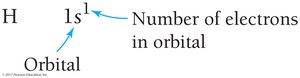
The arrangement of electrons in atoms determines their chemical properties. Electron configuration follows specific rules and patterns.
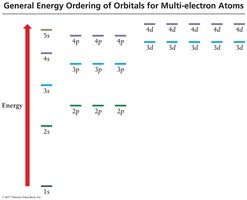
Aufbau principle: Electrons fill lowest energy orbitals first.
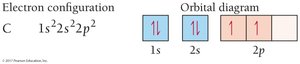
Pauli exclusion principle: No two electrons in an atom can have the same set of quantum numbers.
Hund’s rule: Electrons occupy orbitals singly before pairing.
Core vs Valence Electrons
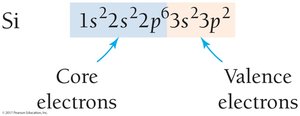
Electrons are classified as core or valence based on their location in the electron configuration.
Core electrons: Located in inner shells, not involved in bonding.
Valence electrons: Located in outermost shell, involved in chemical reactions.
Predicting Ion Charges
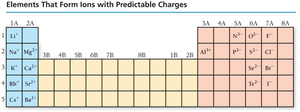
Elements form ions with predictable charges based on their position in the periodic table.
Group 1A: +1 charge
Group 2A: +2 charge
Group 7A: -1 charge
Group 6A: -2 charge
Periodic Trends
Periodic properties change predictably across periods and groups due to electron configuration and nuclear charge.
Atomic radius: Increases down a group, decreases across a period.
Ionization energy: Decreases down a group, increases across a period.
Electron affinity: Becomes more negative across a period.
Metallic character: Increases down a group, decreases across a period.
Property | Trend Down a Column | Reason | Trend Across a Row | Reason |
|---|---|---|---|---|
Atomic Radii | Increasing | Size of outermost occupied orbital increases | Decreasing | Effective nuclear charge increases |
First Ionization Energy | Decreasing | Outermost electrons are further away from nucleus | Increasing | Effective nuclear charge increases |
Electron Affinity | No definite trend | Decreasing (more negative) | Effective nuclear charge increases | |
Metallic Character | Increasing | Ionization energy decreases | Decreasing | Ionization energy increases |
Additional info:
These notes cover foundational concepts in general chemistry, including measurement, atomic structure, quantum mechanics, and periodic properties. They are structured to provide a comprehensive review for exam preparation.
