뒤로
General Chemistry Study Guide: Chemical Reactions, Solutions, and Gases
스터디 가이드 - 스마트 노트
 자료에 맞춘 맞춤형 노트, 핵심 정의, 예시, 맥락을 확장해 제공합니다.
Chapter 4: Chemical Reactions and Quantities
Chemical Equations
Chemical equations represent the reactants and products in a chemical reaction, showing their relative amounts and physical states. The arrow (→) indicates the direction of the reaction, with reactants on the left and products on the right.
Reactants: Substances consumed in the reaction.
Products: Substances formed by the reaction.
Stoichiometry: The quantitative relationship between reactants and products.
Example:
Balancing Chemical Equations
Balancing ensures the same number of each atom on both sides of the equation, reflecting the law of conservation of mass. Only coefficients can be changed, not subscripts.
Steps:
Write the unbalanced equation.
Balance atoms one at a time, starting with the most complex molecule.
Check that all atoms are balanced.
Example:
Physical States in Equations
Physical states are indicated as (s) for solid, (l) for liquid, (g) for gas, and (aq) for aqueous (dissolved in water).
Example:
Polyatomic Ions and Balancing
When polyatomic ions appear unchanged on both sides, balance them as units rather than individual atoms.
Example:
Combustion Reactions
Combustion involves an organic molecule reacting with oxygen to produce carbon dioxide and water.
Example:
Stoichiometry and Mass Relationships
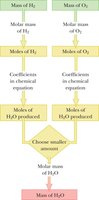
Stoichiometry uses balanced equations to relate masses and moles of reactants and products. Theoretical yield is the maximum possible product.
Steps:
Write the balanced equation.
Convert masses to moles.
Use coefficients to find moles of desired product.
Convert moles to mass.

Limiting Reactants
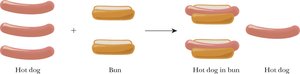
The limiting reactant is the reactant that is completely consumed first, limiting the amount of product formed. Theoretical yield is determined by the limiting reactant.
Example: If you have 3 hot dogs and 2 buns, only 2 hot dogs in buns can be made; buns are the limiting reactant.
Actual Yield and Percent Yield
Actual yield is the measured amount of product obtained. Percent yield compares actual to theoretical yield:
Percent Yield Formula:
Chapter 5: Chemical Reactions in Solution
Molarity and Solution Preparation
Molarity (M) is the concentration of a solution, defined as moles of solute per liter of solution. Solutions are prepared by dissolving a solute in a solvent.
Formula:
Example: Calculate molarity from grams and volume.

Solution Stoichiometry
Stoichiometry in solutions involves using molarity and volume to calculate the amount of reactant or product.
Steps:
Convert volume to moles using molarity.
Use balanced equation coefficients.
Convert moles to mass or volume as needed.
Dilution
Dilution reduces the concentration of a solution by adding solvent. The relationship is given by:
Formula:
Application: Used only for dilution problems.
Solubility and Solubility Rules
Solubility is the extent to which a solute dissolves in a solvent. Solubility rules help predict whether an ionic compound is soluble or insoluble in water.
Soluble: Group 1A cations, NH4+, NO3-, ClO4-, CH3COO-, Cl-, Br-, I- (except with Ag+, Hg2+, Pb2+), SO42- (except with Ag+, Pb2+, Ca2+, Sr2+, Ba2+).
Insoluble: CO32-, PO43-, OH-, S2- (except with Group 1A, NH4+, Ca2+, Sr2+, Ba2+).
Precipitation Reactions
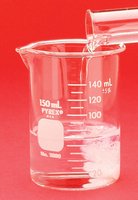
Precipitation reactions form an insoluble product (precipitate) from soluble reactants. These are double replacement reactions.
Example:
Ionic and Net Ionic Equations
Ionic equations show all ions separately. Net ionic equations show only the ions involved in the reaction, omitting spectator ions.
Example:
Acids and Bases
Acids dissociate in water to produce H+ (or H3O+), while bases produce OH-. Neutralization reactions between acids and bases yield water and a salt.
Example:
Titration and Volumetric Analysis
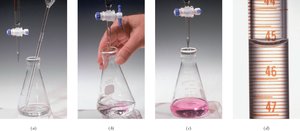
Titration determines the concentration of a solution by reacting it with a solution of known concentration. The equivalence point is detected with an indicator.
Application: Used to standardize acids and bases.

Redox Reactions
Redox (oxidation-reduction) reactions involve electron transfer. Oxidation is loss of electrons; reduction is gain of electrons. Assign oxidation numbers to track electron movement.
OIL RIG: Oxidation Is Loss, Reduction Is Gain.
Example:

Chapter 6: The Gaseous State
States of Matter
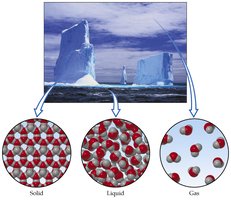
Matter exists as solids, liquids, or gases. Solids have fixed shape and volume, liquids have fixed volume but variable shape, and gases have neither.
Condensed Phases: Solids and liquids are closely packed and resist volume change.
Density
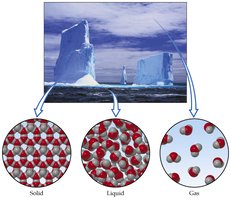
Density is mass per unit volume. Gases have much lower density than solids and liquids.
Pressure and Measurement
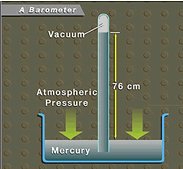
Pressure is force per unit area. Atmospheric pressure is measured with a barometer. Common units include atm, mm Hg, torr, Pa, and psi.
Formula:
1 atm = 760 mm Hg = 760 torr = 101.325 kPa = 14.7 psi$
Gas Laws
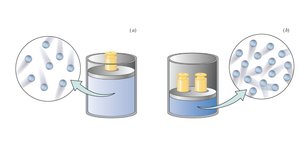
Gas laws describe relationships between pressure, volume, temperature, and amount (moles) of gas.
Boyle’s Law: (at constant T)
Charles’ Law: (at constant P)
Avogadro’s Law: (at constant P and T)
Combined Gas Law:


The Ideal Gas Law
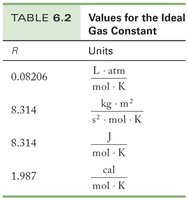
The ideal gas law combines previous laws into one equation:
Formula:
R: Ideal gas constant (various units)
Molar Mass and Density of Gases
Molar mass is the mass of one mole of a substance. Density of a gas can be calculated using the ideal gas law.
Formula:
Stoichiometry with Gases
Stoichiometry calculations for gases use volume and the ideal gas law to relate reactants and products.
Dalton’s Law of Partial Pressures
In a mixture, each gas exerts a partial pressure. The total pressure is the sum of partial pressures.
Formula:
Mole Fraction:
Partial Pressure:
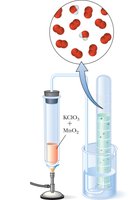
Kinetic Molecular Theory (KMT)
KMT explains gas behavior at the molecular level. Gas particles move randomly, are far apart, and collisions are elastic. Average kinetic energy is proportional to temperature.
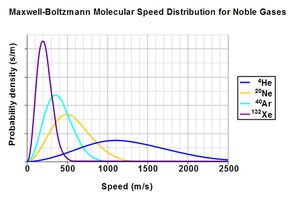
Speed Distribution and Root-Mean-Square Speed
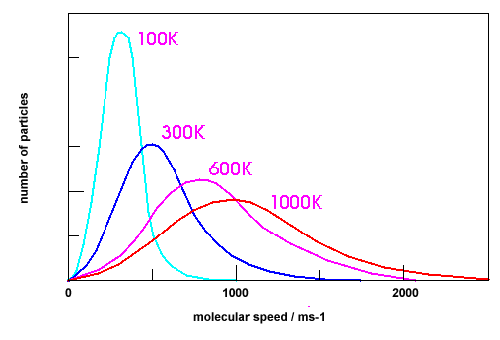
The average speed of gas particles increases with temperature and decreases with molar mass. The root-mean-square (rms) speed is given by:
Formula:
Diffusion and Effusion
Diffusion is the mixing of gases; effusion is the escape of gas through a small hole. Graham’s law relates effusion rate to molar mass:
Formula:
Deviations from Ideal Gas Behavior
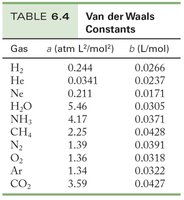
Real gases deviate from ideal behavior at high pressures and low temperatures due to intermolecular attractions and finite particle volume. The van der Waals equation corrects for these deviations:
Formula:
a: Attraction correction
b: Volume correction