 뒤로
General Chemistry Study Guide: Thermochemistry, Atomic Structure, Periodic Trends, Bonding, and States of Matter
스터디 가이드 - 스마트 노트
 자료에 맞춘 맞춤형 노트, 핵심 정의, 예시, 맥락을 확장해 제공합니다.
Thermochemistry
Energy and Internal Energy
Thermochemistry is the study of heat released or absorbed during chemical reactions. The internal energy of a system, denoted as E, is the sum of all kinetic and potential energies of its components.
Change in Internal Energy:
Heat (q): Energy transferred due to temperature difference between system and surroundings.
Work (w): Energy transferred when a force moves an object.
Relationship:
Types of Energy
Kinetic Energy: Energy of motion (e.g., thermal energy from molecular movement).
Potential Energy: Energy due to position or composition (e.g., chemical energy in bonds).
Exothermic and Endothermic Processes
Exothermic: Heat is released by the system ().
Endothermic: Heat is absorbed by the system ().
Units of Energy
Joule (J): SI unit of energy.
Calorie (cal): Amount of energy required to raise 1 g of water by 1°C.
Nutritional Calorie: 1 Cal = 1000 cal
State Functions
State functions depend only on the current state, not the path taken. Examples: internal energy, enthalpy.
Pathway Independence: The value is the same regardless of the process.
First Law of Thermodynamics
Law: Energy can neither be created nor destroyed; it can only be transferred or transformed.
Equation:
Enthalpy
Enthalpy (H) is the heat content of a substance. The change in enthalpy () is the heat given off or absorbed at constant pressure.
Enthalpy of Reaction:
Exothermic: (heat released)
Endothermic: (heat absorbed)
Calorimetry
Calorimetry measures the heat transferred in a reaction or process.
Heat Capacity (C): Amount of heat required to raise the temperature of a substance by 1°C.
Specific Heat (c): Amount of heat required to raise 1 g of a substance by 1°C.
Formula:
Example: To heat 35.0 g of Al from 55.0°C to 75.0°C with :
Hess's Law
Hess's Law states that the total enthalpy change for a reaction is the sum of the enthalpy changes for individual steps.
Equation:
Manipulation: Reactions can be added, multiplied, or reversed to find overall .
Standard Enthalpy of Formation
Definition: Enthalpy change for forming 1 mole of a compound from its elements in their standard states.
Formula:
Atomic Structure and Periodic Properties
Electron Configuration and Orbital Diagrams
Electron configuration describes the arrangement of electrons in an atom. Orbital diagrams visually represent electron placement in orbitals.
Subshells: s, p, d, f
Energy Levels: 7 principal energy levels
Valence Electrons: Electrons in the outermost shell, involved in bonding.
Sublevel Energy Splitting and Shielding
Shielding: Inner electrons reduce the effective nuclear charge felt by valence electrons.
Effective Nuclear Charge (): The net positive charge experienced by valence electrons.
Periodic Trends
Atomic Radius: Increases down a group, decreases across a period.
Ion Size: Cations are smaller, anions are larger than their parent atoms.
Ionization Energy: Energy required to remove an electron. Increases across a period, decreases down a group.
Electron Affinity: Energy change when an electron is added. Increases across a period, decreases down a group.
Metallic Character: Increases down a group, decreases across a period.
Isoelectronic Particles
Definition: Species with the same number of electrons.
Example: Ne, Na+, Mg2+ are isoelectronic.
Chemical Bonding
Types of Bonds
Ionic Bond: Attraction between cations and anions via electrostatic force.
Covalent Bond: Sharing of electron pairs between atoms.
Metallic Bond: "Sea" of electrons shared among metal atoms.
Macromolecular Crystals: Large networks of covalently bonded atoms.
Valence Electrons and Lewis Structures
Valence Electrons: Outermost electrons involved in bonding.
Lewis Structures: Electron dot diagrams showing bonding and lone pairs.
Steps: Count valence electrons, choose central atom, arrange atoms, assign bonds and lone pairs, check octet rule.
Exceptions to the Octet Rule
Electron Deficient: Central atom has less than 8 electrons (e.g., BCl3).
Expanded Octet: Central atom has more than 8 electrons (period 3 or higher, e.g., SF6).
Odd Number of Electrons: Molecules with unpaired electrons (e.g., NO2).
Electronegativity and Bond Polarity
Electronegativity: Atom's ability to attract shared electrons. Increases left to right, bottom to top.
Bond Polarity: Difference in electronegativity determines bond type:
Nonpolar Covalent:
Polar Covalent:
Ionic:
States of Matter and Intermolecular Forces
Properties of Gases, Liquids, and Solids
Gases: Far apart particles, low density, compressible, indefinite shape.
Liquids: Close particles, high density, not compressible, indefinite shape.
Solids: Very close particles, high density, not compressible, definite shape.
Intermolecular Forces
Dispersion (London) Forces: Weak attractions between nonpolar molecules.
Dipole-Dipole: Attractions between polar molecules.
Hydrogen Bonds: Strong dipole-dipole between H and F, O, or N.
Ion-Dipole: Attraction between ions and polar molecules (e.g., salt in water).
Surface Tension, Viscosity, and Capillary Action
Surface Tension: Intermolecular forces at the surface create tension.
Viscosity: Resistance to flow; increases with stronger intermolecular forces.
Capillary Action: Movement of liquid in narrow spaces due to adhesion and cohesion.
Evaporation and Vapor Pressure
Evaporation: Liquid to gas; rate increases with temperature and surface area.
Vapor Pressure: Pressure exerted by vapor above a liquid at equilibrium.
Boiling Point: Temperature at which vapor pressure equals atmospheric pressure.
Changes of State
Specific Heat Capacity (c): Heat required to raise 1 g of substance by 1°C.
Heat of Fusion (): Heat needed to convert solid to liquid.
Heat of Vaporization (): Heat needed to convert liquid to gas.
Formula:
Heating Curve and Phase Changes
Heating Curve: Shows temperature changes and phase transitions as heat is added.
Phase Changes: Melting, freezing, vaporization, condensation, sublimation, deposition.
Phase Diagrams
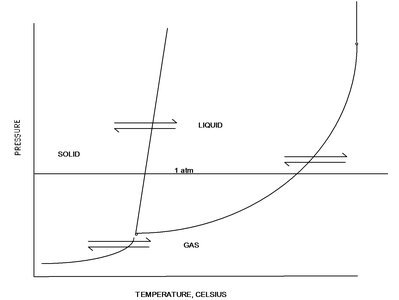
A phase diagram plots pressure vs. temperature, showing regions of stability for solid, liquid, and gas.
Vapor Pressure Curve: Separates gas and liquid.
Fusion Curve: Separates solid and liquid.
Sublimation Curve: Separates solid and gas.
Triple Point: All three phases coexist.
Critical Point: Above this, only supercritical fluid exists.
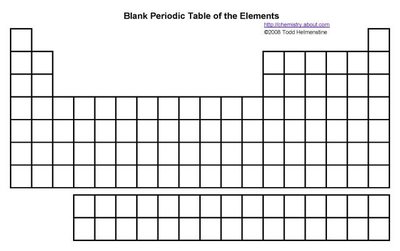
Appendix: Periodic Table
Periodic Table: Fundamental tool for organizing elements by atomic number, electron configuration, and recurring chemical properties.
*Additional info: The periodic table image is included for reference and practice in identifying element positions and periodic trends.*
