 뒤로
Intermolecular Forces: Types, Properties, and Their Effects on Substances
스터디 가이드 - 스마트 노트
 자료에 맞춘 맞춤형 노트, 핵심 정의, 예시, 맥락을 확장해 제공합니다.
Intermolecular and Intramolecular Forces
Definitions and Distinctions
Understanding the difference between intermolecular forces (IMFs) and intramolecular forces is fundamental in chemistry. Intramolecular forces are the strong forces that hold atoms together within a molecule, such as covalent or ionic bonds. Intermolecular forces, in contrast, are weaker attractions that occur between neighboring molecules and are responsible for many physical properties of substances.
Intramolecular forces: Forces within a molecule (e.g., covalent bonds in HCl).
Intermolecular forces: Forces between molecules (e.g., attractions between HCl molecules).
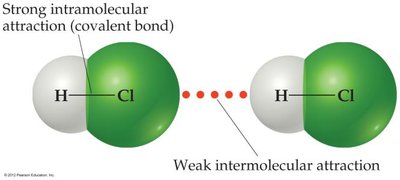
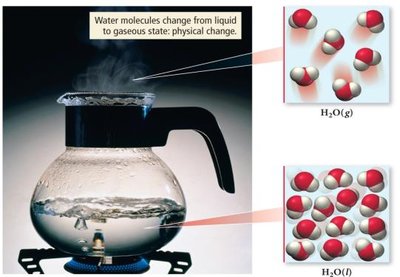
IMFs are generally much weaker than intramolecular forces because they involve smaller charges at greater distances, as described by Coulomb’s Law. For example, breaking the O–H bonds within a water molecule requires much more energy than overcoming the IMFs between water molecules during vaporization.
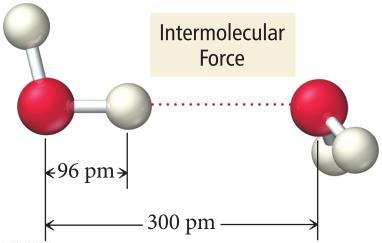
When substances undergo phase changes (e.g., solid to liquid, liquid to vapor), the molecules remain intact; only the IMFs are disrupted, not the intramolecular bonds.
Importance of Intermolecular Forces
Physical Properties and States of Matter
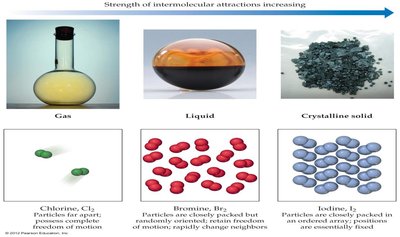
IMFs are crucial in determining the physical properties of substances, such as vapor pressure, melting point, boiling point, and viscosity. The state of matter (solid, liquid, or gas) at room temperature depends on the magnitude of IMFs:
Solids and liquids: Moderate to strong IMFs
Gases: Weak IMFs
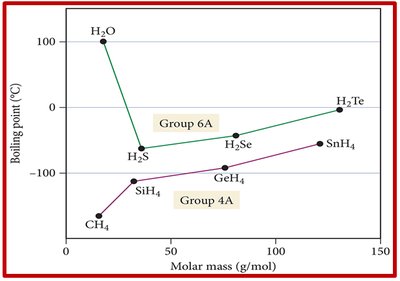
Stronger IMFs lead to higher boiling and melting points.
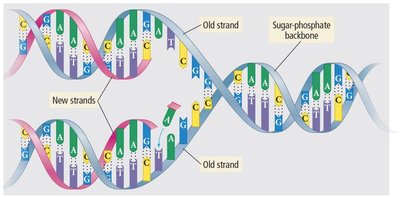
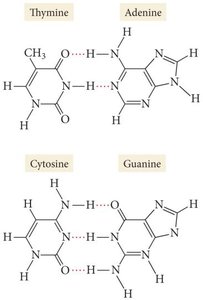
Hydrogen bonding, a specific type of IMF, is essential for the structure of biological molecules like DNA.
Types of Intermolecular Forces
Overview
There are four main types of intermolecular forces:
London Dispersion Forces (present in all molecules and atoms)
Dipole-Dipole Forces (between polar molecules)
Hydrogen Bonding (a special case of dipole-dipole, involving H bonded to F, O, or N)
Ion-Dipole Forces (between ions and polar molecules)
All IMFs arise from attractions between opposite charges, whether permanent or temporary.
London Dispersion Forces (LDFs)
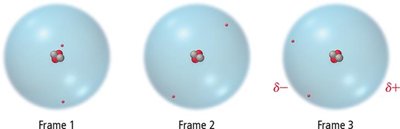
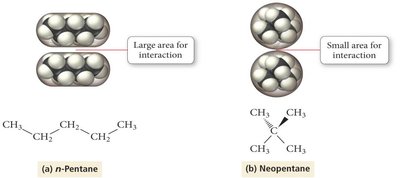
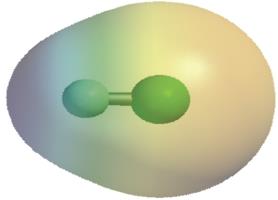
London dispersion forces are the result of temporary fluctuations in electron distribution, creating instantaneous dipoles that induce dipoles in neighboring molecules. These forces are present in all molecules, but are the only IMFs in nonpolar substances.
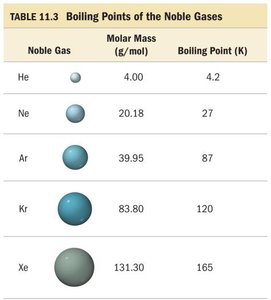
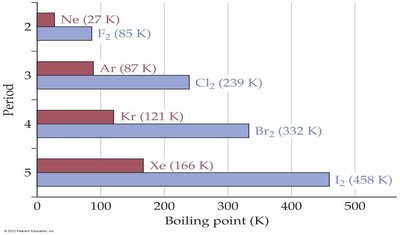
Polarizability: The ease with which the electron cloud can be distorted. Larger atoms/molecules with more electrons are more polarizable and have stronger LDFs.
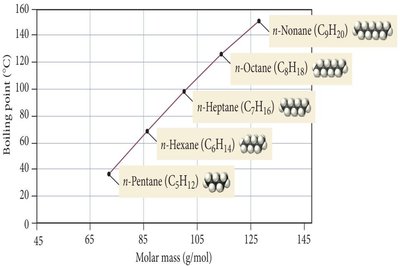
Molar mass: LDF strength increases with increasing molar mass.
Molecular shape: Molecules with greater surface area (e.g., straight chains) have stronger LDFs than compact shapes (e.g., spheres).
Dipole-Dipole Forces
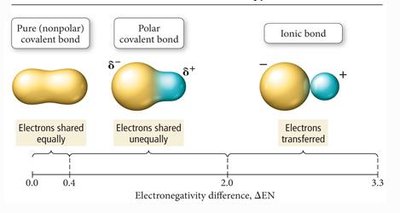
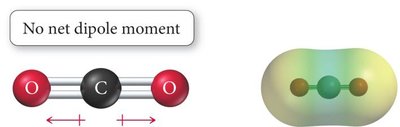
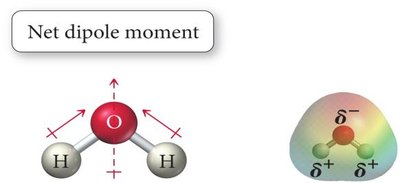
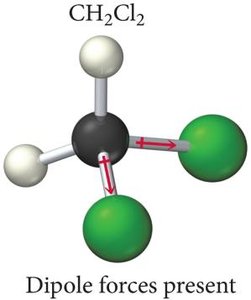
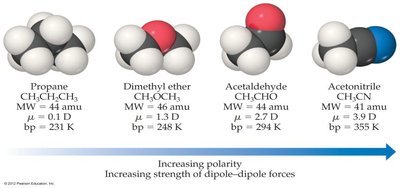
Dipole-dipole forces exist between polar molecules, which have permanent dipoles due to differences in electronegativity between atoms. The positive end of one molecule is attracted to the negative end of another.
Dipole moment (μ): A measure of molecular polarity, given by (where is charge and is distance).
For molecules of similar size and shape, those with greater polarity have higher boiling and melting points.
Miscibility and Polarity
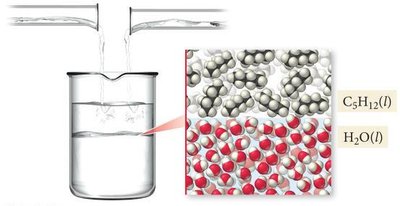
The polarity of molecules determines their miscibility (ability to mix without separating). Polar substances tend to dissolve in polar solvents, and nonpolar substances in nonpolar solvents (“like dissolves like”).
Hydrogen Bonding
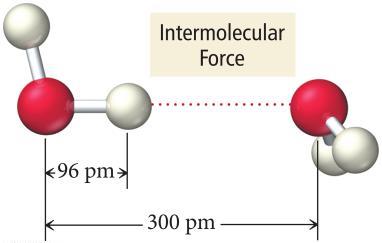
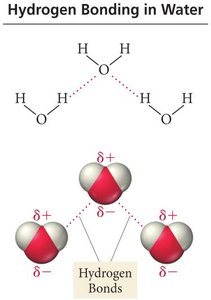
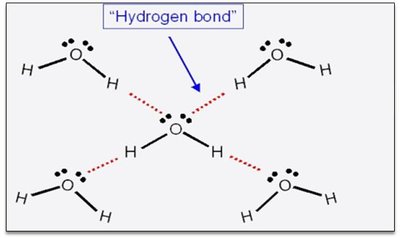
Hydrogen bonding is a strong type of dipole-dipole interaction that occurs when hydrogen is bonded to a highly electronegative atom (F, O, or N). The exposed proton of hydrogen is attracted to a lone pair on a neighboring F, O, or N atom.
Hydrogen bonds are much stronger than regular dipole-dipole or dispersion forces.
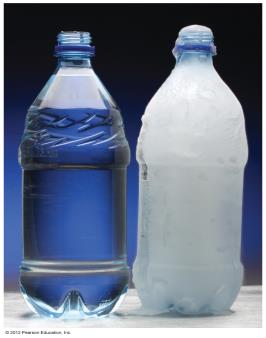
Responsible for unique properties of water, such as its high boiling point and the structure of ice.
Central to the structure of DNA and proteins.
Ion-Dipole Forces
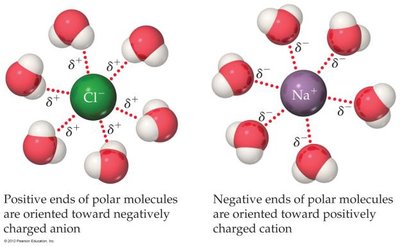
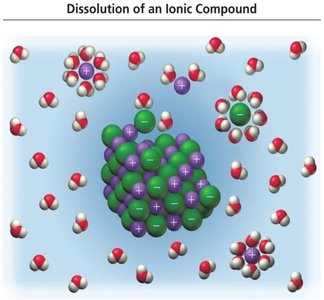
Ion-dipole forces occur when an ionic compound is mixed with a polar solvent, such as water. These are the strongest type of intermolecular force and are responsible for the dissolution of ionic compounds in water.
The strength of ion-dipole forces depends on the ion’s charge and size, and the dipole moment of the solvent.
Cations interact more strongly with dipoles than anions of the same charge due to their smaller size.
Comparison of Intermolecular Forces
Relative Strengths and Effects
The main types of IMFs can be compared as follows:
Type | Present In | Relative Strength |
|---|---|---|
London Dispersion | All molecules and atoms | Weakest |
Dipole-Dipole | Polar molecules | Intermediate |
Hydrogen Bonding | Molecules with H bonded to F, O, or N | Strong |
Ion-Dipole | Ions and polar molecules | Strongest |
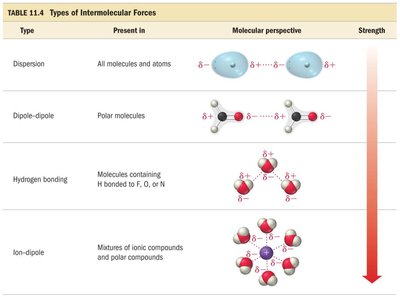
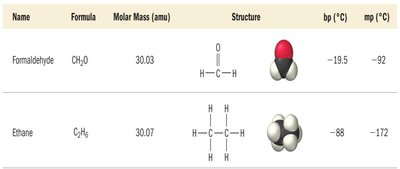
For substances with similar molar masses and shapes, differences in IMFs are due to dipole or hydrogen bonding. For substances with very different molar masses, London forces dominate unless hydrogen bonding is present.
Summary Table: Types of Intermolecular Forces
Type of Force | Occurs Between | Relative Strength | Example |
|---|---|---|---|
London Dispersion | All molecules/atoms | Weakest | He, I2, CCl4 |
Dipole-Dipole | Polar molecules | Intermediate | HCl, CH2Cl2 |
Hydrogen Bonding | H bonded to F, O, or N | Strong | H2O, NH3, HF |
Ion-Dipole | Ions and polar molecules | Strongest | NaCl(aq) |
Key Equations
Dipole Moment:
Practice and Application
Identify the types of IMFs present in a given substance based on its structure and composition.
Predict relative boiling and melting points based on the strength and type of IMFs.
Explain solubility and miscibility using the concept of molecular polarity and IMFs.
