 뒤로
뒤로Introduction to Solutions and Chemical Reactions: Solution Concentration, Types, and Reaction Stoichiometry
스터디 가이드 - 스마트 노트
 자료에 맞춘 맞춤형 노트, 핵심 정의, 예시, 맥락을 확장해 제공합니다.
Introduction to Solutions and Chemical Reactions
Overview
This chapter introduces the fundamental concepts of solutions, their concentrations, and the various types of chemical reactions that occur in aqueous solutions. Understanding these concepts is essential for predicting reaction outcomes and performing quantitative chemical calculations.
Solution Concentration and Solution Stoichiometry
Definitions and Key Concepts
Solution: A homogeneous mixture of two or more substances. The major component is the solvent, and the minor component is the solute.
Aqueous Solution: A solution in which water is the solvent.
Concentration: A measure of the amount of solute dissolved in a given quantity of solvent or solution.
Because solutions are mixtures, their composition can vary. To describe them accurately, we use concentration units.
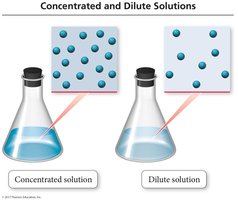
Concentrated vs. Dilute Solutions
Concentrated Solution: Contains a large amount of solute relative to solvent.
Dilute Solution: Contains a small amount of solute relative to solvent.
Molarity (M)
Molarity (M) is the most common unit of concentration in chemistry, defined as:
Allows conversion between moles of solute and volume of solution.
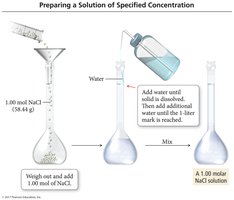
Preparing a Solution of Specified Concentration
Weigh out the required amount of solute.
Dissolve in a portion of solvent.
Transfer to a volumetric flask and dilute to the desired final volume.
Using Molarity in Calculations
Molarity can be used as a conversion factor between moles and liters.
For example, a 0.500 M NaCl solution contains 0.500 mol NaCl per liter of solution.


Solution Dilution
To prepare a less concentrated solution from a stock solution, use the dilution equation:
M1 and V1: Molarity and volume of the concentrated solution.
M2 and V2: Molarity and volume of the diluted solution.
Types of Aqueous Solutions and Solubility
Solubility and Dissolution
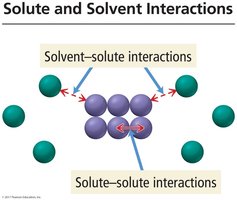
Solubility is the ability of a solute to dissolve in a solvent. Dissolution occurs when solute-solvent attractions overcome solute-solute attractions.
Polarity of Water
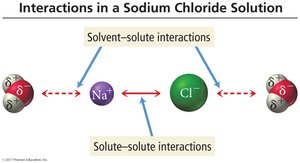
Water is a polar molecule due to its bent shape and uneven electron distribution, resulting in partial negative (δ–) and partial positive (δ+) charges.
Solute-Solvent Interactions in Ionic Solutions
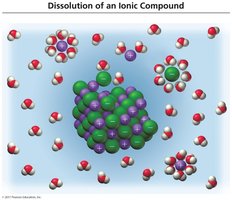
When ionic compounds like NaCl dissolve in water, the ions are stabilized by interactions with water molecules, which are attracted to the ions based on their charges.
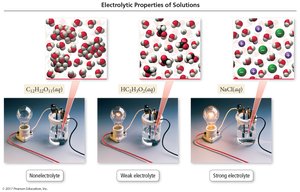
Electrolyte and Nonelectrolyte Solutions
Definitions
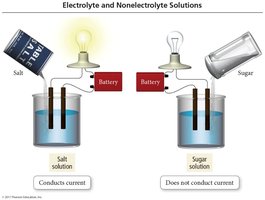
Electrolyte: A substance that conducts electricity when dissolved in water due to the presence of ions.
Nonelectrolyte: A substance that does not conduct electricity in solution because it does not produce ions.
Strong and Weak Electrolytes
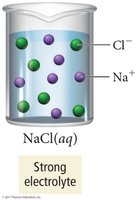
Strong Electrolyte: Completely dissociates into ions in solution (e.g., NaCl).
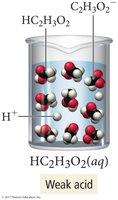
Weak Electrolyte: Partially dissociates into ions (e.g., weak acids like acetic acid).
Nonelectrolyte: Does not dissociate (e.g., sugar).
Solubility of Salts and Solubility Rules
Solubility of Ionic Compounds
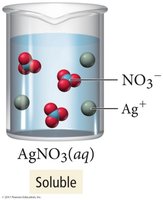
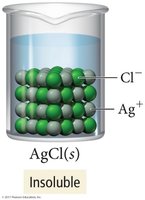
Some ionic compounds are soluble in water, while others are not.
Solubility rules help predict whether a compound will dissolve.
Chemical Reaction Types in Aqueous Solution
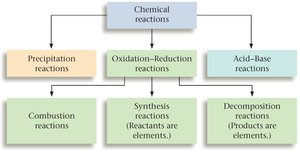
Classification of Reactions
Precipitation Reactions: Formation of an insoluble product (precipitate).
Acid-Base Reactions: Transfer of protons (H+).
Oxidation-Reduction (Redox) Reactions: Transfer of electrons.
Precipitation Reactions
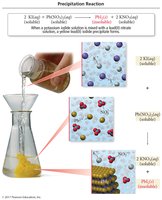
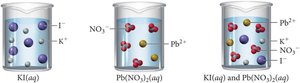
When two aqueous solutions of ionic compounds are mixed, an insoluble compound may form as a precipitate.
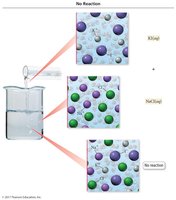
If no insoluble product forms, no reaction occurs.
Predicting Precipitation Reactions
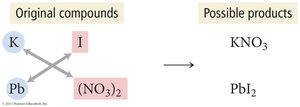
Identify the ions present in each reactant.
Exchange ions to form possible products.
Use solubility rules to determine if a precipitate forms.
Write the balanced equation, indicating states (s, aq).
Representing Aqueous Reactions
Molecular Equation: Shows complete formulas for all reactants and products.
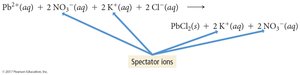
Complete Ionic Equation: Shows all strong electrolytes as ions.
Net Ionic Equation: Shows only the species that actually change during the reaction (spectator ions are omitted).
Acid–Base and Gas-Evolution Reactions
Acid–Base (Neutralization) Reactions
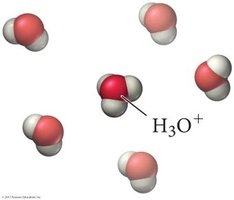
An acid reacts with a base to produce water and a salt. The net ionic equation for a strong acid–strong base reaction is:
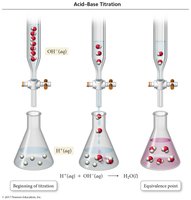
Acid–Base Titration
Titration is a laboratory technique used to determine the concentration of an acid or base by reacting it with a solution of known concentration.
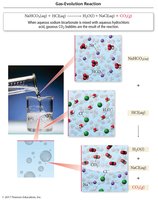
Gas-Evolution Reactions
Some reactions produce a gas either directly or by decomposition of a product. For example, mixing sodium bicarbonate and hydrochloric acid produces carbon dioxide gas.
Oxidation–Reduction (Redox) Reactions
Definitions and Electron Transfer
Oxidation: Loss of electrons (increase in oxidation state).
Reduction: Gain of electrons (decrease in oxidation state).
Oxidizing Agent: Causes oxidation; is reduced.
Reducing Agent: Causes reduction; is oxidized.
Assigning Oxidation States
Free elements: 0
Monatomic ions: Equal to their charge
Sum of oxidation states in a compound: 0
Sum in a polyatomic ion: Equals the ion's charge
Group I metals: +1; Group II metals: +2
Nonmetals: Follow priority rules (e.g., F: –1, O: –2, H: +1)
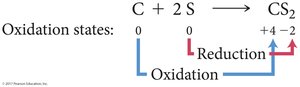
Combustion Reactions
Combustion is a type of redox reaction where a substance reacts with oxygen, producing heat and light. For example:
Synthesis and Decomposition Reactions
Synthesis: Two or more elements or compounds combine to form one product.
Decomposition: A compound breaks down into simpler substances.
Single-Replacement Reactions
In a single-replacement reaction, an element replaces another in a compound. The activity series predicts whether a reaction will occur.
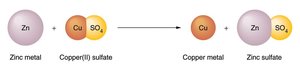
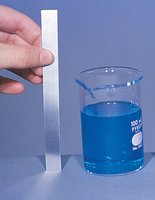
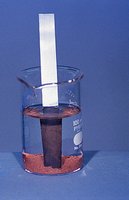
Example: Zn(s) + CuSO4(aq) → Cu(s) + ZnSO4(aq)
Additional info: This guide covers the core concepts of solution chemistry and aqueous reactions, including concentration calculations, solubility, and the main types of chemical reactions encountered in introductory general chemistry.
