 뒤로
Quantum Theory and the Electronic Structure of Atoms: Study Notes
스터디 가이드 - 스마트 노트
 자료에 맞춘 맞춤형 노트, 핵심 정의, 예시, 맥락을 확장해 제공합니다.
Quantum Theory and the Electronic Structure of Atoms
3.1 Energy and Energy Changes
Energy is fundamental to chemistry, as it governs the behavior of atoms and molecules. It exists in two primary forms: kinetic and potential energy.
Kinetic Energy: The energy of motion, given by , where m is mass and u is velocity.
Thermal Energy: A form of kinetic energy associated with the random motion of atoms and molecules.
Potential Energy: Energy due to position. Important types include:
Chemical Energy: Stored within chemical bonds.
Electrostatic Energy: Energy from interactions between charged particles, proportional to , where q1 and q2 are charges and d is distance.
Law of Conservation of Energy: Energy can neither be created nor destroyed; it can only change forms.
Units of Energy: The SI unit is the joule (J). .
3.2 The Nature of Light
Light is a form of electromagnetic radiation, which exhibits both wave-like and particle-like properties.
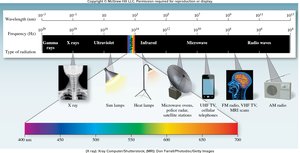
Electromagnetic Spectrum: Includes gamma rays, X-rays, ultraviolet, visible, infrared, microwaves, and radio waves. Visible light is only a small part of the spectrum.
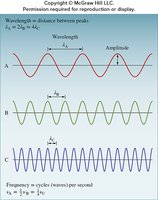
Wave Properties:
Wavelength (λ): Distance between successive wave peaks.
Frequency (ν): Number of waves passing a point per second (Hz).
Amplitude: Height of the wave from the midline to the peak.
Relationship: , where c is the speed of light ().
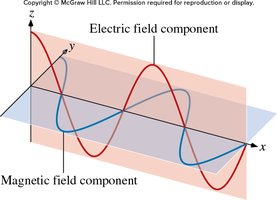
Electromagnetic Waves: Consist of electric and magnetic field components oscillating perpendicular to each other.
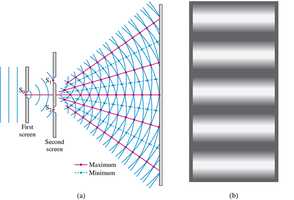
Double-Slit Experiment: Demonstrates the wave nature of light through interference patterns.
3.3 Quantum Theory
Quantum theory describes the behavior of subatomic particles, which classical physics cannot explain.
Quantization of Energy: Max Planck proposed that energy is emitted or absorbed in discrete units called quanta.
Planck's Equation: , where h is Planck's constant ().
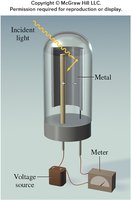
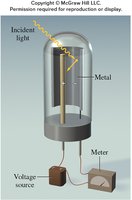
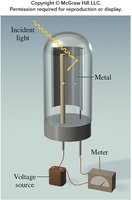
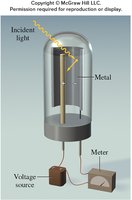
Photoelectric Effect: Einstein explained that light consists of photons, and electrons are ejected from metals only if the light has a minimum frequency (threshold frequency).
Photon Energy:
Kinetic Energy of Ejected Electron: , where W is the binding energy.
3.4 Bohr’s Theory of the Hydrogen Atom
Bohr's model explains the emission spectra of hydrogen and the quantized energy levels of electrons.
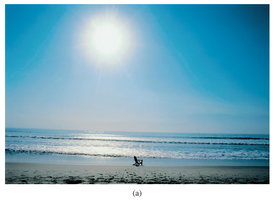
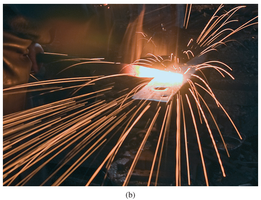
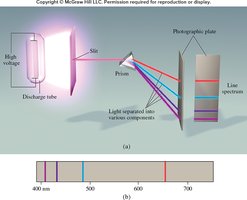
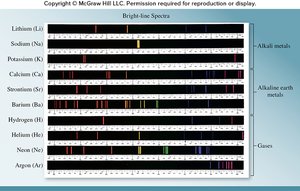
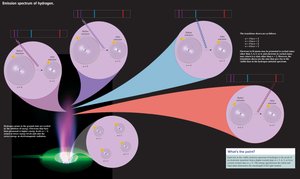
Emission Spectrum: Energized atoms emit light at specific wavelengths, producing line spectra.
Rydberg Equation: Used to calculate the wavelengths of visible lines in hydrogen's spectrum.
Bohr's Energy Equation: , where n is the principal quantum number.
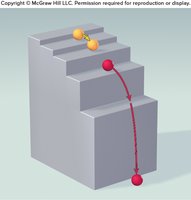
Ground State: Lowest energy state ().
Excited State: Higher energy states ().
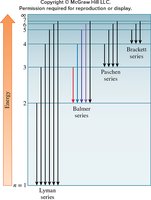
Energy Transition: ; photon is emitted if is negative, absorbed if positive.
3.5 Wave Properties of Matter
Louis de Broglie proposed that particles such as electrons exhibit wave-like properties.
de Broglie Wavelength: , where m is mass and u is velocity.
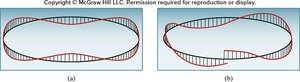
Standing Waves: Electrons behave as standing waves with nodes where amplitude is zero.
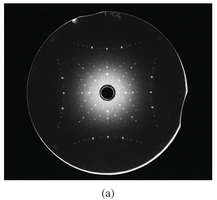
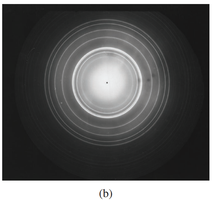
Diffraction: Electrons can produce diffraction patterns, confirming their wave nature.
3.6 Quantum Mechanics
Quantum mechanics provides a mathematical framework for understanding atomic structure.
Heisenberg Uncertainty Principle: , where is uncertainty in position and is uncertainty in momentum.
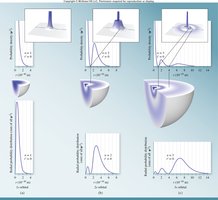
Schrödinger Equation: Describes the wave function () of electrons; probability of finding an electron is proportional to .
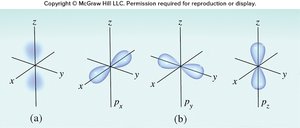
Atomic Orbitals: Regions where electrons are most likely to be found, defined by quantum numbers.
3.7 Quantum Numbers
Quantum numbers describe the properties and distribution of electrons in atoms.
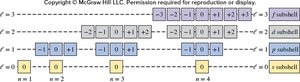
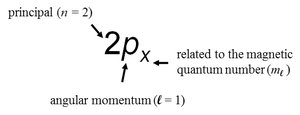
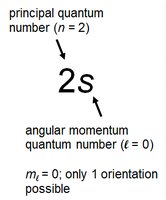
Principal Quantum Number (n): Size and energy level of the orbital;
Angular Momentum Quantum Number (l): Shape of the orbital; (s), $1 (d), $3$ (f)
Magnetic Quantum Number (): Orientation in space;
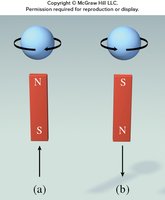
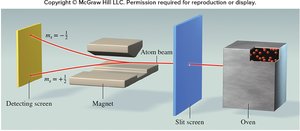
Electron Spin Quantum Number (): Spin direction; or
3.8 Atomic Orbitals
Atomic orbitals are regions in space where electrons are likely to be found. Their shapes and energies are determined by quantum numbers.
s Orbitals: Spherical shape; size increases with n (1s < 2s < 3s).
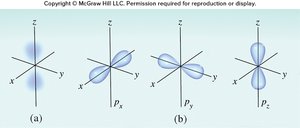
p Orbitals: Dumbbell-shaped; three orientations (, , ).
d Orbitals: More complex shapes; five orientations.
Orbital Energies: In hydrogen, energy depends only on n; in multi-electron atoms, also on l.
Tables
Allowed Values of Quantum Numbers
n | l | l value | ml |
|---|---|---|---|
1 | 0 | s | 0 |
2 | 0, 1 | s, p | 0; -1, 0, +1 |
3 | 0, 1, 2 | s, p, d | 0; -1, 0, +1; -2, -1, 0, +1, +2 |
4 | 0, 1, 2, 3 | s, p, d, f | 0; -1, 0, +1; -2, -1, 0, +1, +2; -3, -2, -1, 0, +1, +2, +3 |
Emission Series in Hydrogen Spectrum
Series | nfinal | ninitial | Region |
|---|---|---|---|
Lyman | 1 | 2, 3, ... | Ultraviolet |
Balmer | 2 | 3, 4, ... | Visible |
Paschen | 3 | 4, 5, ... | Infrared |
Brackett | 4 | 5, 6, ... | Infrared |
Additional info: These notes expand on brief points from the original slides and textbook, providing definitions, equations, and examples for clarity and completeness. All included images directly reinforce the adjacent explanations and are strictly relevant to the content.
