 뒤로
Stereoisomerism: Arrangement of Atoms in Space (Organic Chemistry Chapter 6)
스터디 가이드 - 스마트 노트
 자료에 맞춘 맞춤형 노트, 핵심 정의, 예시, 맥락을 확장해 제공합니다.
Stereoisomerism: Arrangement of Atoms in Space
Introduction to Stereoisomerism
Stereoisomerism is a fundamental concept in organic chemistry, describing how molecules with the same molecular formula and connectivity can differ in the spatial arrangement of their atoms. This chapter focuses on the types of stereoisomers, their identification, and their significance in chemical and biological contexts.
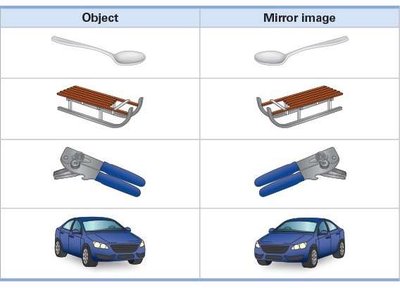
Objects and Their Mirror Images
Understanding stereoisomerism begins with the concept of superimposability. Objects (and molecules) may or may not be superimposable on their mirror images, which is a key distinction in identifying enantiomers.
Superimposable: Objects that can be placed over their mirror image and match exactly.
Nonsuperimposable: Objects that cannot be matched with their mirror image, indicating chirality.
Example: Everyday objects like spoons, sleds, and cars can be compared to their mirror images to illustrate superimposability.
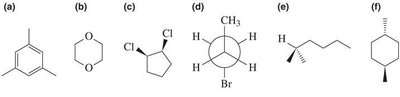
Planes of Symmetry
The presence or absence of a plane of symmetry in a molecule determines its chirality. A plane of symmetry divides a molecule into two mirror-image halves.
Chiral molecules: No plane of symmetry; nonsuperimposable on their mirror image.
Achiral molecules: Have a plane of symmetry; superimposable on their mirror image.
Example: Identifying planes of symmetry in various molecular conformations.
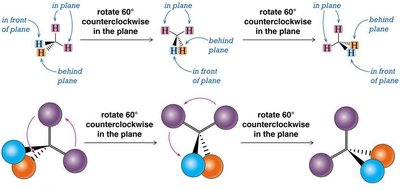
Drawing Tetrahedral Atoms in 3-D
Organic molecules often contain tetrahedral carbon atoms. To represent these in three dimensions:
Two bonds are drawn in the plane of the page.
One bond comes forward (bold wedge).
One bond goes back (hashed wedge).
This convention helps visualize the spatial arrangement of substituents.
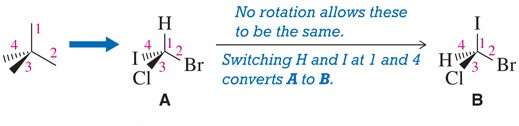
Stereoisomerism in Tetrahedral Carbons
When a tetrahedral carbon has four different groups attached, it becomes a stereocenter, and switching any two groups creates a new stereoisomer.
Stereoisomers: Molecules that differ only in the spatial arrangement of their atoms.
Example: Swapping H and I on a carbon with H, Cl, Br, and I creates a new compound.
The Thalidomide Story: Chirality in Context
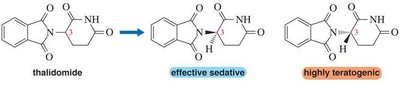
Thalidomide is a drug with a famous history related to chirality. It exists as two stereoisomers, each with different biological effects.
One isomer is an effective sedative.
The other is highly teratogenic (causes birth defects).
Thalidomide was sold as a mixture, leading to tragic consequences.
Stereocenters and Molecular Models
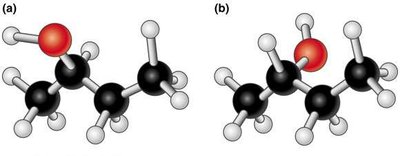
A stereocenter (or stereogenic center) is an atom where interchanging any two groups leads to a new stereoisomer. Carbon atoms with four different groups are common stereocenters.
Molecular models help visualize stereocenters and their isomers.
Example: 2-butanol has two stereoisomers, shown in 3-D models.
Centers of Asymmetry
A center of asymmetry is another term for a stereocenter. Asymmetric molecules are nonsuperimposable with their mirror images, which is the basis for chirality.
Testing for asymmetry involves checking for four different groups on a tetrahedral atom and the absence of a plane of symmetry.
Molecule | Four different groups? | Mirror image superimposable? | Symmetry? |
|---|---|---|---|
Methylcyclopentane | No | Yes | One plane of symmetry |
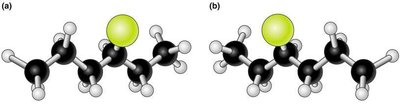
Alkane chain with Cl and H | Yes | No | No planes of symmetry |

Chiral and Achiral Molecules
Chirality is a property of molecules that are nonsuperimposable on their mirror images. Achiral molecules are superimposable and often contain a plane of symmetry.
Chiral: Contains a stereocenter, no plane of symmetry.
Achiral: Superimposable with mirror image, often has a plane of symmetry.
Enantiomers
Enantiomers are pairs of chiral molecules that are nonsuperimposable mirror images of each other. They have identical physical properties except in chiral environments.
Example: Many drugs exist as enantiomers, with different biological activities.
Isomer A | Mirror image | Isomer B |
|---|---|---|
Drug structure (R) | Mirror image | Drug structure (S) |
Naming Stereoisomers: Cahn–Ingold–Prelog System
The Cahn–Ingold–Prelog (CIP) system is used to assign absolute configuration (R or S) to stereocenters.
Assign priorities to substituents based on atomic number.
Orient the molecule so the lowest priority group is away.
Trace the path from highest to lowest priority: clockwise (R), counterclockwise (S).
Priority Rules:
Highest atomic number = highest priority.
If tie, move to next atom.
For double/triple bonds, use "phantom atoms" to assign priority.
Properties of Enantiomers
Enantiomers have identical physical properties except for their interaction with plane-polarized light and in chiral environments.
Optical activity: Enantiomers rotate plane-polarized light in opposite directions.
Racemic mixture: Equal mixture of enantiomers; no net rotation.
Polarimeter and Optical Rotation
A polarimeter is used to measure the rotation of plane-polarized light by chiral molecules.
Optically active: Substance rotates light.
Optically inactive: Substance does not rotate light (racemic or achiral).
Terms Used to Describe Rotation
System | Term | Description |
|---|---|---|
d/l | Dextrorotatory (d) | Rotates light to the right (clockwise) |
d/l | Levorotatory (l) | Rotates light to the left (counterclockwise) |
IUPAC | (+) | Clockwise rotation |
IUPAC | (-) | Counterclockwise rotation |
Note: There is no direct relationship between d/l or +/– and R/S configuration.
Specific Rotation and Enantiomeric Excess
Specific rotation is a characteristic property of a pure enantiomer, measured as:
= observed rotation (degrees)
= length of sample tube (dm)
= concentration (g/100 mL)
Enantiomeric excess (ee) quantifies the relative amounts of enantiomers:
% optical purity is equivalent to ee:
Diastereomers
Diastereomers are stereoisomers that are not mirror images. They differ in physical and chemical properties.
A molecule with n stereocenters can have up to stereoisomers.
Example: 2,3-dibromobutane has three stereoisomers due to a meso compound.
Meso Compounds
Meso compounds contain stereocenters but are achiral due to a plane of symmetry. They are superimposable on their mirror image.
Example: 2,3-dibromobutane has a meso form.
Fischer Projections
Fischer projections are 2-D representations of 3-D structures, commonly used in carbohydrate chemistry.
Horizontal bonds: out of the plane.
Vertical bonds: behind the plane.
A 90° rotation gives the enantiomer.
Selective Biological Activity
Enzymes and biological receptors are chiral and bind preferentially to one enantiomer. Diastereomers do not have the same biological function.
Enantioselective Synthesis and Resolution
Most laboratory syntheses produce racemic mixtures. Enantioselective synthesis uses chiral catalysts or conditions to favor one enantiomer. Resolution involves separating enantiomers by converting them to diastereomers, which can be separated and then reverted.
Chiral Compounds without Asymmetric Atoms
Some compounds, such as atropisomers and certain allenes, are chiral due to restricted rotation or unique geometry, even without a traditional stereocenter.
