 뒤로
Stoichiometry and Chemical Reactions: Structured Study Notes
스터디 가이드 - 스마트 노트
 자료에 맞춘 맞춤형 노트, 핵심 정의, 예시, 맥락을 확장해 제공합니다.
Stoichiometry and Chemical Reactions
Law of Conservation of Mass
The Law of Conservation of Mass states that matter is neither created nor destroyed in a chemical reaction. The total mass of reactants equals the total mass of products, which is fundamental to balancing chemical equations.
Chemical Equations: Anatomy and Balancing
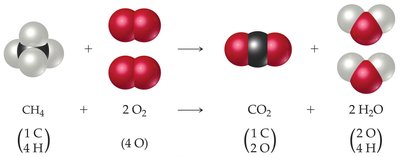
Chemical equations represent the reactants and products involved in a reaction, including their physical states and proportions. Balancing equations ensures the conservation of atoms for each element.
Reactants are written on the left side; products on the right.
States are indicated in parentheses: (s) for solid, (l) for liquid, (g) for gas, (aq) for aqueous.
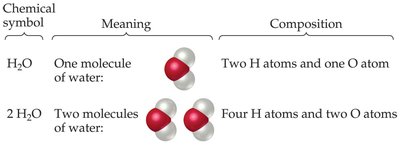
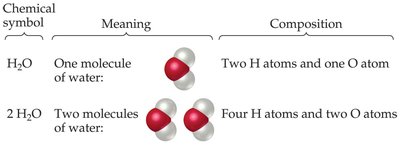
Coefficients are used to balance the number of atoms for each element.
Subscripts indicate the number of atoms in a molecule; coefficients indicate the number of molecules.
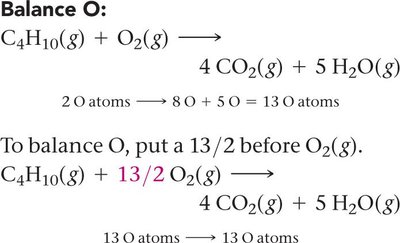
Steps for Balancing Chemical Equations
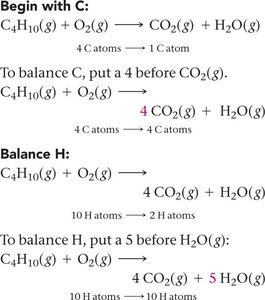
Balancing chemical equations is a systematic process:
Write the skeletal equation with correct formulas.
Balance atoms in complex substances first.
Balance atoms in pure elements last.
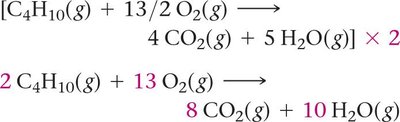
If fractions appear, multiply all coefficients by the denominator to clear them.
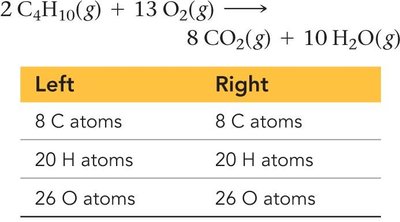
Check that the equation is balanced for all atoms.
Balancing Equations with Polyatomic Ions
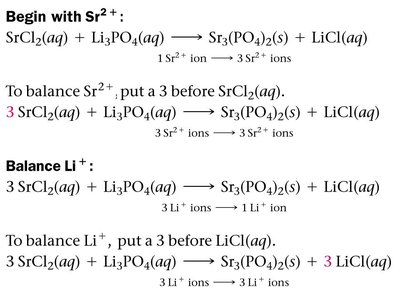
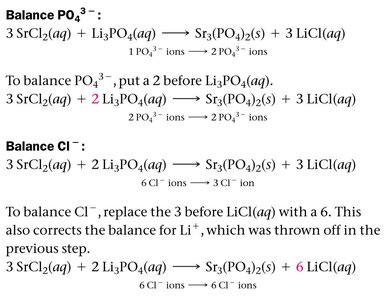
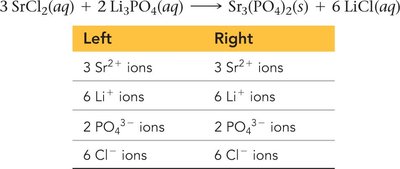
When polyatomic ions appear unchanged on both sides, balance them as units. Balance cations first, then anions, and check the final balance.
Types of Chemical Reactions
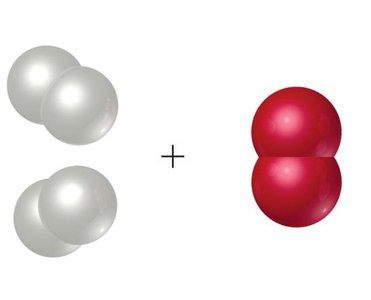
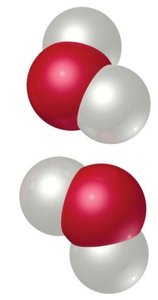
Combination (Synthesis) Reactions: Two or more substances form one product. Example:
Decomposition Reactions: One substance breaks down into two or more products. Example:
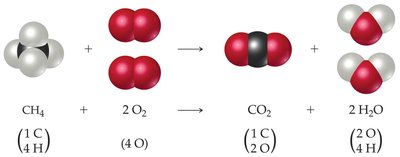
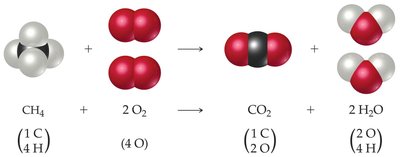
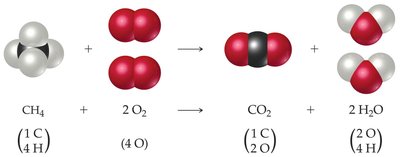
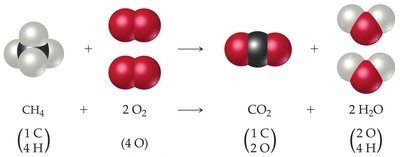
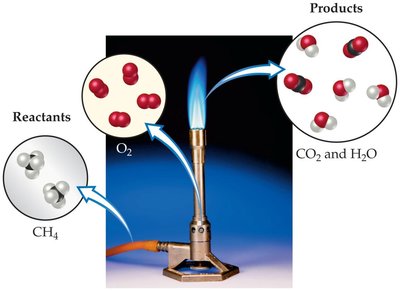
Combustion Reactions: Rapid reactions producing a flame, often involving hydrocarbons and oxygen. Example:
Double Displacement Reactions: Ions exchange between two compounds, often forming a precipitate, gas, or water.
Precipitation Reactions and Solubility Rules
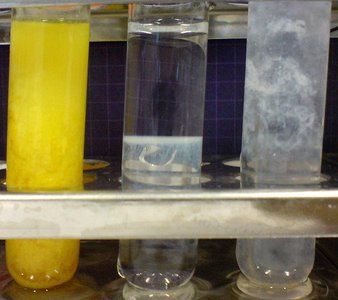
Precipitation reactions occur when two solutions combine to form an insoluble product (precipitate). Solubility rules help predict which compounds will precipitate.
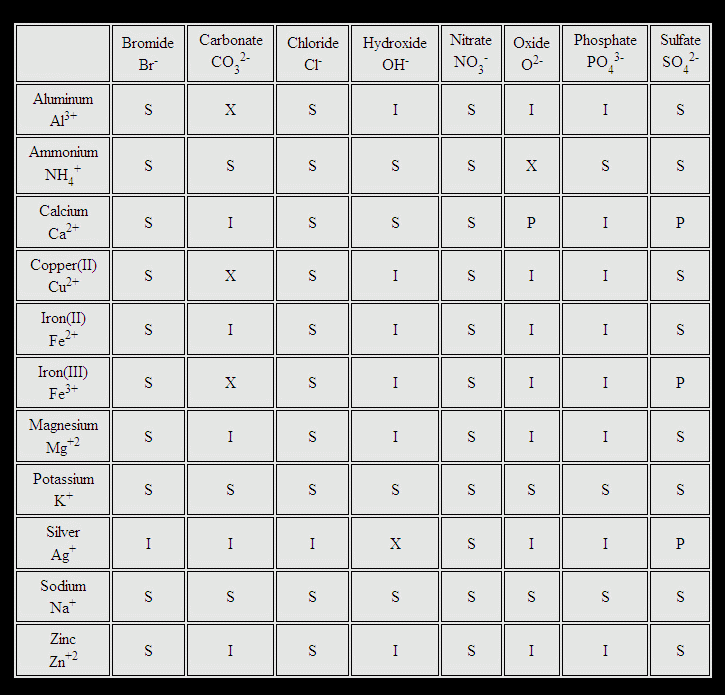
Solubility Chart: Indicates which salts are soluble (S), insoluble (I), or partially soluble (P).
Acid-Base Reactions and Neutralization
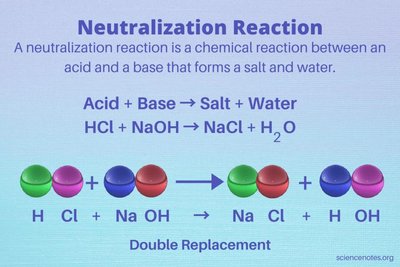
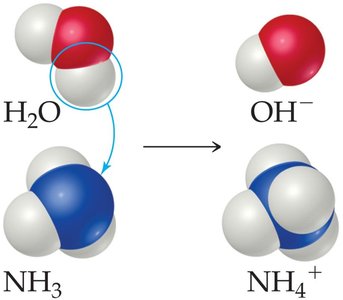
Acid-base reactions involve the transfer of a proton (H+) from the acid to the base, resulting in the formation of water and a salt. Strong acids and bases dissociate completely in water.
Arrhenius Definition: Acids increase H+ concentration; bases increase OH- concentration.
Brønsted-Lowry Definition: Acids are proton donors; bases are proton acceptors.
Neutralization: Acid + Base → Salt + Water
Redox Reactions
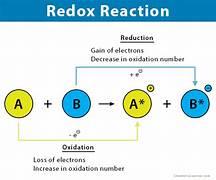
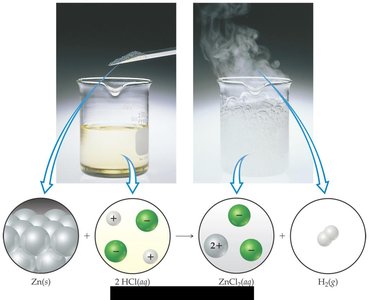
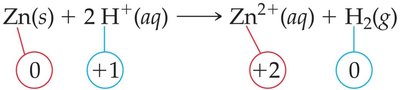
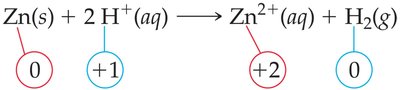
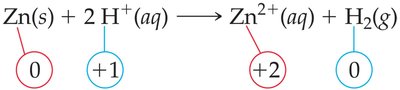
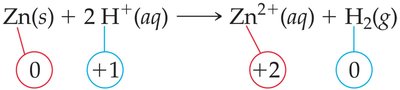
Redox (oxidation-reduction) reactions involve the transfer of electrons. Oxidation is the loss of electrons; reduction is the gain of electrons. Assigning oxidation numbers helps track electron transfer.
Oxidizing agent: Causes oxidation, is itself reduced.
Reducing agent: Causes reduction, is itself oxidized.
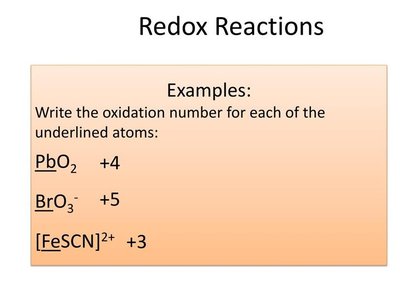
Rules for assigning oxidation numbers: Elemental form = 0; monatomic ion = charge; oxygen = -2 (except peroxides); hydrogen = +1 (nonmetals), -1 (metals); fluorine = -1; sum in compound = 0; sum in ion = charge.
Half-Reaction Method for Balancing Redox Equations
The half-reaction method separates oxidation and reduction processes, balances each, and combines them for the overall reaction.
Assign oxidation numbers.
Write oxidation and reduction half-reactions.
Balance elements (except H and O), then O by adding H2O, H by adding H+, and charge by adding electrons.
Multiply half-reactions to equalize electrons.
Add half-reactions and subtract common terms.
Check balance for mass and charge.
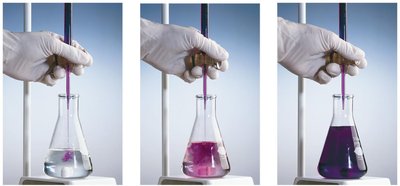
Formula Weight, Molecular Weight, and Percent Composition
Formula weight is the sum of atomic weights in a chemical formula (usually for ionic compounds). Molecular weight is the sum for molecules. Percent composition calculates the mass percentage of each element in a compound.
Formula weight:
Molecular weight:
Percent composition:
The Mole and Avogadro's Number
The mole is a counting unit in chemistry, defined as particles (Avogadro's number). Molar mass (g/mol) links the molecular scale to laboratory measurements.
1 mole of C-12 = 6.022 x 10²³ atoms = 12 g
Molar mass is numerically equal to formula weight in g/mol
Solution Concentration: Molarity
Molarity (M) is the number of moles of solute per liter of solution. It is used to describe solution concentration and calculate the amount of dissolved ions.
Molarity:
Dissociation: CaCl2 → Ca2+ + 2 Cl-
Empirical and Molecular Formulas
The empirical formula is the simplest whole-number ratio of elements in a compound. The molecular formula is a multiple of the empirical formula, determined by molar mass.
Empirical formula from percent composition: Convert mass to moles, divide by smallest number, multiply to get whole numbers.
Molecular formula: , where
Combustion Analysis
Combustion analysis determines the empirical formula of compounds containing C, H, and O by measuring the masses of CO2 and H2O produced.
Stoichiometric Calculations
Stoichiometric calculations use balanced equations to relate masses and moles of reactants and products. The coefficients indicate the mole ratios.
Convert mass to moles using molar mass.
Use mole ratios from the balanced equation.
Convert moles back to mass if needed.
Limiting Reactant, Theoretical Yield, and Percent Yield
The limiting reactant is the reactant that is consumed first, limiting the amount of product formed. Theoretical yield is the maximum possible product, and percent yield compares actual to theoretical yield.
Percent yield:
Gas Stoichiometry
Gas stoichiometry involves using balanced equations and the ideal gas law to relate volumes of gases at given conditions.
Ideal Gas Law:
Volume relationships depend on mole ratios and gas conditions (temperature, pressure).
Additional info: Academic context and examples were expanded for clarity and completeness. Images were included only when directly relevant to the explanation of the adjacent paragraph.
