 뒤로
뒤로Structure of the Atom and Quantum Models: General Chemistry Study Notes
스터디 가이드 - 스마트 노트
 자료에 맞춘 맞춤형 노트, 핵심 정의, 예시, 맥락을 확장해 제공합니다.
Structure of the Atom
The Constituents of the Atom
An atom consists of a positively charged nucleus and negatively charged electrons orbiting around it. The nucleus is composed of protons and neutrons, collectively called nucleons. Electrons are found outside the nucleus. The characteristics of these particles are:
Proton: Charge C; Mass kg
Neutron: Charge C; Mass kg
Electron: Charge C; Mass kg
Note: The mass of an electron is negligible compared to nucleons.
Atomic Number and Mass Number
The atomic number () is the number of protons in the nucleus and determines the element's identity. The mass number () is the total number of nucleons (, where is the number of neutrons). The atom is electrically neutral, so .
Atomic mass:
Molar mass: (Avogadro's number )
The mass number is approximately equal to the atomic molar mass in grams.
Concept of Isotopes
Isotopes are atoms of the same element (same ) but with different mass numbers () due to varying numbers of neutrons. For example, hydrogen has three isotopes: H, H, H.
Example: Chlorine isotopes: Cl and Cl. Their natural abundance explains the average atomic mass of chlorine.
Atomic Models: Bohr's Model
Energy Quantization and Spectra
Bohr's model introduced the concept of quantized energy levels for electrons in atoms. Energy exchanges occur in discrete amounts called quanta, defined by , where is Planck's constant ( J·s) and is frequency.
Emission Spectrum of Hydrogen
When hydrogen atoms are excited, they emit light at specific wavelengths, forming a line spectrum. The wavelengths obey:
is the Rydberg constant ( m)
Series: Lyman (), Balmer (, visible), Paschen (), Brackett (), Pfund ()
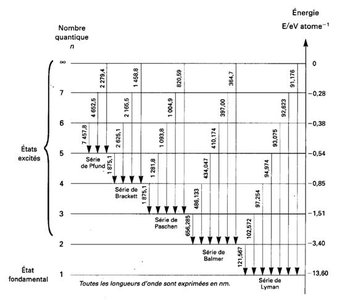
Bohr's Postulates and Quantization
Electrons orbit the nucleus in fixed paths (orbits) with quantized angular momentum:
Energy is absorbed/emitted when electrons transition between orbits:
Orbital radius:
Orbital energy:
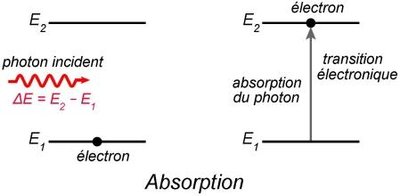
Example: The ground state () has Å and eV.
Hydrogen-like Ions
For ions with one electron (e.g., He, Li), the energy and radius are:
eV
Limitations of Bohr's Model
Bohr's model cannot explain fine spectral structures or multi-electron atoms, but it is useful for visualizing quantization.
The Quantum Model of the Atom
Wave-Particle Duality and Quantum Mechanics
Quantum mechanics replaces classical trajectories with probability distributions. Every particle has an associated wavelength:
Heisenberg's Uncertainty Principle: It is impossible to simultaneously determine both position and momentum:
The Schrödinger Equation
The wave function describes the probability density of finding an electron. The time-independent Schrödinger equation for the hydrogen atom is:
Solving this equation yields quantized energy levels and wave functions (atomic orbitals).
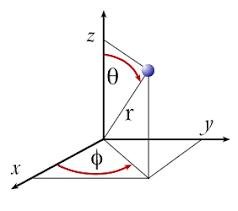
Quantum Numbers and Atomic Orbitals
Atomic orbitals are characterized by three quantum numbers:
Principal quantum number (n): Defines energy level and shell (K, L, M, ...)
Azimuthal quantum number (l): Defines subshell and orbital shape (s, p, d, f)
Magnetic quantum number (m): Defines orientation in space
For a given , there are orbitals.
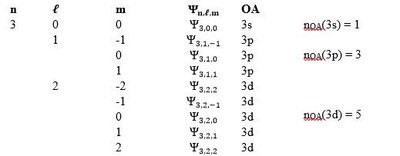
Mathematical Expressions of Atomic Orbitals
Atomic orbitals have radial and angular components. The radial distribution function gives the probability of finding an electron at a distance from the nucleus.
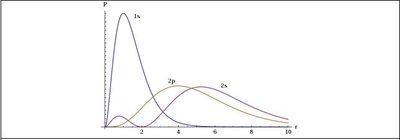
Geometry of Atomic Orbitals
s orbitals are spherical; p orbitals are dumbbell-shaped along x, y, z axes; d orbitals have more complex shapes.
The Many-Electron Atom
Electron Spin
A fourth quantum number, spin (), describes the intrinsic angular momentum of the electron. It can be or .

Electronic Configuration and Filling Rules
Aufbau Principle: Electrons fill orbitals in order of increasing energy (lowest first).
Pauli Exclusion Principle: No two electrons in an atom can have the same four quantum numbers.
Hund's Rule: Electrons occupy as many orbitals as possible before pairing up.
Core electrons occupy inner orbitals (often represented by noble gas notation), while valence electrons are in the outermost shells.
Magnetic Properties of Atoms
Paramagnetic: Atoms with unpaired electrons; magnetic moments do not cancel.
Diamagnetic: Atoms with all electrons paired; magnetic moments cancel.
Example: Oxygen (O), fluorine (F), and neon (Ne) exhibit different magnetic properties based on their electron configurations.
