 뒤로
Thermochemistry and Energy in Chemical Systems: Study Notes
스터디 가이드 - 스마트 노트
 자료에 맞춘 맞춤형 노트, 핵심 정의, 예시, 맥락을 확장해 제공합니다.
Thermochemistry and Energy in Chemical Systems
Review of Chemical Reactions and Ionic Equations
Chemical reactions often involve the formation of precipitates, changes in oxidation states, and calculations of solution concentrations. Understanding these concepts is fundamental to analyzing reactions in aqueous solutions.
Balanced Ionic Equation: When magnesium chloride reacts with potassium carbonate, a white precipitate (magnesium carbonate) forms. The net ionic equation is:
Redox Analysis: This reaction is not a redox reaction. The oxidation state of magnesium remains +2 in both reactant and product.
Concentration Calculation: Using the mass of precipitate and molar mass (), the molarity of magnesium chloride is:
Oxidation Numbers
Oxidation numbers are used to track electron transfer in chemical reactions. Here are examples for common compounds:
BrO3-: Br: +5, O: -2
K2CO3: K: +1, C: +4, O: -2
NH3: N: -3, H: +1
O2: O: 0
O3: O: 0
MnO4-: Mn: +7, O: -2
P2O5: P: +5, O: -2
NO: N: +2, O: -2
CaTiO3: Ca: +2, Ti: +4, O: -2
CaH2: Ca: +2, H: -1
Nature of Energy
Definitions and Types of Energy
Thermochemistry studies the relationship between chemistry and energy, especially heat. Energy is the ability to do work or transfer heat. Work is energy transfer not as heat, often a force acting over a distance. Heat is energy flow caused by a temperature difference.
Potential Energy: Energy due to position or composition.
Kinetic Energy: Energy due to motion.
Thermal Energy: Energy due to temperature, arising from molecular motion.
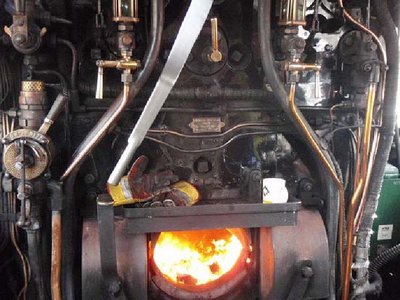
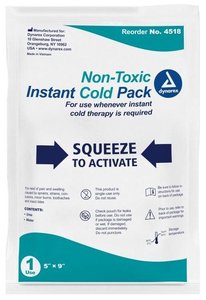
Energy Exchange: Heat and Work
Energy can be exchanged between objects through contact or radiation. Heat and work are the two main ways energy is transferred between a system and its surroundings.

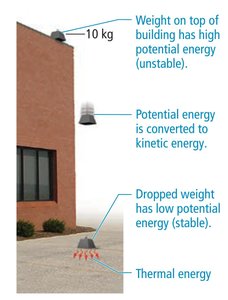
Potential, Kinetic, and Thermal Energy
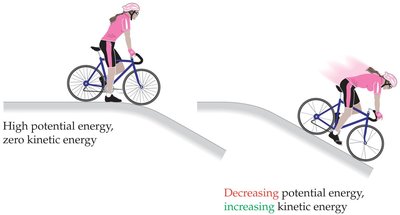
Potential energy is associated with position or chemical composition. Kinetic energy is associated with motion. Thermal energy is a type of kinetic energy due to the motion of atoms or molecules.
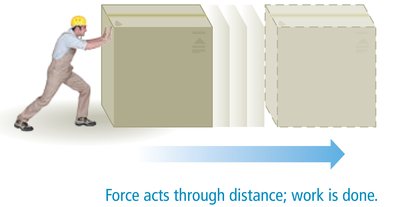
Work in Chemistry
Work is the action of a force through a distance. It can be converted to heat, kinetic, or potential energy.
Formula:
Kinetic Energy Formula
The kinetic energy of an object is given by:
Formula:
Gases at the same temperature have the same average kinetic energy, but lighter particles move faster.
Units of Energy
The SI unit of energy is the joule (J): . The calorie (cal) is also used: . Food calories are actually kilocalories (kcal).
Electrostatic Potential Energy in Chemistry
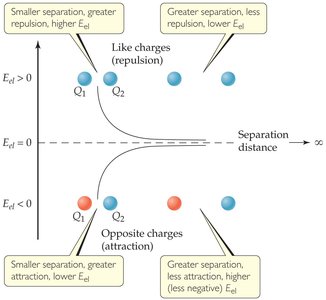
Electrostatic potential energy is important in molecules:
Formula:
Where is a constant, and are charges, and is the distance between them.
System and Surroundings
Definitions
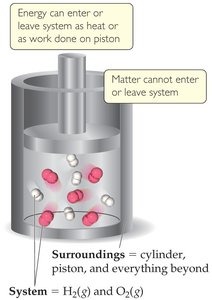
The system is the part of the universe under study (e.g., reactants and products), while the surroundings are everything else.
Work and Heat
Energy can be transferred as work or heat. Work is energy used to move an object over a distance, and heat is energy transferred due to temperature differences.
Work formula:
Conversion of Energy
Energy can be converted from one form to another. For example, potential energy can become kinetic energy, and friction can convert kinetic energy to heat.
First Law of Thermodynamics
Law Statement
The First Law of Thermodynamics states that energy is neither created nor destroyed. The total energy of the universe is constant; energy lost by the system is gained by the surroundings, and vice versa.
Internal Energy
Internal energy (E) is the sum of all kinetic and potential energies of the components of a system. It does not include the collective motion of the system relative to the surroundings.

State Functions
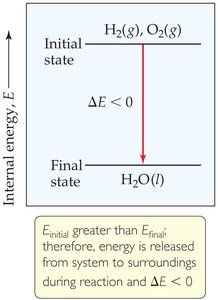
Internal energy is a state function, meaning it depends only on the current state of the system, not the path taken to reach that state. The change in internal energy () depends only on the initial and final energies.
Formula:
Changes in Internal Energy
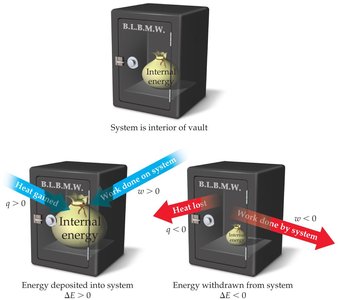
If , the system absorbs energy (endergonic). If , the system releases energy (exergonic).
Energy Exchange: Heat and Work
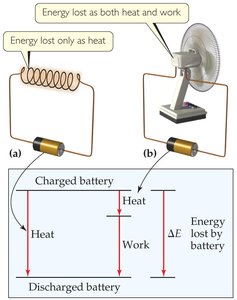
Energy is exchanged as heat () or work ():
State Functions vs. Path Functions
While is a state function, and are not. Their values depend on the process path.
Heat Exchange: Endothermic and Exothermic Processes
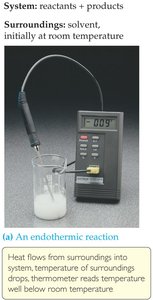
Endothermic Processes
When heat is absorbed by the system from the surroundings, the process is endothermic.
Exothermic Processes
When heat is released by the system into the surroundings, the process is exothermic.
Pressure-Volume Work
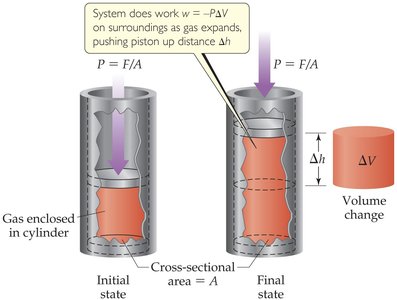
PV Work Formula
In open containers, the main work is by a gas pushing on the atmosphere. The formula is:
Enthalpy and Heat Flow at Constant Pressure
Definition of Enthalpy
Enthalpy (H) is the internal energy plus the product of pressure and volume:
Change in Enthalpy
At constant pressure, the change in enthalpy () is: Since and , then: Thus, at constant pressure, equals the heat gained or lost.
Endothermic and Exothermic Processes (Enthalpy)
Endothermic: (heat absorbed)
Exothermic: (heat released)
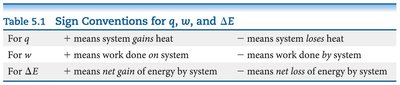
Sign Conventions for q, w, and ΔE
The sign conventions for heat, work, and internal energy are summarized below:
Quantity | Positive (+) | Negative (-) |
|---|---|---|
q | System gains heat | System loses heat |
w | Work done on system | Work done by system |
ΔE | Net gain of energy by system | Net loss of energy by system |
