 뒤로
Thermochemistry, Quantum Mechanics, and Chemical Bonding: General Chemistry Study Guide
스터디 가이드 - 스마트 노트
 자료에 맞춘 맞춤형 노트, 핵심 정의, 예시, 맥락을 확장해 제공합니다.
Thermochemistry and Energy
Energy and Laws of Thermodynamics
Thermochemistry is the study of energy changes that occur during chemical reactions and changes of state. Energy is the capacity to do work or produce heat, and it exists in various forms such as kinetic and potential energy.
Kinetic Energy: The energy of motion, given by where m is mass and v is velocity.
System: The part of the universe being studied (e.g., a chemical reaction).
Surroundings: Everything outside the system.
Universe: System + surroundings.
First Law of Thermodynamics: Energy cannot be created or destroyed, only transferred or transformed.
Internal Energy Change: where q is heat and w is work.
Energy Conservation:

Heat Transfer and Calorimetry
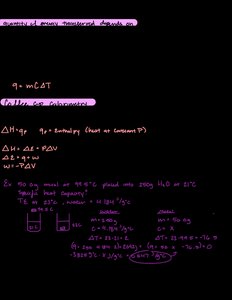
The amount of energy transferred as heat depends on the mass, specific heat capacity, and temperature change of a substance.
Heat Equation: where m is mass, C is specific heat, and is temperature change.
Calorimetry: The measurement of heat flow using a calorimeter.
Enthalpy Change: (heat at constant pressure)
Example: Calculating heat transfer when a metal is placed in water, using calorimetry equations.
Quantum Mechanics and Atomic Structure
Quantum Numbers and Electron Configuration
Quantum mechanics describes the behavior of electrons in atoms using quantum numbers. Each electron in an atom is characterized by four quantum numbers:
Principal Quantum Number (n): Indicates the energy level.
Angular Momentum Quantum Number (l): Indicates the shape of the orbital.
Magnetic Quantum Number (ml): Indicates the orientation of the orbital.
Spin Quantum Number (ms): Indicates the spin direction (+1/2 or -1/2).
Example: Assigning quantum numbers to nitrogen's electrons.
De Broglie Wavelength and Heisenberg Uncertainty Principle
The de Broglie wavelength relates a particle's momentum to its wavelength, showing the wave-particle duality of matter. The Heisenberg uncertainty principle states that it is impossible to simultaneously know both the position and momentum of a particle with absolute certainty.
De Broglie Equation:
Heisenberg Uncertainty:
Periodic Properties of Elements
Atomic Radius
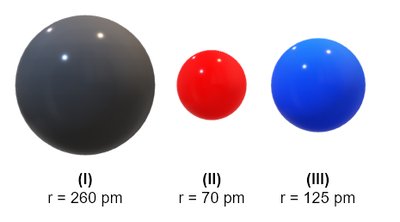
Atomic radius is a periodic property that decreases across a period and increases down a group. Larger atoms have more electron shells.
Example: Comparing atomic radii of Al, C, and Cs.
Ionization Energy
Ionization energy is the energy required to remove an electron from an atom. It increases across a period and decreases down a group.
First, second, and third ionization energies: Successive removal of electrons requires more energy.
Chemical Bonding and Lattice Energy
Lattice Energy
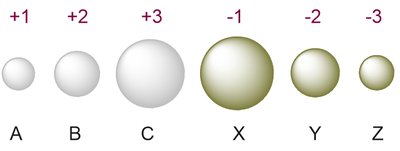
Lattice energy is the energy released when ions combine to form an ionic solid. It depends on the charges and sizes of the ions.
Lattice Energy Equation: where z is the charge and r is the distance between ions.
Greater charge and smaller radius result in higher lattice energy.
Example: Comparing lattice energies of different ion pairs.
Born-Haber Cycle
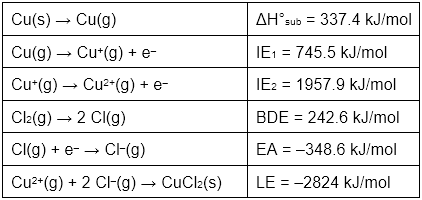
The Born-Haber cycle is a thermochemical cycle used to analyze the formation of ionic compounds and calculate lattice energy.
Steps include sublimation, ionization, bond dissociation, electron affinity, and lattice formation.
Example Table: Born-Haber cycle for CuCl2(s).
Molecular Structure and Polarity
Lewis Structures and Formal Charge
Lewis structures represent the arrangement of electrons in molecules. Formal charge helps determine the most stable structure.
Formal charge = (valence electrons) - (nonbonding electrons) - (1/2 bonding electrons)
Bond Types and Polarity
Chemical bonds can be ionic or covalent. Polarity depends on the difference in electronegativity between atoms.
Ionic Bonds: Formed between metals and nonmetals.
Covalent Bonds: Formed between nonmetals.
Polar Covalent Bonds: Unequal sharing of electrons.
Nonpolar Covalent Bonds: Equal sharing of electrons.
Molecular Geometry and Dipole Moment
The shape of a molecule affects its polarity and dipole moment. Geometries such as trigonal planar, tetrahedral, and octahedral are determined by the number of electron groups around the central atom.
Net dipole moment occurs when dipoles do not cancel out due to molecular geometry.
Additional info:
Some equations and examples were expanded for clarity and completeness.
Images included only where directly relevant to the explanation of atomic radius, lattice energy, and Born-Haber cycle.
