(b) Will Mg(OH)2 precipitate when 4.0 g of Na2CO3 is added to 1.00 L of a solution containing 125 ppm of Mg2+?
Ch.18 - Chemistry of the Environment
18장, 문제 76b
(b) Concentrations of lead in the bloodstream are often quoted in units of μg/dL. Averaged over the entire country, the mean concentration of lead in the blood was measured to be 1.6 μg/dL in 2008. Express this concentration in ppb.
검증된 단계별 안내1
Understand that ppb (parts per billion) is a unit of concentration that is equivalent to micrograms of solute per liter of solution (μg/L).
Recognize that the given concentration is in μg/dL, which means micrograms per deciliter.
Convert the concentration from μg/dL to μg/L by using the conversion factor: 1 dL = 0.1 L. Therefore, multiply the given concentration by 10 to convert it to μg/L.
Since 1 μg/L is equivalent to 1 ppb, the concentration in μg/L is numerically equal to the concentration in ppb.
Conclude that the concentration in ppb is the same as the concentration in μg/L after conversion.

비슷한 문제에 대한 검증된 영상 답변:
이 영상 해법은 위 문제에 도움이 된다고 튜터들이 추천한 것입니다.
영상 길이:
2m주요 개념
질문에 올바르게 답하기 위해 반드시 이해해야 하는 핵심 개념들은 다음과 같습니다.
Units of Concentration
Concentration can be expressed in various units, including micrograms per deciliter (μg/dL) and parts per billion (ppb). Understanding these units is crucial for converting between them, as they represent different scales of measurement. Specifically, 1 μg/dL is equivalent to 10 ppb, which is important for accurately interpreting and comparing concentration data.
추천 영상:
가이드 코스
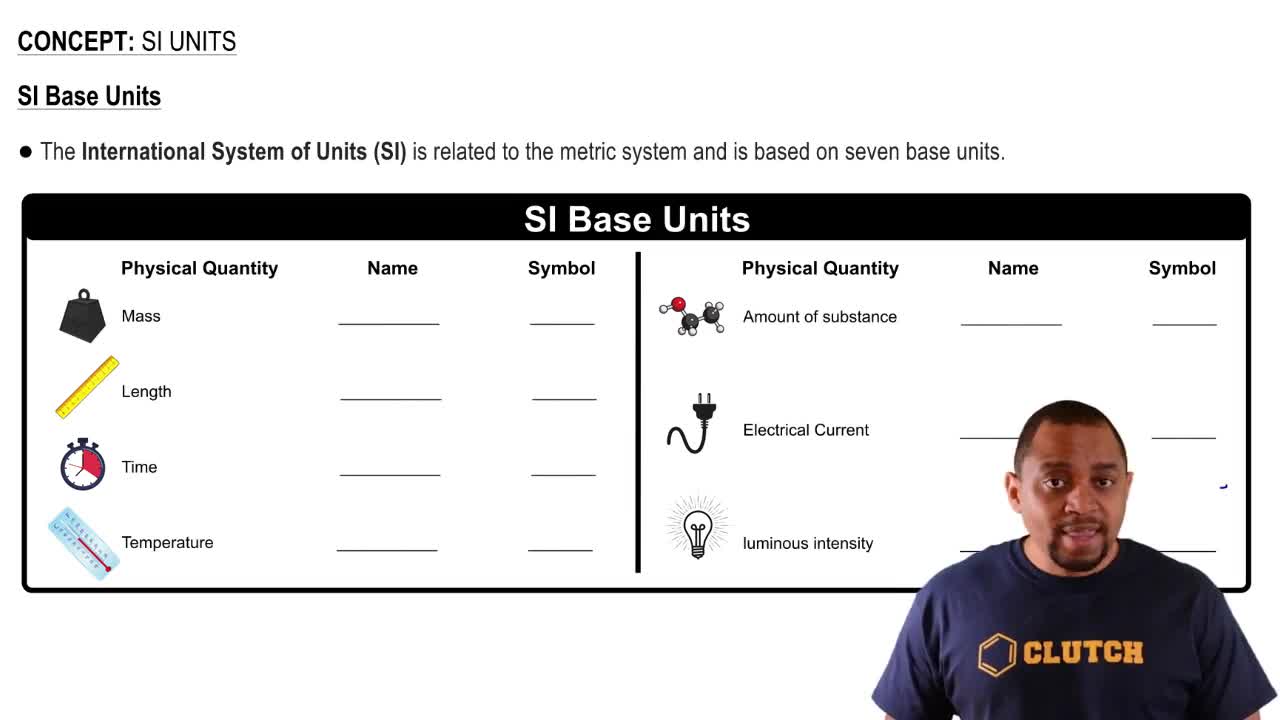
SI Units
Conversion Factors
Conversion factors are numerical values used to convert one unit of measurement to another. In this case, the conversion from μg/dL to ppb involves knowing that 1 μg/dL equals 10 ppb. Mastery of conversion factors is essential in chemistry for ensuring that calculations involving different units are performed correctly and consistently.
추천 영상:
가이드 코스
Conversion Factors
Blood Lead Levels and Health Implications
Lead concentration in the bloodstream is a significant health concern, as elevated levels can lead to serious health issues, particularly in children. Understanding the implications of lead exposure and the significance of measuring blood lead levels in ppb helps contextualize the importance of monitoring and regulating environmental lead sources to protect public health.
추천 영상:
가이드 코스
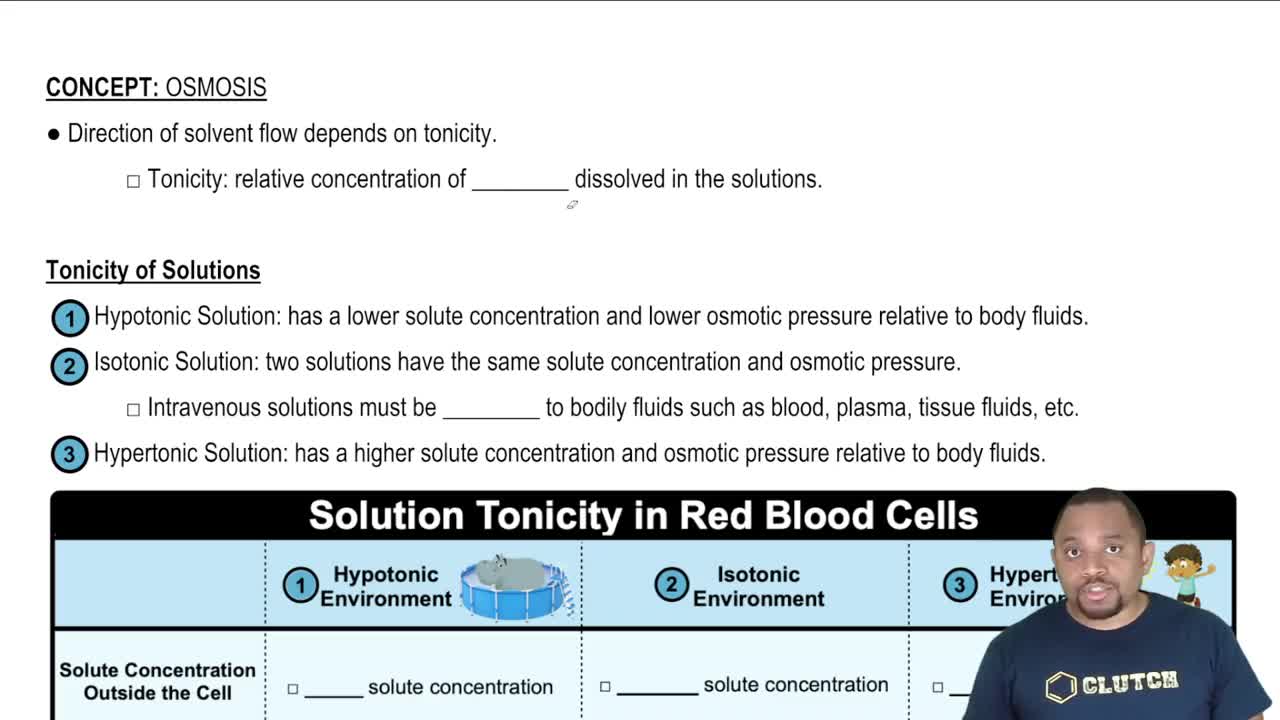
Osmosis and Tonicity
관련 실천
교과서 질문
367
views
교과서 질문
(a) The EPA threshold for acceptable levels of lead ions in water is 615 ppb. What is the molarity of an aqueous solution with a concentration of 15 ppb?
1
views
교과서 질문
In 1986 an electrical power plant in Taylorsville, Georgia, burned 8,376,726 tons of coal, a national record at that time. (a) Assuming that the coal was 83% carbon and 2.5% sulfur and that combustion was complete, calculate the number of tons of carbon dioxide and sulfur dioxide produced by the plant during the year.
1470
views
교과서 질문
The estimated average concentration of NO2 in air in the United States in 2006 was 0.016 ppm. (a) Calculate the partial pressure of the NO2 in a sample of this air when the atmospheric pressure is 755 torr (99.1 kPa).
504
views