Ch.18 - Chemistry of the Environment
Brown - Chemistry: The Central Science 14th Edition
Brown14th EditionChemistry: The Central ScienceISBN: 9780134414232당신이 사용하는 게 아니라요?교과서 변경
18장, 문제 79a

In 1986 an electrical power plant in Taylorsville, Georgia, burned 8,376,726 tons of coal, a national record at that time. (a) Assuming that the coal was 83% carbon and 2.5% sulfur and that combustion was complete, calculate the number of tons of carbon dioxide and sulfur dioxide produced by the plant during the year.

검증된 단계별 안내
1
Identify the mass of carbon and sulfur in the coal: Calculate the mass of carbon by multiplying the total mass of coal by the percentage of carbon (83%) and the mass of sulfur by the percentage of sulfur (2.5%).
Convert the mass of carbon to moles: Use the molar mass of carbon (12.01 g/mol) to convert the mass of carbon to moles.
Convert the mass of sulfur to moles: Use the molar mass of sulfur (32.07 g/mol) to convert the mass of sulfur to moles.
Calculate the moles of carbon dioxide produced: Since each mole of carbon produces one mole of carbon dioxide, the moles of carbon dioxide will be equal to the moles of carbon.
Calculate the moles of sulfur dioxide produced: Since each mole of sulfur produces one mole of sulfur dioxide, the moles of sulfur dioxide will be equal to the moles of sulfur.

비슷한 문제에 대한 검증된 영상 답변:

이 영상 해법은 위 문제에 도움이 된다고 튜터들이 추천한 것입니다.
영상 길이:
2m

주요 개념

질문에 올바르게 답하기 위해 반드시 이해해야 하는 핵심 개념들은 다음과 같습니다.

Combustion Reaction

A combustion reaction is a chemical process in which a substance reacts with oxygen to produce heat and light. In the case of coal, the primary components, carbon and sulfur, react with oxygen to form carbon dioxide (CO2) and sulfur dioxide (SO2), respectively. Understanding this reaction is crucial for calculating the products formed during the combustion of coal.
추천 영상:
가이드 코스
02:24
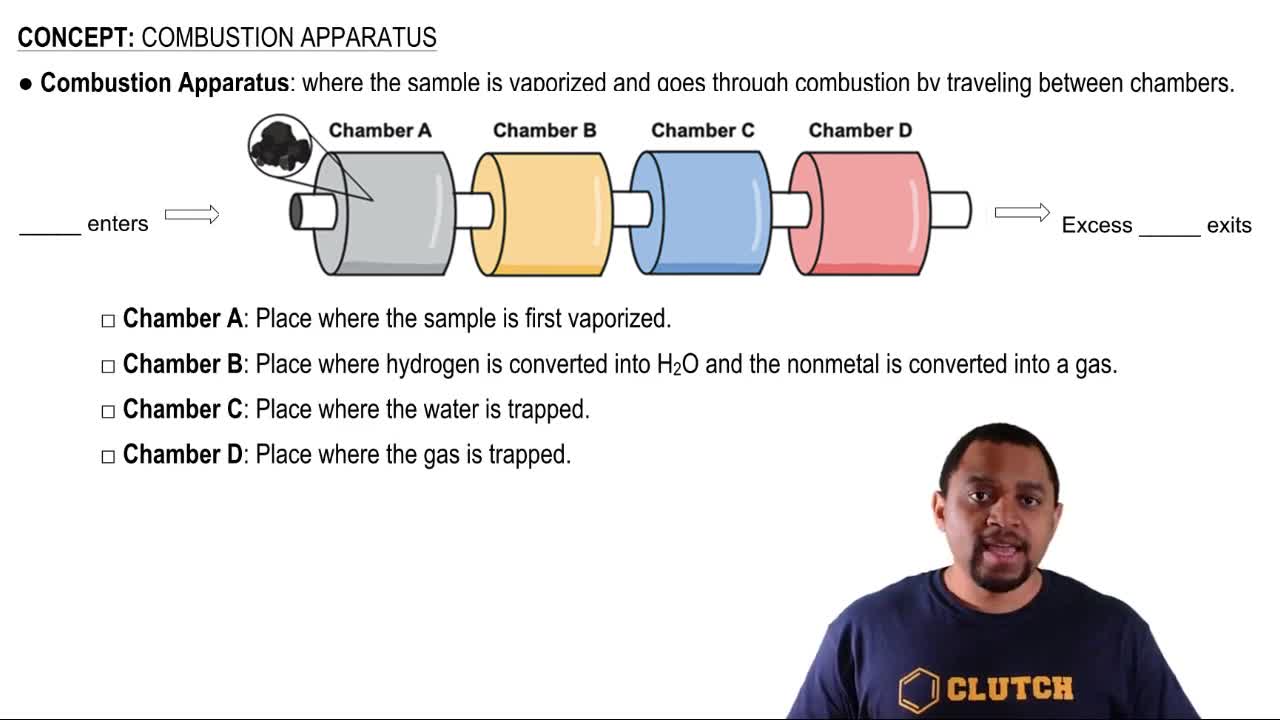
Combustion Apparatus

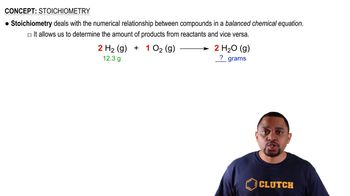
Stoichiometry

Stoichiometry is the branch of chemistry that deals with the quantitative relationships between the reactants and products in a chemical reaction. It allows us to calculate the amounts of substances consumed and produced in a reaction based on their molar ratios. In this question, stoichiometry is essential for determining the tons of CO2 and SO2 generated from the combustion of the specified amounts of carbon and sulfur in the coal.
추천 영상:
가이드 코스
01:16
Stoichiometry Concept

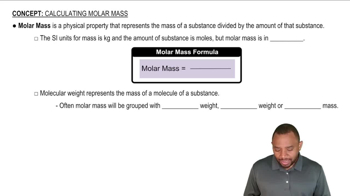
Molar Mass

Molar mass is the mass of one mole of a substance, typically expressed in grams per mole (g/mol). It is used to convert between the mass of a substance and the number of moles, which is necessary for stoichiometric calculations. For this problem, knowing the molar masses of carbon (12.01 g/mol) and sulfur (32.07 g/mol) is vital for accurately calculating the total emissions of CO2 and SO2 from the coal burned.
추천 영상:
가이드 코스
02:11
Molar Mass Concept
관련 실천
교과서 질문

In 1986 an electrical power plant in Taylorsville, Georgia, burned 8,376,726 tons of coal, a national record at that time. (b) If 55% of the SO2 could be removed by reaction with powdered CaO to form CaSO3, how many tons of CaSO3 would be produced?

1
views
교과서 질문

(b) Concentrations of lead in the bloodstream are often quoted in units of μg/dL. Averaged over the entire country, the mean concentration of lead in the blood was measured to be 1.6 μg/dL in 2008. Express this concentration in ppb.

378
views
교과서 질문

The water supply for a midwestern city contains the following impurities: coarse sand, finely divided particulates, nitrate ions, trihalomethanes, dissolved phosphorus in the form of phosphates, potentially harmful bacterial strains, dissolved organic substances. Which of the following processes or agents, if any, is effective in removing each of these impurities: coarse sand filtration, activated carbon filtration, aeration, ozonization, precipitation with aluminum hydroxide?

406
views
교과서 질문

The estimated average concentration of NO2 in air in the United States in 2006 was 0.016 ppm. (a) Calculate the partial pressure of the NO2 in a sample of this air when the atmospheric pressure is 755 torr (99.1 kPa).

504
views
교과서 질문

An impurity in water has an extinction coefficient of 3.45⨉103 M-1 cm-1 at 280 nm, its absorption maximum (A Closer Look, p. 576). Below 50 ppb, the impurity is not a problem for human health. Given that most spectrometers cannot detect absorbances less than 0.0001 with good reliability, is measuring the absorbance of a water sample at 280 nm a good way to detect concentrations of the impurity above the 50-ppb threshold?

476
views