
Ch.18 - Chemistry of the Environment
Brown - Chemistry: The Central Science 14th Edition
Brown14th EditionChemistry: The Central ScienceISBN: 9780134414232당신이 사용하는 게 아니라요?교과서 변경
18장, 문제 5

Where does the energy come from to evaporate the esti- mated 425,000 km3 of water that annually leaves the oceans, as illustrated here? [Section 18.3]

검증된 단계별 안내
1
Understand that the energy required for evaporation comes from the sun, which provides the heat necessary to convert liquid water into water vapor.
Recognize that the process of evaporation involves breaking the intermolecular forces between water molecules, which requires energy.
Consider that the sun's energy is absorbed by the ocean's surface, increasing the kinetic energy of water molecules, allowing them to escape into the atmosphere as vapor.
Acknowledge that this process is part of the water cycle, where solar energy drives the evaporation of water from the ocean's surface.
Note that the energy involved in this process is often measured in terms of the heat of vaporization, which is the amount of energy required to convert a given amount of liquid into vapor.

비슷한 문제에 대한 검증된 영상 답변:

이 영상 해법은 위 문제에 도움이 된다고 튜터들이 추천한 것입니다.
영상 길이:
53s

주요 개념

질문에 올바르게 답하기 위해 반드시 이해해야 하는 핵심 개념들은 다음과 같습니다.

Evaporation

Evaporation is the process by which liquid water transforms into vapor, occurring at the surface of the liquid. This phase change requires energy, typically in the form of heat, which is absorbed from the surrounding environment. Factors such as temperature, humidity, and wind speed influence the rate of evaporation, making it a critical component of the water cycle.
추천 영상:
가이드 코스
04:50
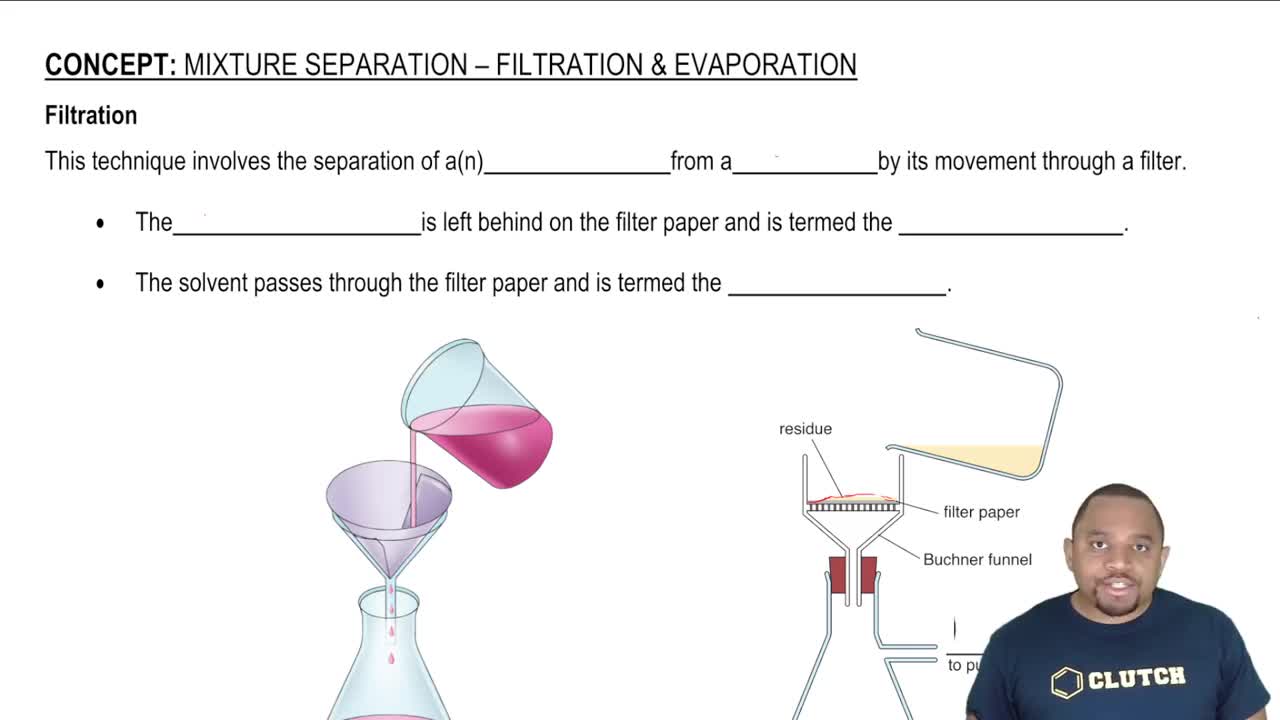
Filtration and Evaporation

Energy Sources for Evaporation

The energy required for evaporation primarily comes from solar radiation, which heats the surface of the oceans. This energy increases the kinetic energy of water molecules, allowing them to overcome intermolecular forces and escape into the atmosphere as vapor. Additionally, heat from the atmosphere and ocean currents can also contribute to the energy needed for this process.
추천 영상:
가이드 코스
04:50
Filtration and Evaporation

Water Cycle

The water cycle describes the continuous movement of water within the Earth and atmosphere, encompassing processes such as evaporation, condensation, precipitation, and runoff. Evaporation plays a vital role in this cycle, as it transfers water from the oceans to the atmosphere, where it can later condense and fall back to the surface as precipitation, thus sustaining ecosystems and weather patterns.
추천 영상:
가이드 코스
03:49
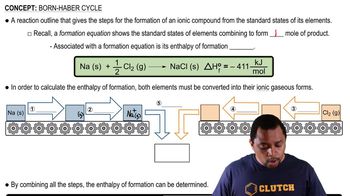
Born Haber Cycle
관련 실천
교과서 질문

The figure shows the three lowest regions of Earth's atmo- sphere.

(d) An aurora borealis is due to excitation of atoms and molecules in the atmosphere 55–95 km above Earth's surface. Which regions in the figure are involved in an aurora borealis?

307
views
교과서 질문

You are working with an artist who has been commissioned to make a sculpture for a big city in the eastern United States. The artist is wondering what material to use to make her sculpture because she has heard that acid rain in the eastern United States might destroy it over time. You take samples of granite, marble, bronze, and other materials, and place them outdoors for a long time in the big city. You periodically examine the appearance and measure the mass of the samples. (a) What observations would lead you to conclude that one or more of the materials are well- suited for the sculpture?

476
views
1
rank
교과서 질문

You are working with an artist who has been commissioned to make a sculpture for a big city in the eastern United States. The artist is wondering what material to use to make her sculpture because she has heard that acid rain in the eastern United States might destroy it over time. You take samples of granite, marble, bronze, and other materials, and place them outdoors for a long time in the big city. You periodically examine the appearance and measure the mass of the samples. (b) What chemical process (or processes) is (are) the most likely responsible for any observed changes in the materials? [Section 18.2]

598
views
교과서 질문

(a) What is the primary basis for the division of the atmosphere into different regions?

340
views