
교과서 질문
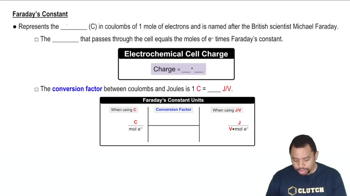
During a period of discharge of a lead–acid battery, 402 g of Pb from the anode is converted into PbSO4(s). (b) How many coulombs of electrical charge are transferred from Pb to PbO2?
1
views

 검증된 단계별 안내
 02:46
02:46
 01:40
01:40 02:11
02:11During a period of discharge of a lead–acid battery, 402 g of Pb from the anode is converted into PbSO4(s). (b) How many coulombs of electrical charge are transferred from Pb to PbO2?
During a period of discharge of a lead–acid battery, 402 g of Pb from the anode is converted into PbSO4(s). (a) What mass of PbO2(s) is reduced at the cathode during this same period?
During the discharge of an alkaline battery, 4.50 g of Zn is consumed at the anode of the battery. (a) What mass of MnO2 is reduced at the cathode during this discharge?
Heart pacemakers are often powered by lithium–silver chromate 'button' batteries. The overall cell reaction is 2 Li(s) + Ag2CrO4(s) → Li2CrO4(s) + 2 Ag(s) (b) Choose the two half-reactions from Appendix E that most closely approximate the reactions that occur in the battery. What standard emf would be generated by a voltaic cell based on these half-reactions?
Heart pacemakers are often powered by lithium–silver chromate 'button' batteries. The overall cell reaction is 2 Li(s) + Ag2CrO4(s) → Li2CrO4(s) + 2 Ag(s) (a) Lithium metal is the reactant at one of the electrodes of the battery. Is it the anode or the cathode?