Ch.1 - Chemical Tools: Experimentation & Measurement
McMurry - Chemistry 8th Edition
McMurry8th EditionChemistryISBN: 9781292336145당신이 사용하는 게 아니라요?교과서 변경
1장, 문제 86b

How many significant figures are in each of the following measurements? (b) 59.0001 cm

검증된 단계별 안내
1
Identify all the non-zero digits in the measurement, as they are always significant.
Recognize that any zeros between non-zero digits are also significant.
Note that zeros to the right of a decimal point and following a non-zero digit are significant.
Apply these rules to the measurement 59.0001 cm to determine the number of significant figures.
Count all the significant figures identified in the previous steps to find the total number of significant figures in the measurement.

비슷한 문제에 대한 검증된 영상 답변:

이 영상 해법은 위 문제에 도움이 된다고 튜터들이 추천한 것입니다.
영상 길이:
1m

주요 개념

질문에 올바르게 답하기 위해 반드시 이해해야 하는 핵심 개념들은 다음과 같습니다.

Significant Figures

Significant figures are the digits in a number that contribute to its precision. This includes all non-zero digits, any zeros between significant digits, and trailing zeros in the decimal portion. Understanding significant figures is crucial for accurately reporting measurements and ensuring that calculations reflect the precision of the data.
추천 영상:
가이드 코스
01:09
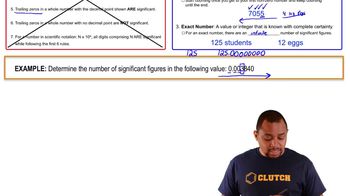
Significant Figures Example

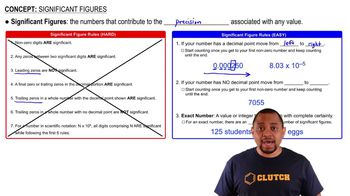
Rules for Counting Significant Figures

There are specific rules for determining the number of significant figures in a measurement. Non-zero digits are always significant, zeros between significant digits are significant, and leading zeros are not. Trailing zeros in a decimal number are significant, while those in a whole number without a decimal point are ambiguous. These rules help in maintaining consistency in scientific communication.
추천 영상:
가이드 코스
04:40
Significant Figures Rules

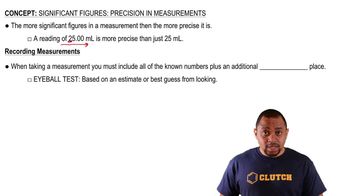
Precision vs. Accuracy

Precision refers to the consistency of repeated measurements, while accuracy indicates how close a measurement is to the true value. In the context of significant figures, a measurement with more significant figures is generally considered more precise. Understanding the distinction between these two concepts is essential for interpreting data and assessing the reliability of measurements.
추천 영상:
가이드 코스
01:49
Significant Figures Precision