Ch.1 - Chemical Tools: Experimentation & Measurement
McMurry - Chemistry 8th Edition
McMurry8th EditionChemistryISBN: 9781292336145당신이 사용하는 게 아니라요?교과서 변경
1장, 문제 86d

How many significant figures are in each of the following measurements? (d) 0.004 50 m

검증된 단계별 안내
1
Identify all non-zero digits in the measurement, as they are always significant.
Recognize that any zeros between non-zero digits are also significant.
Note that leading zeros, which are zeros that precede all non-zero digits, are not significant.
Apply these rules to the given measurement: 0.004 50 m.
Count the significant figures: the non-zero digits and any zeros between them.

비슷한 문제에 대한 검증된 영상 답변:

이 영상 해법은 위 문제에 도움이 된다고 튜터들이 추천한 것입니다.
영상 길이:
1m

주요 개념

질문에 올바르게 답하기 위해 반드시 이해해야 하는 핵심 개념들은 다음과 같습니다.

Significant Figures

Significant figures are the digits in a number that contribute to its precision. This includes all non-zero digits, any zeros between significant digits, and trailing zeros in the decimal portion. Understanding significant figures is crucial for accurately reporting measurements in scientific contexts.
추천 영상:
가이드 코스
01:09
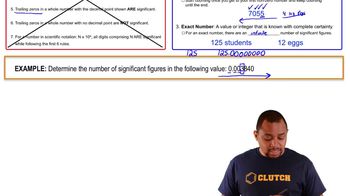
Significant Figures Example

Leading Zeros

Leading zeros are the zeros that precede all non-zero digits in a number. They are not considered significant because they do not affect the precision of the measurement. For example, in the number 0.00450, the leading zeros (0.00) do not count towards the significant figures.
추천 영상:
가이드 코스
02:44
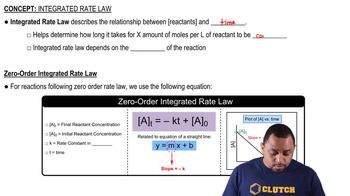
Zero-Order Reactions

Trailing Zeros in Decimal Numbers

Trailing zeros in a decimal number are significant because they indicate the precision of the measurement. For instance, in the measurement 0.00450 m, the two trailing zeros after the 5 are significant, indicating that the measurement is precise to the thousandths place.
추천 영상:
가이드 코스
00:46
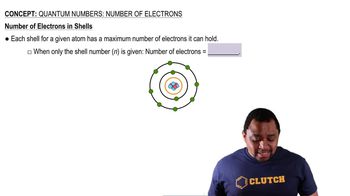
Number of Electrons in Shells