 뒤로
뒤로Chromosomal Mutations: Variations in Number and Arrangement
스터디 가이드 - 스마트 노트
 자료에 맞춘 맞춤형 노트, 핵심 정의, 예시, 맥락을 확장해 제공합니다.
Chromosomal Mutations: Variations in Number and Arrangement
Introduction to Chromosomal Mutations
Chromosomal mutations involve changes at a scale larger than individual genes, affecting the structure or number of entire chromosomes. These mutations can be lethal, especially in animals, or lead to significant phenotypic changes in plants. Because these changes occur at the chromosomal level, they are often heritable and can have profound effects on an organism's development and evolution.
Types of Chromosomal Modifications:
Change in chromosome number (aneuploidy, polyploidy)
Chromosome deletions and duplications
Chromosomal rearrangements (inversions, translocations)
Consequences:
Lethality in animals
Phenotypic variation in plants
Potential for heritability
Chromosome Number Variations
Aneuploidy
Aneuploidy refers to the presence of an abnormal number of chromosomes in a cell. It results from nondisjunction events during meiosis, where chromosomes fail to separate properly.
Monosomy (2n - 1): Loss of a single chromosome from a pair. Generally not tolerated in animals except for small chromosomes (e.g., X in Turner syndrome).
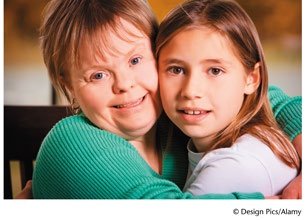
Trisomy (2n + 1): Addition of an extra chromosome. More tolerated than monosomy, especially for smaller chromosomes (e.g., trisomy 21 in Down syndrome).
Haploinsufficiency: Condition where a single copy of a gene is insufficient for normal function.
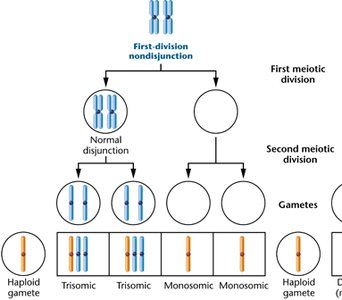
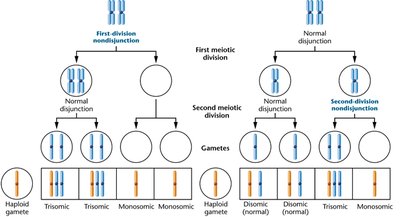
Examples of Human Aneuploidy Syndromes
Klinefelter syndrome (XXY): 47 chromosomes
Turner syndrome (X): 45 chromosomes (monosomy X)
Trisomy X (XXX): 47 chromosomes
XYY syndrome: 47 chromosomes
Down syndrome (trisomy 21): 47,21+; most common viable human aneuploidy
Patau syndrome (trisomy 13): 47,13+
Edwards syndrome (trisomy 18): 47,18+
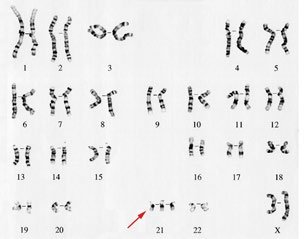
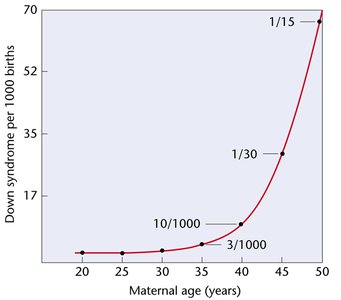
Detection Methods: Amniocentesis, chorionic villus sampling, non-invasive prenatal genetic diagnosis (NIPGD), and karyotyping.
Euploidy and Polyploidy
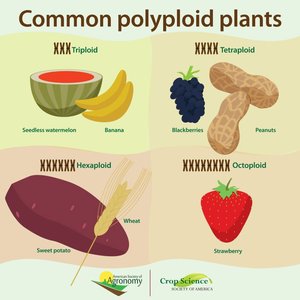
Euploidy refers to changes in the number of complete sets of chromosomes. Polyploidy is the presence of more than two sets of chromosomes and is common in plants.
Triploid (3n): Three sets of chromosomes
Tetraploid (4n): Four sets of chromosomes
Autopolyploidy: Polyploidy arising within a single species
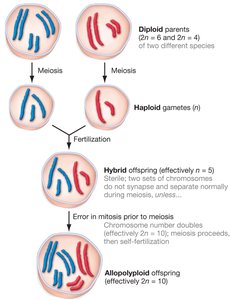
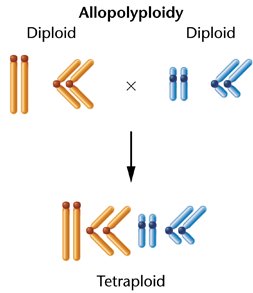
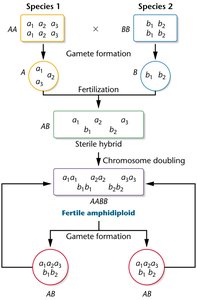
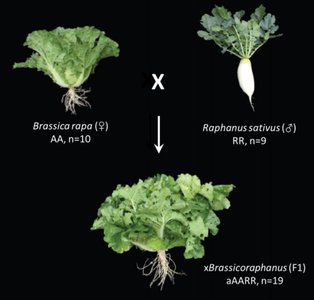
Allopolyploidy: Polyploidy resulting from hybridization between different species
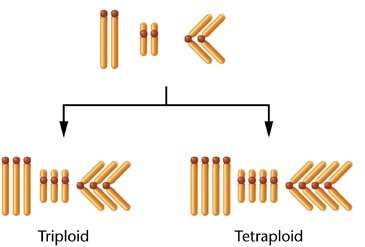
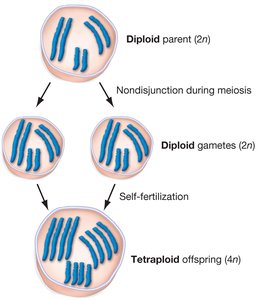
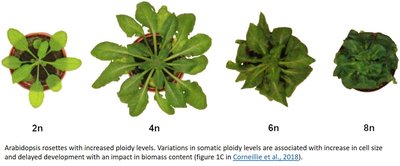
Autopolyploidy
Results from chromosome duplication within a species
Can produce triploid or tetraploid individuals
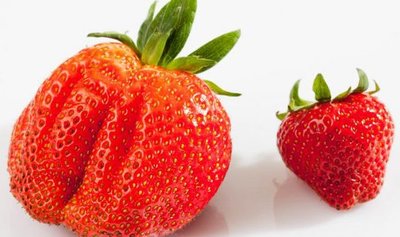
Often leads to larger cell and organism size, especially in plants
Allopolyploidy
Results from hybridization between two species followed by chromosome doubling
Can restore fertility in otherwise sterile hybrids
Example: Wheat (Triticum) and Triticale (wheat-rye hybrid)
Endopolyploidy
Some cells within an organism are polyploid, while the rest are diploid
Examples: Human liver cells (4n, 8n, 16n), water strider salivary glands (up to 2048n)
Chromosomal Structural Variations
Deletions
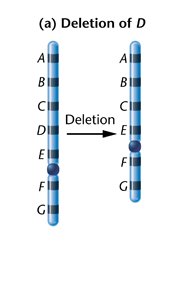
Deletions involve the loss of a chromosomal segment. They can be terminal (end of chromosome) or intercalary (internal segment).
Terminal deletion: Loss of a segment from the end of a chromosome
Intercalary deletion: Loss of an internal segment
Deletions can unmask recessive alleles and cause genetic disorders
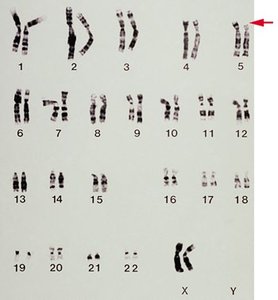
Example: Cri du Chat Syndrome
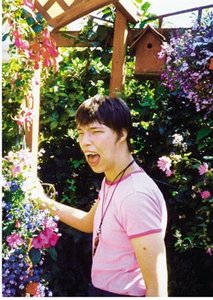
Caused by deletion of part of chromosome 5 (46, 5p-)
Symptoms: Malformations, gastrointestinal and cardiac complications, intellectual disability, abnormal glottis and larynx
Duplications
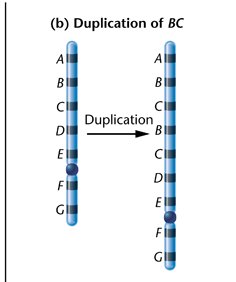
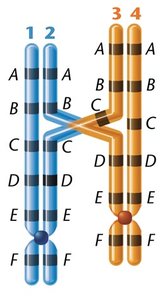
Duplications are the presence of an extra segment of a chromosome. They can arise from unequal crossing over or replication errors and may result in compensation loops during meiosis.
Gene redundancy: Multiple copies of genes, such as rRNA genes, support increased protein synthesis
Gene amplification: Selective replication of certain genes (e.g., rDNA in oocytes)
Example: Drosophila Bar Mutation
Duplication on the X chromosome reduces the number of eye facets
Wild type: 800 facets; Bar heterozygote: 350 facets; Bar homozygote: 70 facets
Gene Duplication in Evolution
Neofunctionalization: Duplicated gene acquires a new function
Subfunctionalization: Duplicated genes divide the original function
Examples: Trypsin and chymotrypsin, hemoglobin and myoglobin
Gene Families and Copy Number Variations (CNVs)
Gene families: Groups of related genes with similar functions, often located near each other
CNVs: Differences in the number of copies of certain genes among individuals; can affect disease susceptibility
Gene | CNV Effect |
|---|---|
CCL3L1 | Increased copies, slower HIV progression |
EGFR | Increased copies, better lung cancer treatment response |
DEFB | Decreased copies, higher risk of Crohn's disease |
Inversions
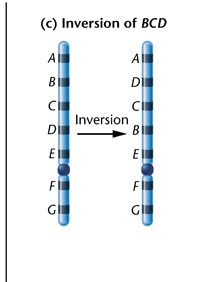
Inversions occur when a chromosomal segment is reversed end to end. They do not involve the addition or loss of genetic material but can disrupt gene function and affect meiosis.
Paracentric inversion: Does not include the centromere
Pericentric inversion: Includes the centromere
Inverted heterozygotes form inversion loops during meiosis, which can lead to abnormal gametes
Translocations
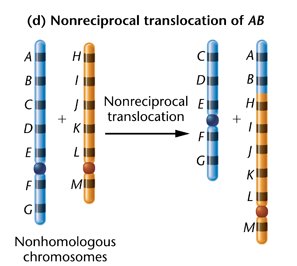
Translocations involve the movement of a chromosomal segment to a non-homologous chromosome. They can be reciprocal (exchange of segments) or nonreciprocal (one-way transfer).
Reciprocal translocation: Exchange of segments between two non-homologous chromosomes
Robertsonian translocation: Fusion of two acrocentric chromosomes, often leading to familial Down syndrome
Segregation Patterns
Alternate segregation: Produces balanced gametes
Adjacent segregation: Produces unbalanced gametes, often leading to inviable offspring
Familial Down Syndrome
Caused by Robertsonian translocation between chromosomes 14 and 21
One parent is a carrier with a normal phenotype but can pass on the translocation to offspring
Summary Table: Types of Chromosomal Mutations
Type | Description | Example |
|---|---|---|
Aneuploidy | Abnormal number of chromosomes | Down syndrome (trisomy 21) |
Polyploidy | More than two sets of chromosomes | Wheat (hexaploid), strawberry (octoploid) |
Deletion | Loss of chromosome segment | Cri du chat syndrome |
Duplication | Extra copy of chromosome segment | Drosophila Bar mutation |
Inversion | Reversal of chromosome segment | Paracentric/pericentric inversions |
Translocation | Segment moves to non-homologous chromosome | Familial Down syndrome |
