 뒤로
뒤로DNA Structure and Analysis: Foundations of Genetic Material
스터디 가이드 - 스마트 노트
 자료에 맞춘 맞춤형 노트, 핵심 정의, 예시, 맥락을 확장해 제공합니다.
DNA Structure and Analysis
Characteristics of True Genetic Material
The genetic material must fulfill several essential criteria to serve its biological function. These include information storage, expression, variation, and replication.
Information Storage: The genetic material acts as the instruction guide for all cellular activities, including gene regulation.
Expression: The material must be able to direct the formation of phenotypes through a series of molecular steps.
Variation: It must allow for differences among individuals, providing the basis for evolution.
Replication: The material must be capable of accurate duplication for cell division and inheritance.
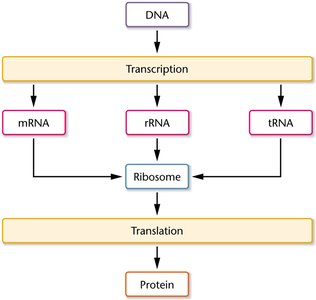
Central Dogma: The flow of genetic information follows the central dogma: DNA is transcribed into RNA, which is then translated into protein.
History of the Debate: DNA vs. Protein as Genetic Material
Early scientific consensus favored proteins as the genetic material due to their complexity and diversity. DNA, with only four nucleotides, was considered too simple. This view changed through key experiments.
Frederick Griffith's Experiment: Demonstrated transformation in Streptococcus pneumoniae by showing that a non-virulent strain could become virulent when exposed to heat-killed virulent cells.

Control Experiments: Showed that only living virulent cells caused disease, while heat-killed virulent cells did not.
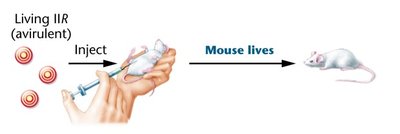
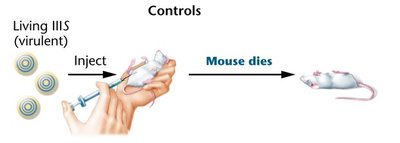
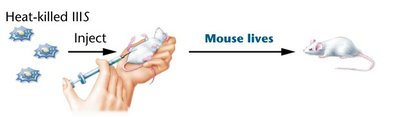
Critical Experiment: Mixing living avirulent and heat-killed virulent cells resulted in the recovery of living virulent cells, indicating a 'transforming principle.'
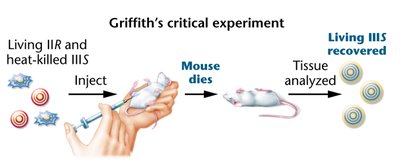
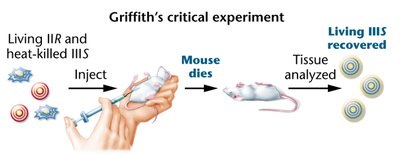
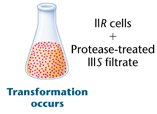
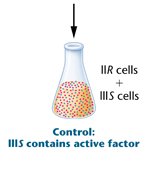
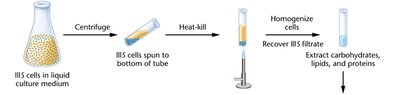
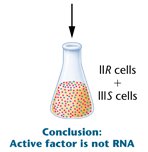
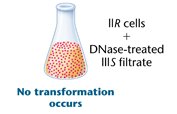
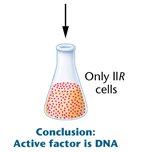
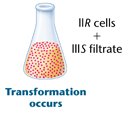
Avery, MacLeod, and McCarty: Identified DNA as the transforming principle by systematically eliminating proteins and RNA as candidates.
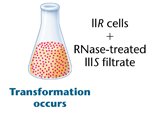
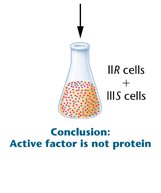
Hershey-Chase Experiment
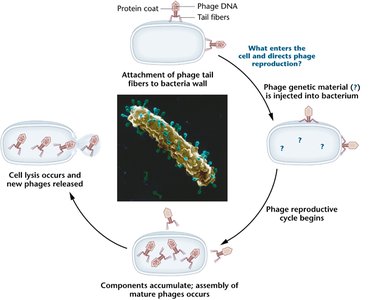
This experiment confirmed DNA as the genetic material using bacteriophages and radioactive labeling. DNA was labeled with 32P, and protein with 35S. Only DNA entered the bacterial cells and directed viral reproduction.
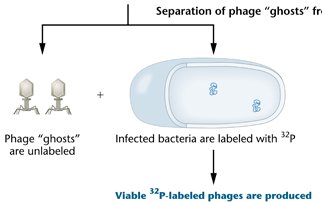
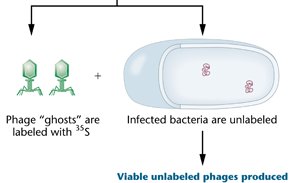
Evidence for DNA as the Predominant Genetic Material
Both direct and indirect evidence support DNA as the genetic material, especially in eukaryotes.
Indirect Evidence: DNA is found in chromosomes, mitochondria, and chloroplasts—sites of genetic function. Protein is more widely distributed.
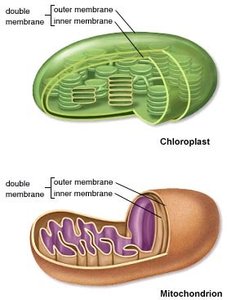
Ploidy and DNA Content: Haploid cells have half the DNA content of diploid cells, consistent with genetic expectations.
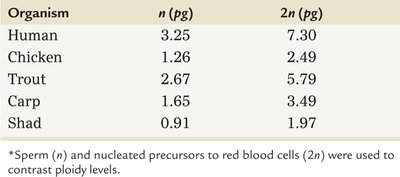
Organism | n (pg) | 2n (pg) |
|---|---|---|
Human | 3.25 | 7.30 |
Chicken | 1.26 | 2.49 |
Trout | 2.67 | 5.79 |
Carp | 1.65 | 3.49 |
Shad | 0.91 | 1.97 |
UV Mutagenesis: DNA absorbs UV light at 260 nm, matching the wavelength that causes mutations, while proteins absorb at 280 nm.
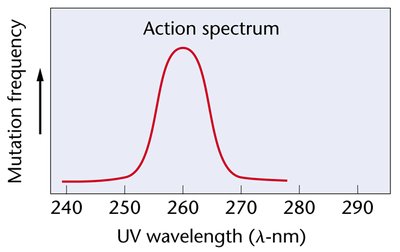
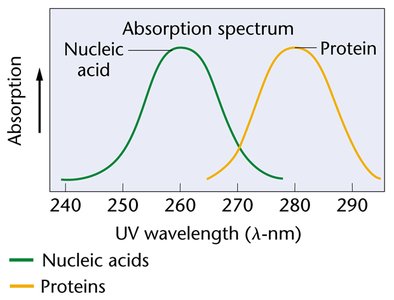
Direct Evidence: Recombinant DNA technology and genomics demonstrate that DNA sequences determine phenotypes and can be manipulated experimentally.
RNA as Genetic Material in Some Viruses
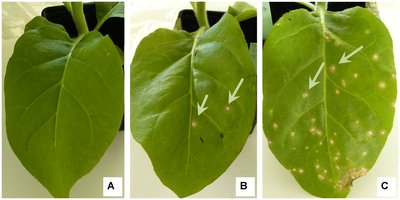
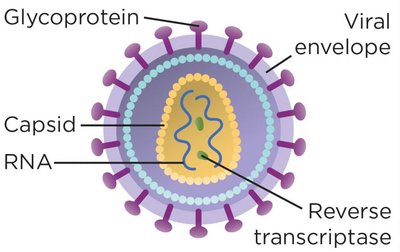
While DNA is the primary genetic material in most organisms, some viruses use RNA. Examples include the tobacco mosaic virus and retroviruses, which utilize reverse transcriptase to convert RNA into DNA in host cells.
Nucleic Acid Chemistry and Structure
Nucleotides are the building blocks of nucleic acids, composed of a nitrogenous base, a pentose sugar, and a phosphate group. Bases are classified as purines (adenine, guanine) or pyrimidines (cytosine, thymine, uracil).
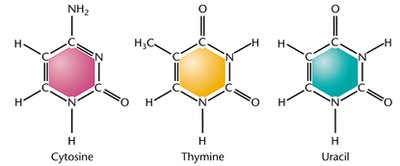
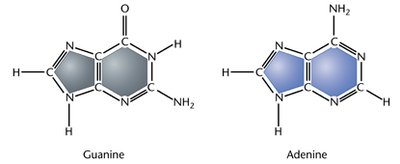
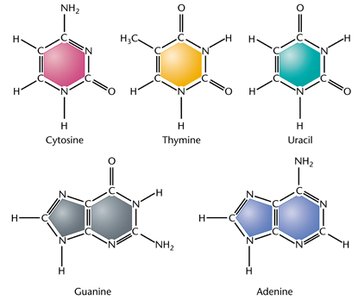
Nucleosides: Consist of a base and sugar.
Nucleotides: Consist of a base, sugar, and phosphate group.
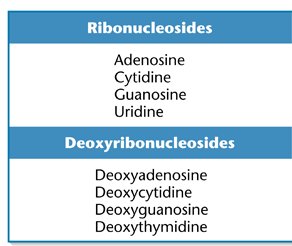
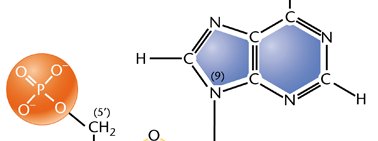
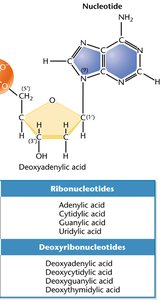
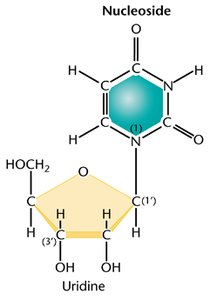
Polymerization: Nucleotides are joined by phosphodiester bonds between the 5' and 3' carbons of the sugar, giving directionality to the nucleic acid chain.
DNA Structure and Function
The double helix structure of DNA, elucidated by Watson and Crick, is stabilized by hydrogen bonds between complementary bases. Chargaff's rules state that purines equal pyrimidines, and A pairs with T, C pairs with G.
Antiparallel Strands: The two DNA strands run in opposite directions, allowing proper base pairing.
Hydrogen Bonding: A-T pairs have two hydrogen bonds; C-G pairs have three, affecting DNA stability.
Comparison of DNA and RNA
DNA and RNA differ in their sugar (deoxyribose vs ribose), bases (thymine vs uracil), and structure (double vs single stranded). RNA types include mRNA, rRNA, and tRNA, each with distinct functions in gene expression.
mRNA: Carries genetic information from DNA to ribosomes.
rRNA: Forms the structural and functional core of ribosomes.
tRNA: Transfers amino acids during protein synthesis.
Techniques for Examining Nucleic Acids
Several laboratory techniques are used to analyze nucleic acids:
Melting Point: DNA strands separate at higher temperatures, with GC content affecting stability.
Gel Electrophoresis: Separates DNA fragments by size using an electric field; smaller fragments migrate faster.
