 뒤로
뒤로DNA Structure and Analysis: Foundations of Genetic Material
스터디 가이드 - 스마트 노트
 자료에 맞춘 맞춤형 노트, 핵심 정의, 예시, 맥락을 확장해 제공합니다.
DNA Structure and Analysis
Characteristics of True Genetic Material
Genetic material is the substance responsible for heredity and must fulfill several essential criteria to function in living organisms.
Information Storage: The genetic material must store all the instructions necessary for cellular structure and function.
Expression: It must be able to direct the synthesis of proteins and other molecules, resulting in observable phenotypes.
Variation: Genetic material must be capable of variation to allow for evolutionary adaptation and diversity.
Replication: It must be accurately copied and transmitted to offspring during cell division (mitosis and meiosis).
These properties are summarized in the central dogma of molecular biology, which describes the flow of genetic information from DNA to RNA to protein.
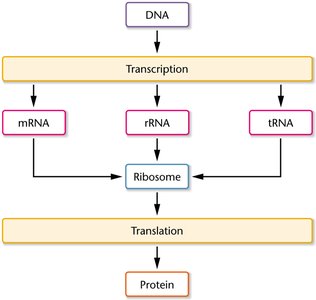
History of the Debate: DNA vs. Protein as Genetic Material
Early in the 20th century, proteins were considered the likely candidates for genetic material due to their complexity and diversity (20 amino acids). DNA, with only four nucleotides, was thought too simple. This view changed through a series of key experiments.
Griffith's Transformation Experiment
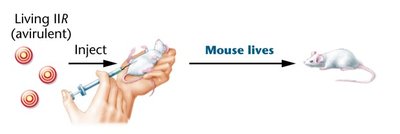
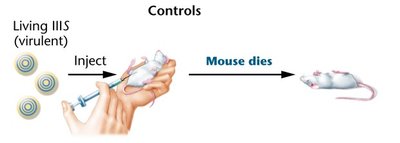
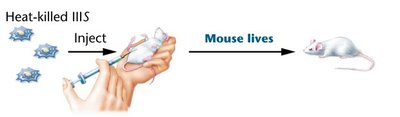
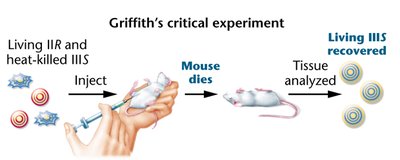
Frederick Griffith studied Streptococcus pneumoniae and discovered that non-virulent bacteria could be transformed into virulent forms by exposure to heat-killed virulent bacteria. This suggested the presence of a "transforming principle."
Smooth (S) strain: Virulent, has a polysaccharide capsule, forms smooth colonies.
Rough (R) strain: Avirulent, lacks capsule, forms rough colonies.

Avery, MacLeod, and McCarty Experiment
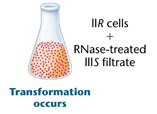
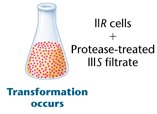
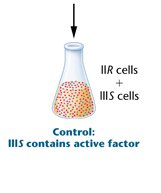
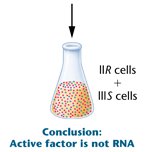
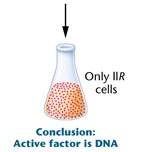
These researchers identified DNA as the "transforming principle" by systematically eliminating proteins and RNA from bacterial extracts. Only extracts treated with DNase (which destroys DNA) lost the ability to transform R cells into S cells, confirming DNA as the genetic material.

Hershey-Chase Experiment
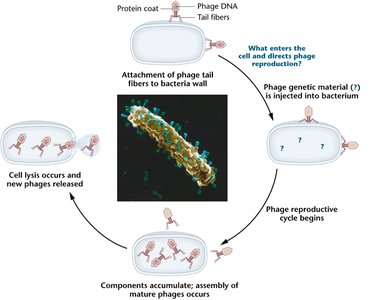
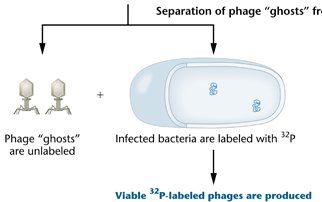
This experiment used bacteriophages labeled with radioactive isotopes to show that DNA, not protein, enters bacterial cells and directs viral replication. DNA was labeled with 32P (phosphorus), and protein with 35S (sulfur). Only 32P was found inside infected bacteria, confirming DNA as the genetic material.
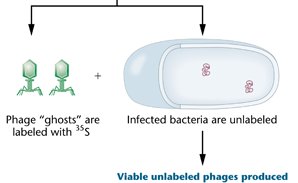
Evidence Supporting DNA as Genetic Material
Indirect Evidence
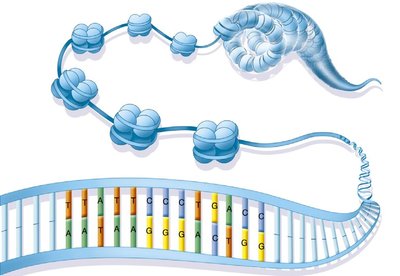
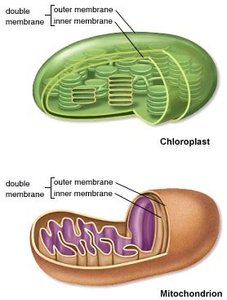
Localization: DNA is found in chromosomes, mitochondria, and chloroplasts—sites of genetic function—while proteins are more widely distributed.
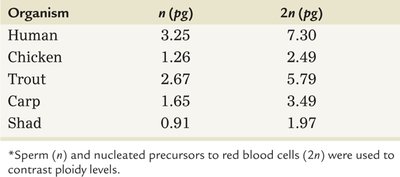
Ploidy Correlation: The amount of DNA doubles in diploid cells compared to haploid cells, matching genetic expectations. Protein content does not show this pattern.
Organism | n (pg) | 2n (pg) |
|---|---|---|
Human | 3.25 | 7.30 |
Chicken | 1.26 | 2.49 |
Trout | 2.67 | 5.79 |
Carp | 1.65 | 3.49 |
Shad | 0.91 | 1.97 |
UV Mutagenesis
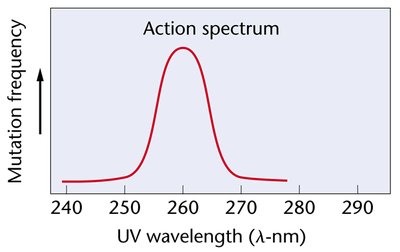
DNA absorbs UV light maximally at 260 nm, which is also the wavelength most effective at inducing mutations. Proteins absorb maximally at 280 nm, but this does not correlate with mutation frequency, further supporting DNA's role as genetic material.
Direct Evidence
Recombinant DNA Technology: Inserting foreign DNA into bacteria enables them to produce new proteins, demonstrating that DNA carries genetic instructions.
Genomics: Comparing DNA sequences among organisms reveals consistent patterns associated with specific traits or conditions.
RNA as Genetic Material in Some Viruses
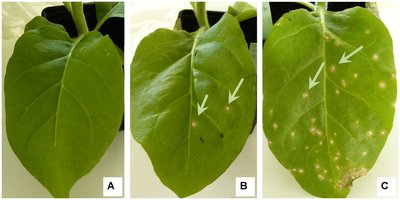
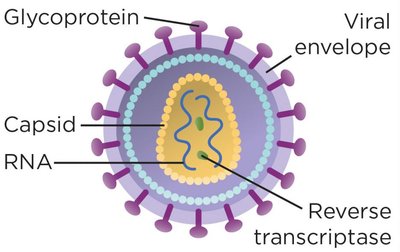
While DNA is the primary genetic material in most organisms, some viruses use RNA. For example, the tobacco mosaic virus and Qβ phage use RNA, which can be replicated in vitro with RNA replicase. Retroviruses, such as HIV, use reverse transcriptase to convert their RNA into DNA within host cells.
Nucleic Acid Chemistry and Structure
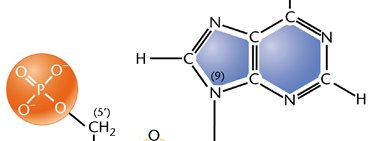
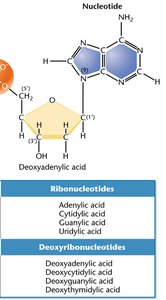
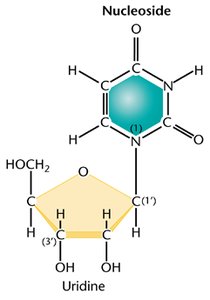
Nucleic acids are polymers of nucleotides, each composed of a nitrogenous base, a five-carbon sugar, and a phosphate group.
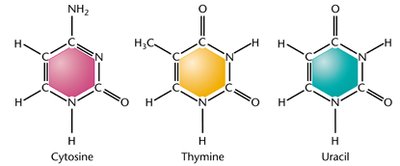
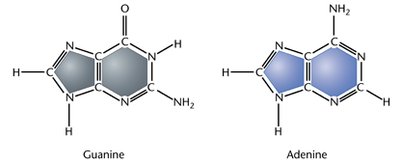
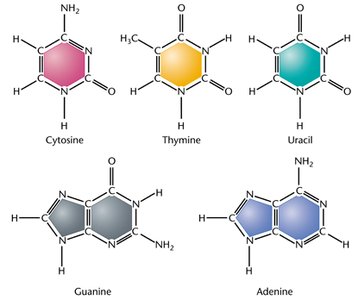
Nitrogenous Bases: Purines (adenine, guanine) and pyrimidines (cytosine, thymine, uracil).
Sugar: Deoxyribose in DNA, ribose in RNA.
Phosphate Group: Links nucleotides via phosphodiester bonds.
Nucleosides and Nucleotides
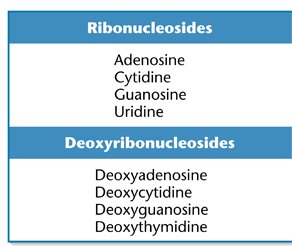
Ribonucleosides | Deoxyribonucleosides |
|---|---|
Adenosine | Deoxyadenosine |
Cytidine | Deoxycytidine |
Guanosine | Deoxyguanosine |
Uridine | Deoxythymidine |
Polymerization of Nucleotides
Nucleotides are joined by phosphodiester bonds between the 5' phosphate of one nucleotide and the 3' hydroxyl of the next, giving nucleic acids directionality (5' to 3'). Short chains are called oligonucleotides; longer chains are polynucleotides.
DNA Structure and Function
The structure of DNA is essential for its function as genetic material. Key discoveries include:
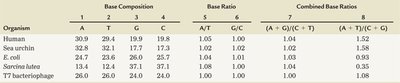
Chargaff's Rules: In DNA, the amount of adenine equals thymine (A = T), and guanine equals cytosine (G = C).
X-ray Crystallography: Franklin and Wilkins showed DNA is helical with repeating distances (0.34 nm, 2.0 nm, 3.4 nm).
Watson and Crick Model: DNA is a double helix with antiparallel strands, held together by hydrogen bonds between complementary bases (A-T: 2 bonds, G-C: 3 bonds).
Organism | A | T | G | C | A/T | G/C |
|---|---|---|---|---|---|---|
Human | 30.9 | 29.4 | 19.9 | 19.8 | 1.05 | 1.01 |
Sea urchin | 32.8 | 32.1 | 17.7 | 17.3 | 1.02 | 1.02 |
E. coli | 24.7 | 23.6 | 26.0 | 25.7 | 1.05 | 1.01 |
S. lutea | 13.4 | 24.9 | 27.1 | 34.6 | 0.54 | 0.78 |
T2 phage | 35.0 | 24.0 | 24.0 | 17.0 | 1.46 | 1.41 |
Comparison of DNA and RNA
DNA and RNA are both nucleic acids but differ in several key aspects:
Sugar: DNA contains deoxyribose; RNA contains ribose.
Bases: DNA uses thymine; RNA uses uracil.
Strandedness: DNA is usually double-stranded; RNA is usually single-stranded but can form secondary structures.
Major types of RNA include:
mRNA (messenger RNA): Carries genetic information from DNA to ribosomes for protein synthesis.
rRNA (ribosomal RNA): Structural and functional component of ribosomes.
tRNA (transfer RNA): Brings amino acids to the ribosome during translation.
Techniques for Examining Nucleic Acids
Melting Point Analysis: Heating DNA separates its strands; higher GC content increases melting temperature due to stronger hydrogen bonding.
Gel Electrophoresis: Separates DNA fragments by size using an electric field; smaller fragments move faster through the gel.
