 뒤로
Population Genetics: Forces Affecting Allele Frequencies and Hardy-Weinberg Equilibrium
스터디 가이드 - 스마트 노트
 자료에 맞춘 맞춤형 노트, 핵심 정의, 예시, 맥락을 확장해 제공합니다.
Population Genetics and Evolution
Introduction to Population Genetics
Population genetics studies the distribution and change of allele frequencies in populations, as influenced by evolutionary forces. It is central to understanding how genetic variation is maintained and how populations evolve over time.
Gene pool: The complete set of genetic information within a population.
Evolution: Long-lasting changes in the gene pool due to natural selection and other forces such as mutation and genetic drift.
Hardy-Weinberg Equilibrium (HWE): A theoretical state where allele and genotype frequencies remain constant from generation to generation in the absence of evolutionary forces.

Forces That Cause Deviation from Hardy-Weinberg Equilibrium
Main Evolutionary Forces
Several forces can alter allele frequencies and disrupt HWE, leading to evolution:
Gene flow (Migration): Movement of alleles between populations.
Genetic drift: Random changes in allele frequencies, especially in small populations.
Mutation: Introduction of new alleles into the gene pool.
Selection: Differential survival and reproduction of individuals based on genotype.
Inbreeding: Mating between related individuals, increasing homozygosity.
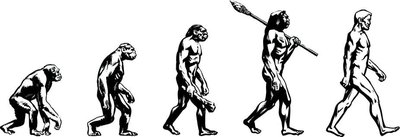
Natural Selection and Its Effects on the Gene Pool
Mechanism of Natural Selection
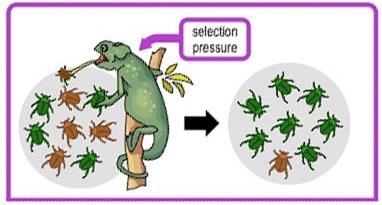
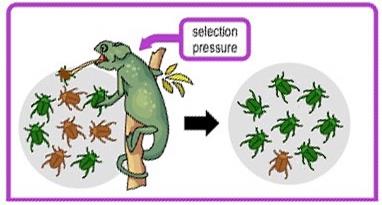
Natural selection favors genotypes that enhance survival and reproduction, increasing their frequency in the gene pool.
Selection pressure: Environmental factors that influence which genotypes survive.
Genotype fitness: The ability of a genotype to contribute alleles to the next generation.
Example: If a population starts with allele frequencies p = 0.3 and q = 0.7, after selection, p may increase to 0.9 and q decrease to 0.1.
Persistence of "Bad" Alleles in Populations
Forces That Maintain Disease-Causing Alleles
Despite natural selection, certain alleles that cause diseases persist in populations due to several mechanisms:
Delayed age of onset: Diseases like Huntington's manifest after reproductive age, allowing alleles to be passed on.
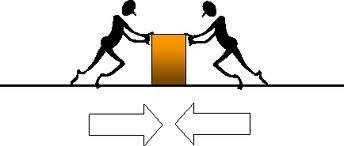
Slow selection against recessive alleles: Recessive alleles are hidden in heterozygotes and are not efficiently removed by selection.
Mutation-selection equilibrium: New mutations introduce harmful alleles at the same rate selection removes them.
Heterozygote superiority: Heterozygotes have a survival advantage, maintaining both alleles in the population.
Selection Efficiency in Haploid vs. Diploid Organisms
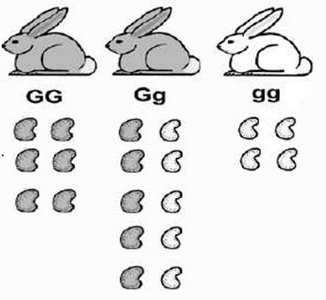
Haploid organisms: Selection is efficient because all alleles are expressed.
Diploid organisms: Recessive alleles can persist in heterozygotes, making selection less efficient.
Mutation-Selection Balance
Mutation introduces new alleles, while selection removes harmful ones. These opposing forces can reach an equilibrium where allele frequencies remain stable.
Key point: Harmful alleles are a stable part of the gene pool due to this balance.
Heterozygote Superiority: Sickle Cell Anemia and Malaria
Malaria and Sickle Cell Anemia
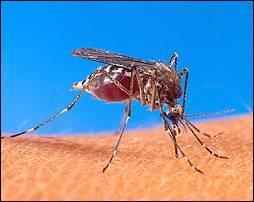
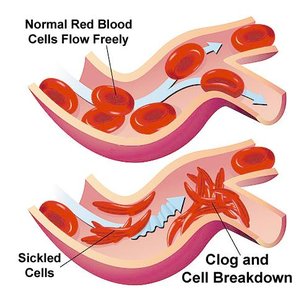
Malaria is a serious infectious disease caused by the parasite Plasmodium, transmitted by mosquitoes. Sickle cell anemia is an autosomal recessive disorder caused by a mutation in the hemoglobin gene.
Malaria: Kills red blood cells and releases toxins, causing severe symptoms and death.
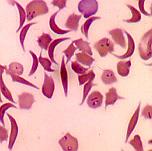
Sickle cell anemia: Causes red blood cells to deform, leading to vessel clotting, pain, and organ failure.
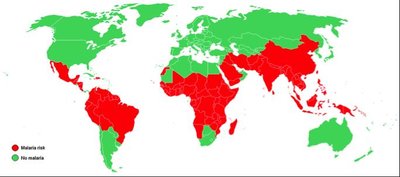
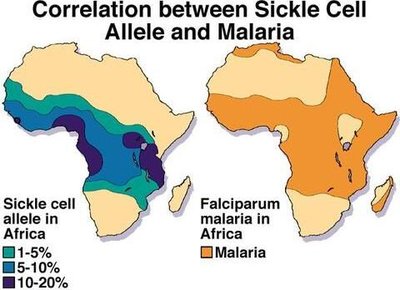
Geographical correlation: Sickle cell allele frequency is higher in regions with malaria risk.

Heterozygote Advantage
Individuals heterozygous for the sickle cell allele (Ss) have increased survival in malaria-endemic regions, compared to homozygous normal (SS) or homozygous sickle (ss).
SS: Susceptible to malaria.
ss: Suffers from sickle cell anemia.
Ss: Resistant to malaria and does not suffer severe sickle cell symptoms.
Result: Both alleles are maintained in the population due to heterozygote superiority.
Inbreeding and Its Effects
Consequences of Inbreeding
Inbreeding increases the risk of homozygosity for rare recessive alleles, leading to higher incidence of genetic diseases.
Individual level: Increased risk of having offspring homozygous for rare recessive alleles.
Population level: Excess of homozygotes compared to random mating.
Historical example: Common among royal families.
Hardy-Weinberg Equilibrium: Checking for Equilibrium
Genotype and Allele Frequencies
The Hardy-Weinberg principle provides equations to predict genotype frequencies from allele frequencies:
Allele frequencies: p (frequency of A), q (frequency of a)
Genotype frequencies: AA, Aa, aa
Equations:
If observed genotype frequencies do not match those predicted by these equations, the population is not in HWE, indicating the influence of evolutionary forces or non-random mating.
Example: Determining HWE
Population | AA | Aa | aa | p | q |
|---|---|---|---|---|---|
Pop#1 | 0.25 | 0.50 | 0.25 | 0.5 | 0.5 |
Pop#2 | 0.36 | 0.28 | 0.36 | 0.5 | 0.5 |
Pop#3 | 0.36 | 0.48 | 0.16 | 0.6 | 0.4 |
To check for HWE, calculate p and q, then use the equations above to predict genotype frequencies. If observed frequencies differ, the population is not in equilibrium.
Summary of Key Points
Natural selection, mutation, genetic drift, gene flow, and inbreeding are forces that affect allele frequencies.
"Bad" alleles persist due to delayed onset, mutation-selection balance, slow selection against recessives, and heterozygote advantage.
Heterozygote superiority can maintain alleles that are harmful in homozygotes but beneficial in heterozygotes.
Hardy-Weinberg equilibrium provides a baseline for detecting evolutionary forces in populations.
