 뒤로
뒤로Transcription and RNA Processing: Mechanisms and Regulation in Prokaryotes and Eukaryotes
스터디 가이드 - 스마트 노트
 자료에 맞춘 맞춤형 노트, 핵심 정의, 예시, 맥락을 확장해 제공합니다.
Transcription and RNA Processing
Overview of Genes and Chromosomes
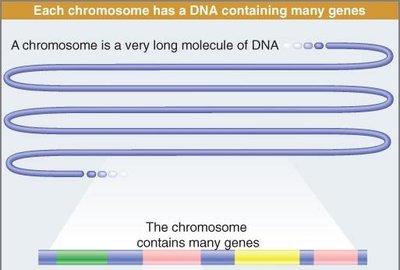
Genes are segments of DNA that encode functional products, typically proteins. Chromosomes are long DNA molecules containing many genes, separated by noncoding regions. The organization and regulation of these genes are essential for proper cellular function.
Chromosome: A single, continuous DNA molecule containing many genes.
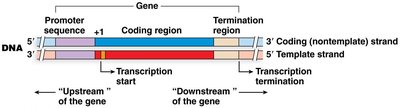
Gene: A sequence of DNA that encodes a functional product.
Intergenic regions: Noncoding DNA sequences between genes; small in bacteria, large in vertebrates.
Bacterial Transcription
Stages of Transcription in Bacteria
Transcription in bacteria is the process by which RNA is synthesized from a DNA template. It occurs in four main stages:
Promoter recognition
Transcription initiation
Chain elongation
Chain termination
RNA Polymerase Structure and Function
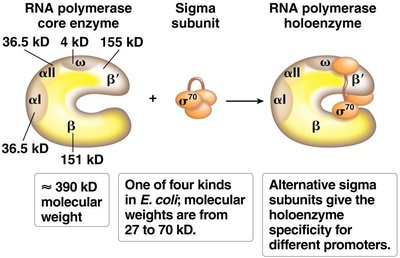
Bacterial RNA polymerase is responsible for synthesizing all types of RNA. The enzyme consists of a core enzyme and a sigma (σ) subunit, which together form the holoenzyme. The sigma subunit is essential for promoter recognition and initiation of transcription.
Core enzyme: Responsible for RNA synthesis.
Sigma subunit: Confers specificity for promoter binding; different sigma factors recognize different promoter sequences.
Promoter Structure and Consensus Sequences
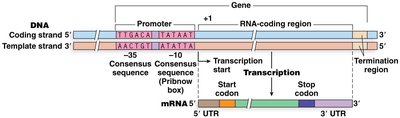
Promoters are DNA sequences upstream of genes that serve as binding sites for RNA polymerase. They contain conserved consensus sequences at the -10 and -35 positions relative to the transcription start site (+1).
-10 consensus sequence (Pribnow box): 5'-TATAAT-3'
-35 consensus sequence: 5'-TTGACA-3'
+1 site: Transcription initiation site
Mechanism of Transcription Initiation, Elongation, and Termination
Transcription initiation involves the binding of RNA polymerase holoenzyme to the promoter, DNA unwinding, and the start of RNA synthesis. Elongation proceeds as the core enzyme synthesizes RNA, and termination occurs when specific sequences signal the end of transcription.
Closed promoter complex: Initial binding of holoenzyme to promoter.
Open promoter complex: DNA unwinding near the -10 region.
Elongation: Sigma subunit dissociates; core enzyme continues RNA synthesis.
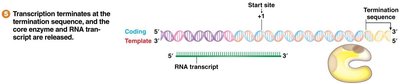
Termination: Triggered by termination sequences, leading to release of RNA and enzyme.




Termination Mechanisms in Bacteria
There are two main mechanisms for transcription termination in bacteria:
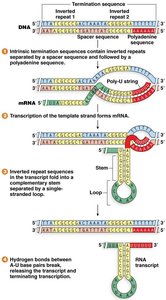
Intrinsic (rho-independent) termination: Involves formation of a hairpin loop in the RNA followed by a string of uracils, causing RNA polymerase to dissociate.
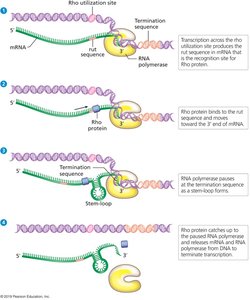
Rho-dependent termination: Requires the rho protein, which binds to the RNA and uses helicase activity to release the transcript from the DNA template.
Eukaryotic Transcription
RNA Polymerases in Eukaryotes
Eukaryotes have three distinct RNA polymerases, each responsible for transcribing different classes of genes:
RNA polymerase I: Transcribes rRNA genes
RNA polymerase II: Transcribes protein-coding genes and most snRNA genes
RNA polymerase III: Transcribes tRNA, one snRNA, and one rRNA
Eukaryotic Promoter Elements
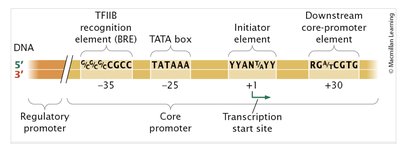
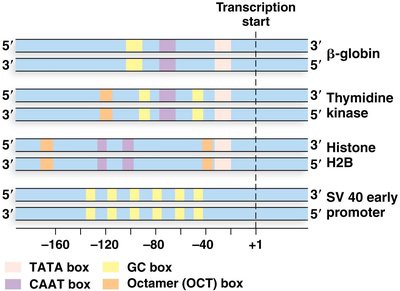
Eukaryotic promoters are more complex and variable than bacterial promoters. Key elements include the TATA box, CAAT box, GC box, and other regulatory sequences. The TATA box is a common core promoter element located around -25.
TATA box: 5'-TATAAA-3', located at -25
CAAT box, GC box, OCT box: Regulatory promoter elements
Initiator element (Inr) and Downstream core-promoter element (DPE): Present if TATA box is absent
Transcription Factor Binding and Initiation Complex Formation
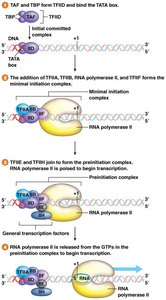
Transcription initiation by RNA polymerase II requires the assembly of general transcription factors (GTFs) at the promoter. The TATA-binding protein (TBP) within TFIID binds the TATA box, followed by the sequential addition of other GTFs and RNA polymerase II to form the pre-initiation complex.
TFIID: Contains TBP and TAFs; binds TATA box
TFIIA, TFIIB, TFIIF, TFIIE, TFIIH: Other GTFs required for initiation
Initiation complex: Directs RNA pol II to the +1 site for transcription start
Enhancers and Silencers
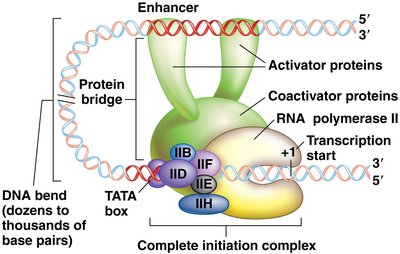
Enhancers and silencers are regulatory DNA sequences that modulate gene expression. Enhancers increase transcription by binding activator proteins and facilitating the assembly of the transcription machinery, often through DNA bending. Silencers repress transcription by binding repressor proteins.
Enhancers: Can be located upstream, downstream, or within genes; act at a distance
Silencers: Also act at a distance; reduce transcription
Post-Transcriptional Processing in Eukaryotes
Overview of mRNA Processing
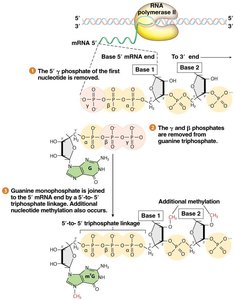
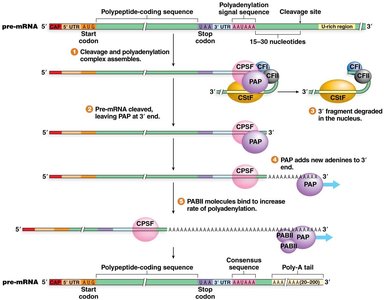
Eukaryotic pre-mRNAs undergo several modifications before becoming mature mRNAs. These include 5' capping, 3' polyadenylation, and intron splicing. These modifications are essential for mRNA stability, export, and translation.
5' capping: Addition of a methylated guanine to the 5' end
3' polyadenylation: Addition of a poly-A tail to the 3' end
Intron splicing: Removal of noncoding introns and joining of exons
Splicing of Pre-mRNA
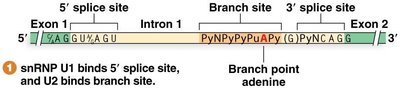
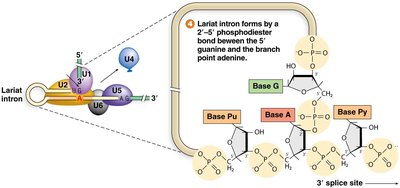
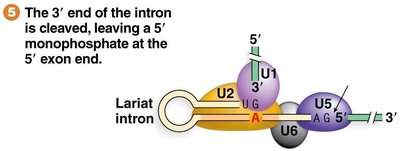
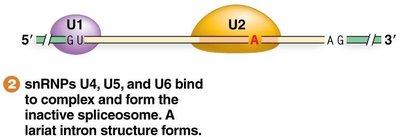
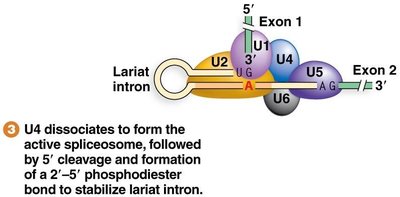
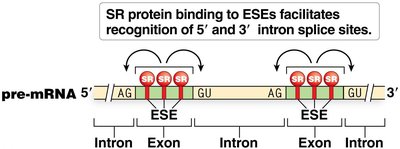
Splicing removes introns from pre-mRNA and joins exons to form mature mRNA. Splicing is catalyzed by the spliceosome, a complex of snRNAs and proteins. Accurate splicing depends on conserved sequences at the 5' and 3' splice sites and the branch point.
5' splice site: Contains invariant GU dinucleotide
3' splice site: Contains invariant AG dinucleotide
Branch site: Contains an invariant adenine (branch point)
Alternative Splicing
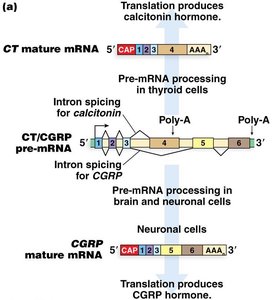
Alternative splicing allows a single gene to produce multiple mRNA variants and thus different proteins. This process is common in humans and increases proteomic diversity.
Alternative splicing: Differential inclusion of exons in mature mRNA
Significance: Enables tissue-specific and developmental regulation of gene expression
Summary Table: Key Differences Between Prokaryotic and Eukaryotic Transcription
Feature | Prokaryotes | Eukaryotes |
|---|---|---|
RNA Polymerases | One | Three (I, II, III) |
Promoter Elements | -10, -35 consensus sequences | TATA box, CAAT box, GC box, etc. |
Transcription Factors | Sigma subunit | Multiple GTFs (TFIID, TFIIA, etc.) |
RNA Processing | Minimal (no capping, poly-A, or splicing) | 5' capping, 3' polyadenylation, splicing |
Location | Cytoplasm | Nucleus (transcription), cytoplasm (translation) |
