Ch. 7 - Sex Determination and Sex Chromosomes
Klug - Concepts of Genetics 12th Edition
Klug12th EditionConcepts of GeneticsISBN: 9780135564776당신이 사용하는 게 아니라요?교과서 변경
7장, 문제 25

The Amami spiny rat (Tokudaia osimensis) lacks a Y chromosome, yet scientists at Hokkaido University in Japan have reported that key sex-determining genes continue to be expressed in this species. Provide possible explanations for why male differentiation can still occur in this mammalian species despite the absence of a Y chromosome.

검증된 단계별 안내
1
Understand the role of the Y chromosome in typical mammalian sex determination. Normally, the Y chromosome carries the SRY (Sex-determining Region Y) gene, which triggers male development by initiating a cascade of gene expression leading to the formation of testes.
Consider alternative mechanisms for male differentiation in the absence of a Y chromosome. One possibility is that the SRY gene or its functional equivalent has translocated to another chromosome, allowing male development to proceed without the Y chromosome.
Explore the role of downstream genes in the sex-determination pathway. Genes such as SOX9, which is activated by SRY, may still be functional and capable of driving male differentiation even if SRY is absent or relocated.
Investigate the possibility of epigenetic regulation. Epigenetic modifications, such as DNA methylation or histone modifications, could activate male-specific genes in the absence of a Y chromosome, ensuring the expression of key sex-determining genes.
Examine the evolutionary context of the Amami spiny rat. Over time, this species may have developed unique genetic or regulatory adaptations that compensate for the loss of the Y chromosome, allowing male differentiation to occur through alternative pathways.

비슷한 문제에 대한 검증된 영상 답변:

이 영상 해법은 위 문제에 도움이 된다고 튜터들이 추천한 것입니다.
영상 길이:
2m

주요 개념

질문에 올바르게 답하기 위해 반드시 이해해야 하는 핵심 개념들은 다음과 같습니다.

Sex Determination Mechanisms

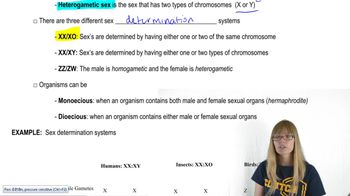
Sex determination in mammals typically involves the presence of sex chromosomes, with the Y chromosome playing a crucial role in male differentiation. However, alternative mechanisms can exist, such as environmental factors or the presence of specific genes that can trigger male development even in the absence of a Y chromosome.
추천 영상:
가이드 코스
04:24
Sex Determination

Gene Expression and Regulation

Gene expression refers to the process by which information from a gene is used to synthesize functional gene products, like proteins. In the case of the Amami spiny rat, key sex-determining genes may still be expressed through regulatory mechanisms that do not rely on the Y chromosome, allowing for male differentiation.
추천 영상:
가이드 코스
02:09
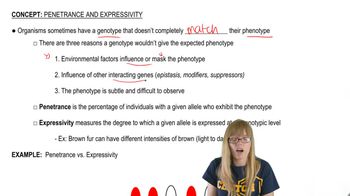
Penetrance and Expressivity

Evolutionary Adaptations

Evolutionary adaptations can lead to unique reproductive strategies in species. The Amami spiny rat may have developed alternative pathways for sex determination that compensate for the lack of a Y chromosome, showcasing how species can adapt to their environments and maintain reproductive functions despite genetic anomalies.
추천 영상:
관련 실천
교과서 질문
What is the role of the enzyme aromatase in sexual differentiation in reptiles?
697
views
교과서 질문

In mice, the X-linked dominant mutation Testicular feminization (Tfm) eliminates the normal response to the testicular hormone testosterone during sexual differentiation. An XY mouse bearing the Tfm allele on the X chromosome develops testes, but no further male differentiation occurs—the external genitalia of such an animal are female. From this information, what might you conclude about the role of the Tfm gene product and the X and Y chromosomes in sex determination and sexual differentiation in mammals? Can you devise an experiment, assuming you can 'genetically engineer' the chromosomes of mice, to test and confirm your explanation?

748
views
교과서 질문

In the wasp Bracon hebetor, a form of parthenogenesis (the development of unfertilized eggs into progeny) resulting in haploid organisms is not uncommon. All haploids are males. When offspring arise from fertilization, females almost invariably result. P. W. Whiting has shown that an X-linked gene with nine multiple alleles (Xₐ, Xb, etc.) controls sex determination. Any homozygous or hemizygous condition results in males, and any heterozygous condition results in females. If an Xₐ/Xb female mates with an Xₐ male and lays 50 percent fertilized and 50 percent unfertilized eggs, what proportion of male and female offspring will result?

613
views
교과서 질문

The genes encoding the red- and green-color-detecting proteins of the human eye are located next to one another on the X chromosome and probably evolved from a common ancestral pigment gene. The two proteins demonstrate 76 percent homology in their amino acid sequences. A normal-visioned woman (with both genes present on each of her two X chromosomes) has a red-color-blind son who was shown to have one copy of the green-detecting gene and no copies of the red-detecting gene. Devise an explanation for these observations at the chromosomal level (involving meiosis).

597
views
교과서 질문

When the cloned cat Carbon Copy (CC) was born, she had black patches and white patches, but completely lacked any orange patches. The knowledgeable students of genetics were not surprised at this outcome. Starting with the somatic ovarian cell used as the source of the nucleus in the cloning process, explain how this outcome occurred.

521
views
교과서 질문

In reptiles, sex determination was thought to be controlled by sex-chromosome systems or by temperature-dependent sex determination without an inherited component to sex. But in the Australian lizard, Pogona vitticeps, it was recently revealed that sex is determined by both chromosome composition and by the temperature at which eggs are incubated. What effects might climate change have on temperature-dependent sex determination in this species, and how might this impact the sex ratio for this species in subsequent generations?

952
views