 뒤로
Alcohols, Phenols, Thiols, and Ethers: Structure, Properties, and Reactions
스터디 가이드 - 스마트 노트
 자료에 맞춘 맞춤형 노트, 핵심 정의, 예시, 맥락을 확장해 제공합니다.
Alcohols, Phenols, Thiols, and Ethers
Introduction
This chapter explores the structure, classification, physical properties, and chemical reactions of alcohols, phenols, thiols, and ethers. These compounds are fundamental in organic and biological chemistry, with important roles in biochemistry, medicine, and industry.
Alcohols
Structure and Classification
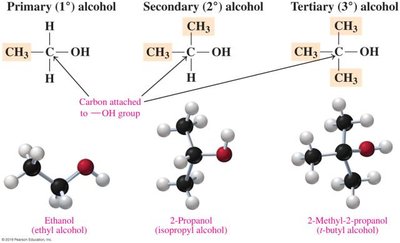
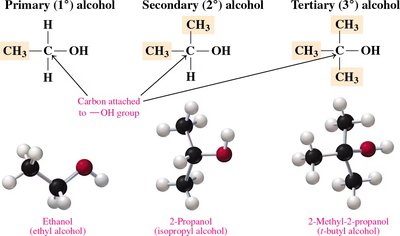
Alcohols are organic compounds containing a hydroxyl group (-OH) bonded to a tetrahedral carbon atom. They are classified based on the number of carbon atoms attached to the carbon bearing the -OH group:
Primary (1º) alcohol: The carbon with the -OH group is attached to one other carbon.
Secondary (2º) alcohol: The carbon with the -OH group is attached to two other carbons.
Tertiary (3º) alcohol: The carbon with the -OH group is attached to three other carbons.
Example: Ethanol (primary), 2-propanol (secondary), 2-methyl-2-propanol (tertiary).
Physical Properties of Alcohols
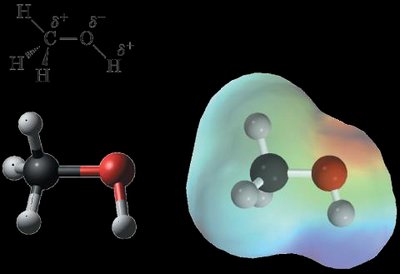
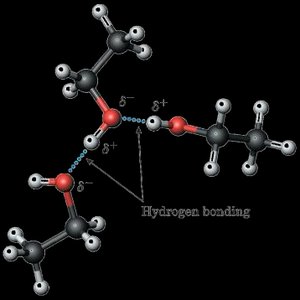
Alcohols are polar molecules due to the polar covalent C-O and O-H bonds. This polarity allows alcohols to form strong intermolecular forces, especially hydrogen bonds, which are crucial in biological systems.
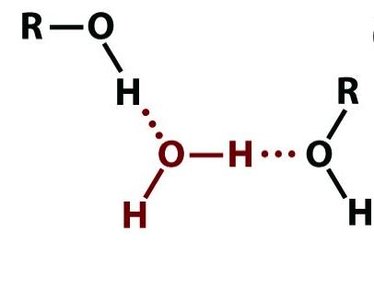
Hydrogen bonds: Special dipole-dipole interactions between the hydrogen of one alcohol and the oxygen of another.
Solubility: Alcohols are more soluble in water than alkanes of similar size.
Boiling point: Alcohols have higher boiling points than alkanes due to hydrogen bonding.
Biological Importance of Hydrogen Bonding
Hydrogen bonding is essential for molecular interactions in biochemistry, including drug-protein interactions and the structure of biomolecules.
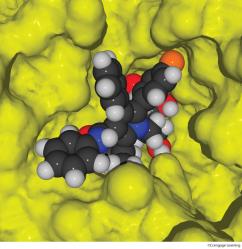
Comparison of Alcohols and Alkanes
Alcohols differ from alkanes in their polarity, ability to form hydrogen bonds, and physical properties such as solubility and boiling point.
Alcohols: Polar, hydrogen bonding, higher boiling point, more soluble in water.
Alkanes: Nonpolar, only London dispersion forces, lower boiling point, insoluble in water.
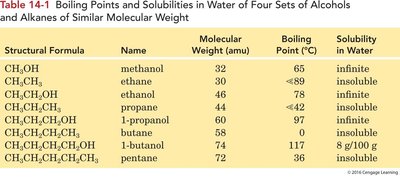
Chemical Reactions of Alcohols
Dehydration of Alcohols
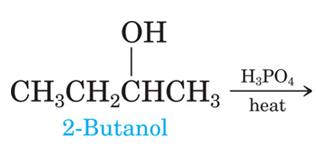
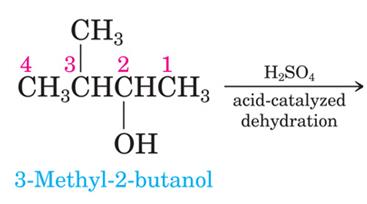
Dehydration is the elimination of water from adjacent carbon atoms to generate an alkene. This reaction requires a strong acid catalyst and elevated temperature.
General equation:
Rate of dehydration: Tertiary > Secondary > Primary alcohols.
Major product: The alkene with more alkyl groups (more stable).
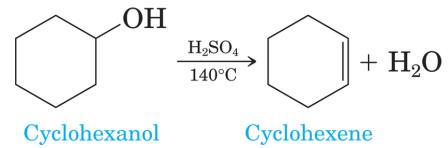
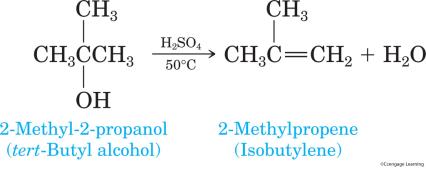
Dehydration-Hydration Equilibrium
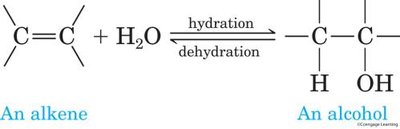
Acid-catalyzed hydration and dehydration reactions of alkenes and alcohols are reversible. Le Chatelier’s Principle governs the favored direction:
High substrate concentration favors hydration (alcohol formation).
High product concentration favors dehydration (alkene formation).
Oxidation of Alcohols
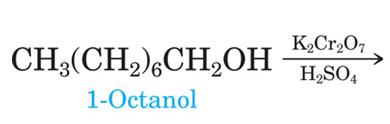
Oxidation involves the loss of electrons or an increase in the number of bonds to oxygen. Common oxidizing agents include potassium permanganate (KMnO4) and potassium dichromate (K2Cr2O7) in sulfuric acid.
Primary alcohols: Oxidize to aldehydes, then to carboxylic acids.
Secondary alcohols: Oxidize to ketones.
Tertiary alcohols: Do not oxidize easily.
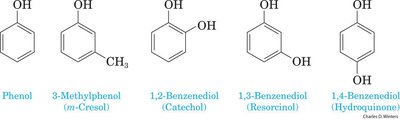
Phenols
Structure and Properties
Phenols are aromatic alcohols, derivatives of benzene with a hydroxyl group. They are named systematically and by common names.
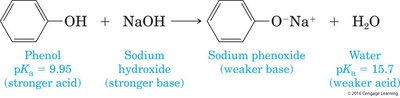
Acidity: Phenols are weak acids (pKa ~10), stronger than aliphatic alcohols.
Reactivity: Phenols react with strong bases to form water-soluble salts.
Thiols
Structure and Properties
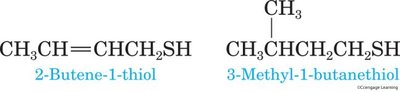
Thiols contain a sulfhydryl group (-SH). They are similar to alcohols but differ in electronegativity and odor.
Acidity: Thiols are weak acids (pKa ~10), comparable to phenols.
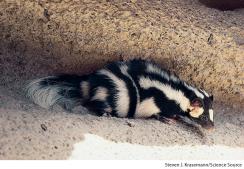
Odor: Small chain thiols have strong, unpleasant odors.

Reactions of Thiols
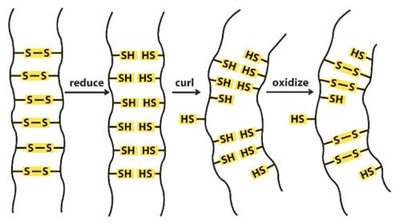
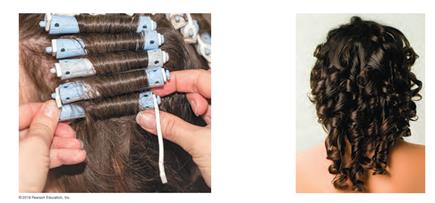
Thiols react with strong bases to form thiolate salts and undergo oxidation to form disulfides, which are important in protein structure.
Oxidation: 2 thiols → disulfide
Reduction: Disulfide → 2 thiols

Ethers
Structure and Properties
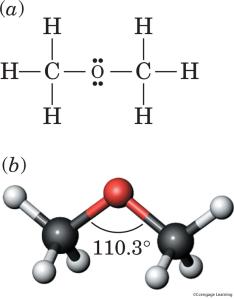
Ethers are compounds with an oxygen atom bonded to two different carbon atoms. They are generally unreactive and serve as excellent solvents for organic reactions.
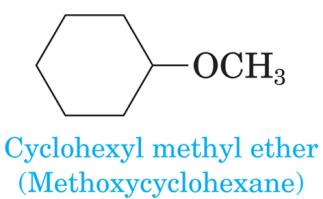
Example: Dimethyl ether, diethyl ether, cyclohexyl methyl ether.
Physical properties: Ethers have lower boiling points than alcohols of similar molecular weight.

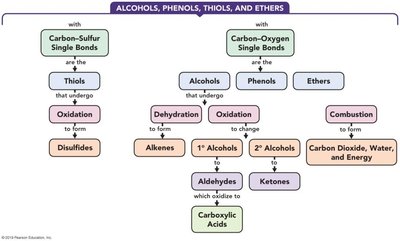
Summary Table: Alcohols, Phenols, Thiols, and Ethers
This table summarizes the key structural features, reactions, and products of alcohols, phenols, thiols, and ethers.
Key Points and Examples
Alcohols: Can form hydrogen bonds, are more soluble in water, and have higher boiling points than alkanes.
Phenols: Aromatic alcohols, weak acids, react with bases.
Thiols: Contain -SH, weak acids, form disulfide bonds important in proteins.
Ethers: Oxygen between two carbons, good solvents, lower boiling points than alcohols.
Example: 1-Propanol forms hydrogen bonds with water, butane does not; ethanol is more soluble in water than 1-hexanol due to its shorter hydrocarbon chain.
Additional info: Academic context was added to clarify mechanisms, properties, and biological relevance of these compounds.
