뒤로
뒤로Carbohydrates: Structure, Classification, and Biological Importance
스터디 가이드 - 스마트 노트
 자료에 맞춘 맞춤형 노트, 핵심 정의, 예시, 맥락을 확장해 제공합니다.
Carbohydrates
Introduction to Carbohydrates
Carbohydrates are essential biomolecules that serve as a major source of energy in the human diet. They are composed of carbon, hydrogen, and oxygen, typically with the general formula CxHyOz. Carbohydrates are also known as saccharides, meaning "sugars." In plants, carbohydrates are synthesized via photosynthesis, while in humans, they are metabolized to release energy.
Key Point 1: Carbohydrates are classified as monosaccharides, disaccharides, or polysaccharides based on the number of sugar units.
Key Point 2: The study of carbohydrates is crucial for understanding metabolic diseases such as diabetes.
Example: Diabetes nurses monitor blood sugar levels, which are directly related to carbohydrate metabolism.

Types of Carbohydrates
Carbohydrates are categorized into three main types:
Monosaccharides: The simplest carbohydrates, consisting of a single sugar unit.
Disaccharides: Composed of two monosaccharide units joined by a glycosidic bond.
Polysaccharides: Polymers containing many monosaccharide units.
Monosaccharides: Structure and Classification
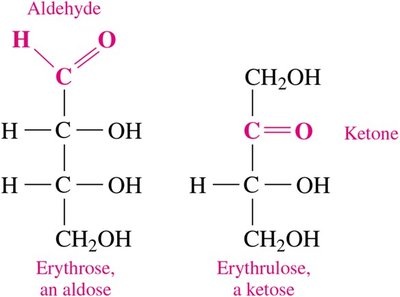
Monosaccharides contain several hydroxyl (-OH) groups attached to a chain of 3-8 carbon atoms. They are further classified based on the presence of an aldehyde or ketone group:
Aldose: Contains an aldehyde group.
Ketose: Contains a ketone group.
Classification by Carbon Number
The number of carbon atoms in a monosaccharide determines its classification:
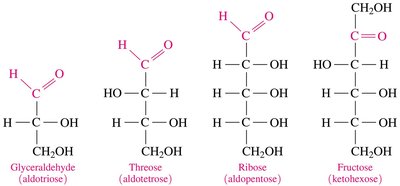
Triose: 3 carbon atoms
Tetrose: 4 carbon atoms
Pentose: 5 carbon atoms
Hexose: 6 carbon atoms
Fischer Projections and Chiral Carbons
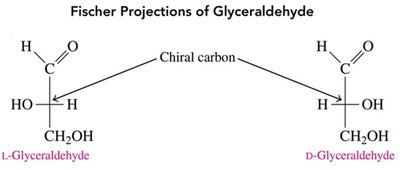
Fischer projections are used to represent the open-chain forms of carbohydrates. The most oxidized group is placed at the top, and horizontal lines represent bonds coming out of the plane.
Chiral Carbon: A carbon atom with four different groups attached. Most carbohydrates have at least one chiral carbon.
D and L Enantiomers
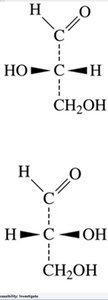
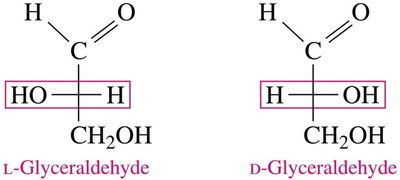
Enantiomers are isomers that are mirror images of each other. Carbohydrates can exist as D or L enantiomers, depending on the orientation of the –OH group on the chiral carbon farthest from the carbonyl group.
D Enantiomer: –OH group oriented to the right.
L Enantiomer: –OH group oriented to the left.
Example: D-glyceraldehyde and L-glyceraldehyde.
Common Monosaccharides: D-Glucose, D-Fructose, D-Galactose
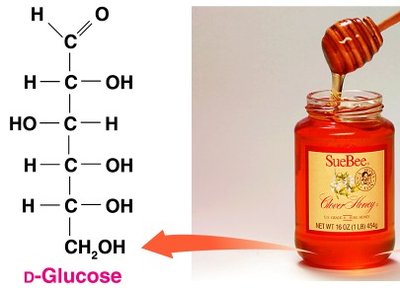
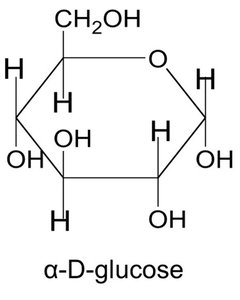
D-Glucose: An aldohexose (C6H12O6), found in fruits, corn syrup, and honey. It is the primary sugar measured in blood glucose tests.
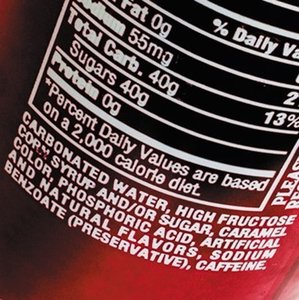
D-Fructose: A ketohexose (C6H12O6), the sweetest carbohydrate, found in fruit juices and honey. The liver converts fructose to glucose.
D-Galactose: An aldohexose (C6H12O6), not found free in nature but obtained from lactose in milk. Important in brain and nervous system membranes.
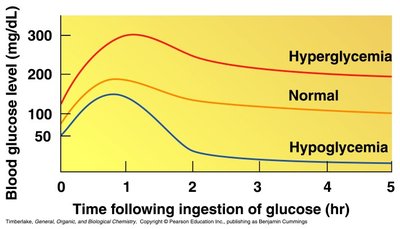
Blood Glucose Levels and Diabetes
Blood glucose levels are measured to diagnose and monitor diabetes.
Normal fasting blood glucose: <110 mg/dL
Diabetes diagnosis: ≥126 mg/dL after two consecutive tests
Oral glucose tolerance test: Measures glucose levels over time after ingestion of a glucose solution.
Fischer to Haworth Structures: Pyranose and Furanose Rings
Monosaccharides can cyclize to form ring structures.
Pyranose: Six-membered ring formed from an aldohexose.
Furanose: Five-membered ring formed from a ketohexose.
Groups on the left in Fischer projection: Oriented up in Haworth structure.
Groups on the right in Fischer projection: Oriented down in Haworth structure.
α and β Anomers
The –OH group on the anomeric carbon (C1 in pyranose, C2 in furanose) can be oriented up or down, forming two isomers called anomers.
α Anomer: –OH oriented down
β Anomer: –OH oriented up
Mutarotation
Mutarotation is the equilibrium between α and β anomers in aqueous solution.
β Anomer: Major product
α Anomer: Minor product
Mutarotation: Only possible with hemiacetals and hemiketals
Oxidation and Reduction of Monosaccharides
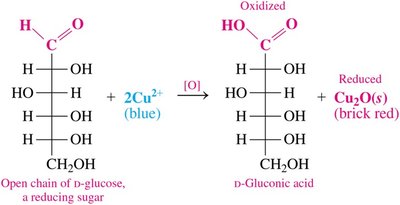
Oxidation: Reducing Sugars
Monosaccharides are called reducing sugars if their carbonyl group can be oxidized to a carboxylic acid.
Aldoses: Can be oxidized to carboxylic acids (e.g., glucose).
Benedict's Test: Used to detect reducing sugars; positive result is a red/orange precipitate.
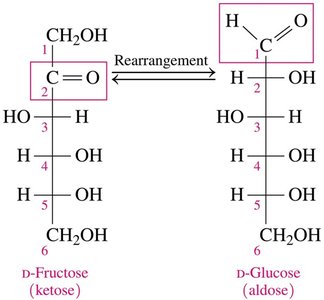
Ketoses: Can also be oxidized after rearrangement (e.g., fructose).
Reduction: Sugar Alcohols
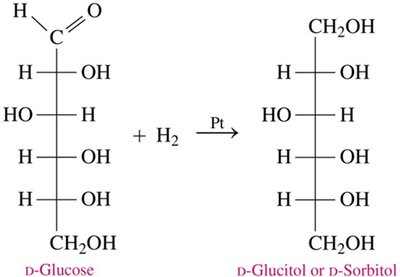
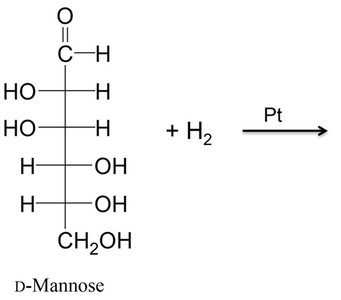
Reduction of the carbonyl group in monosaccharides produces sugar alcohols (alditols), which are used as sweeteners.
D-Glucose: Reduced to D-glucitol (D-sorbitol).
Alditols: Named by replacing the -ose ending with -itol.
Disaccharides
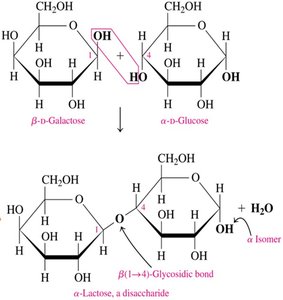
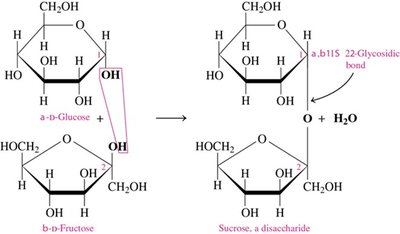
Disaccharides are formed by a dehydration reaction between two monosaccharides. The most common disaccharides are maltose, lactose, and sucrose.
Maltose: Two D-glucose units joined by an α-(1,4)-glycosidic bond.
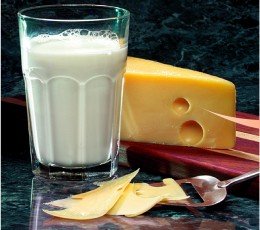
Lactose: Galactose and glucose joined by a β-(1,4)-glycosidic bond.
Sucrose: Glucose and fructose joined by a (1,2)-glycosidic bond; not a reducing sugar.

Polysaccharides
Polysaccharides are polymers of monosaccharides, primarily D-glucose, and differ in glycosidic bond type and branching.
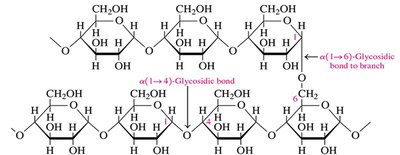
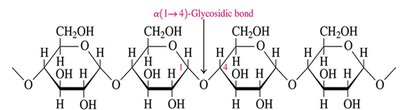
Starch: Plant storage form of glucose; composed of amylose (unbranched, α-(1,4)-glycosidic bonds) and amylopectin (branched, α-(1,4) and α-(1,6)-glycosidic bonds).
Glycogen: Animal storage form of glucose; highly branched, α-(1,4) and α-(1,6)-glycosidic bonds.
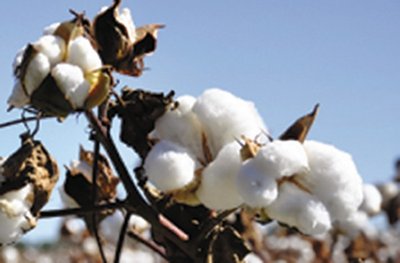
Cellulose: Structural polysaccharide in plants; unbranched, β-(1,4)-glycosidic bonds; indigestible by humans.
Comparison Table: Polysaccharides
Polysaccharide | Monomer | Bond Type | Branching | Source |
|---|---|---|---|---|
Amylose | D-glucose | α-(1,4) | None | Plants |
Amylopectin | D-glucose | α-(1,4), α-(1,6) | Branched | Plants |
Glycogen | D-glucose | α-(1,4), α-(1,6) | Highly branched | Animals |
Cellulose | D-glucose | β-(1,4) | None | Plants |
Summary Practice Problems
Glycogen: Stored in liver and muscle tissues (animal starch).
Amylose: Unbranched polysaccharide with α-(1,4)-glycosidic bonds.
Amylopectin/Glycogen: Branched polysaccharides with α-(1,4) and α-(1,6)-glycosidic bonds.