 뒤로
Carboxylic Acids: Structure, Naming, Properties, and Biological Importance
스터디 가이드 - 스마트 노트
 자료에 맞춘 맞춤형 노트, 핵심 정의, 예시, 맥락을 확장해 제공합니다.
Carboxylic Acids and Esters
Carboxylic Acids: Structure and Functional Group
Carboxylic acids are organic compounds containing a carboxyl group, which consists of a hydroxyl group (-OH) attached to the carbon of a carbonyl group (C=O). This functional group is highly significant in organic and biological chemistry due to its reactivity and presence in many biomolecules.
Carboxyl Group: The functional group is written as -COOH.
General Formula: R-COOH, where R is an alkyl or aryl group.
Example: Methanoic acid (formic acid), ethanoic acid (acetic acid).

Naming Carboxylic Acids
IUPAC Naming
The IUPAC system names carboxylic acids by replacing the -e ending of the parent alkane with -oic acid. The carboxyl carbon is always numbered as carbon 1.
Methane → Methanoic acid
Ethane → Ethanoic acid
Substituents: Numbered from the carboxyl group; e.g., 2-methylpropanoic acid.
Aromatic acids: Substituent positions are indicated by ortho (o-), meta (m-), and para (p-) prefixes.
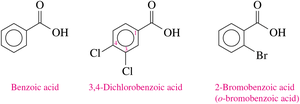
Common Names
Many carboxylic acids are known by their common names, which use prefixes such as form, acet, propion, and butyr. Greek letters (α, β, γ, etc.) are used to designate carbons adjacent to the carboxyl group.
Formic acid: Methanoic acid
Acetic acid: Ethanoic acid
Propionic acid: Propanoic acid
Butyric acid: Butanoic acid
Examples and Applications
Formic acid: Found in ant stings.
Acetic acid: Responsible for the sour taste of vinegar.
Preparation of Carboxylic Acids
Carboxylic acids can be synthesized by the oxidation of primary alcohols or aldehydes.
Oxidation Process: Primary alcohol → Aldehyde → Carboxylic acid
Example: Ethanol in wine oxidizes to acetaldehyde and then to acetic acid.
Alpha Hydroxy Acids (AHAs) in Health
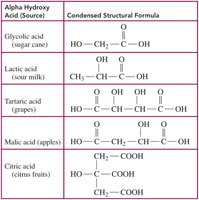
Alpha hydroxy acids are naturally occurring carboxylic acids with a hydroxyl group on the carbon adjacent to the carboxyl group (the alpha carbon). They are used in skin care products for exfoliation and treatment of acne scars.
Sources: Fruits, milk, sugar cane
Examples: Glycolic acid (sugar cane), lactic acid (milk), citric acid (citrus fruits)
Application: Dermatologists use AHAs in skin peels to reduce pigmentation and age spots.
Properties of Carboxylic Acids
Boiling Points and Polarity
Carboxylic acids are strongly polar due to the presence of both hydroxyl and carbonyl groups. This allows them to form multiple hydrogen bonds, resulting in higher boiling points compared to alcohols, ketones, and aldehydes of similar molar mass.
Hydrogen Bonding: Leads to dimer formation, effectively doubling the molecular mass.
Boiling Point Order: Alkane < Alcohol < Carboxylic Acid
Solubility in Water
Hydrogen Bonding: Carboxylic acids with 1–5 carbons are very soluble in water.
Solubility decreases: As the carbon chain length increases.
Acidity and Dissociation
Carboxylic acids are weak acids that dissociate in water to produce carboxylate ions and hydronium ions. The negative charge is stabilized by resonance between the two oxygen atoms.
General Dissociation Equation:
Example: Butanoic acid dissociates to form butanoate ion.
Neutralization of Carboxylic Acids
Carboxylic acids react with strong bases (e.g., NaOH, KOH) to form carboxylate salts, which are ionic compounds with strong attractions between metal ions and carboxylate ions.
General Neutralization Equation:
Carboxylate Salt Naming: Replace -ic acid with -ate (e.g., propanoic acid → propanoate).
Properties: Solids at room temperature, high melting points, usually water-soluble.
Carboxylic Acids as Preservatives and Flavor Enhancers
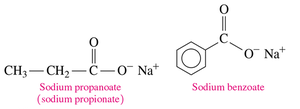
Sodium propionate: Used in bread, cheese, and bakery items to inhibit spoilage.
Sodium benzoate: Added to juices, margarine, relishes, salads, and jams to prevent mold and bacteria growth.
Monosodium glutamate (MSG): Enhances flavor in meats, fish, vegetables, and bakery items.
Carboxylic Acids in Metabolism
Role in Cellular Metabolism
At physiological pH, carboxylic acids exist as carboxylate ions, which participate in metabolic pathways such as glycolysis and the citric acid cycle (Krebs cycle).
Glycolysis: Glucose is broken down into pyruvate (carboxylate salt of pyruvic acid).
Anaerobic Exercise: Pyruvate is reduced to lactic acid or lactate ion.
Citric Acid Cycle: Di- and tri-carboxylates (e.g., citrate, succinate) are oxidized and decarboxylated to produce cellular energy.
Additional info: The citric acid cycle is a central metabolic pathway that generates ATP and intermediates for biosynthesis.
