 뒤로
뒤로Chapter 1: Chemistry Basics—Matter and Measurement (GOB Chemistry Study Notes)
스터디 가이드 - 스마트 노트
 자료에 맞춘 맞춤형 노트, 핵심 정의, 예시, 맥락을 확장해 제공합니다.
Chemistry Basics—Matter and Measurement
1.1 Classifying Matter: Pure Substance or Mixture
Chemistry begins with understanding matter, which is anything that occupies space and has mass. Matter can be classified based on its composition and uniformity.
Pure Substance: Composed of only one type of particle; can be represented by a single chemical formula or symbol.
Element: Simplest form of matter, made of one type of atom (e.g., Calcium, Hydrogen, Carbon).
Compound: Pure substance made of two or more elements chemically combined in fixed ratios (e.g., Water (H2O), Rust (Fe2O3)).
Mixture: Combination of two or more substances that can be separated by physical means.
Homogeneous Mixture: Uniform composition throughout (e.g., air, coffee).
Heterogeneous Mixture: Non-uniform composition (e.g., vegetable soup).
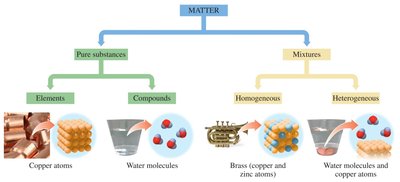
Example: Gold is a pure substance (element), coffee is a homogeneous mixture, table salt is a pure substance (compound), and vegetable soup is a heterogeneous mixture.
1.2 Elements, Compounds, and the Periodic Table
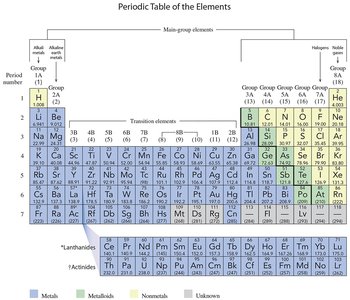
The periodic table organizes all known elements based on their properties. Each element is represented by a chemical symbol, often derived from its English or Latin name (e.g., Na for sodium, Au for gold).
Groups: Vertical columns with similar chemical properties; labeled 1–18 (IUPAC system).
Periods: Horizontal rows numbered 1–7.
Metals, Nonmetals, Metalloids: The staircase line separates metals (left) from nonmetals (right); elements bordering the line (except Al) are metalloids.
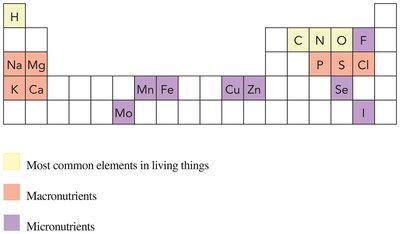
Macronutrients: Elements needed in quantities >100 mg/day (e.g., Na, K, Ca).
Micronutrients: Elements needed in quantities <100 mg/day (e.g., Fe, Zn, I).
Compounds: Contain two or more elements in fixed ratios. Chemical formulas (e.g., H2O, NaCl) show the types and numbers of atoms present.
1.3 How Matter Changes
Matter can undergo physical or chemical changes. Understanding these changes is essential for describing chemical reactions.
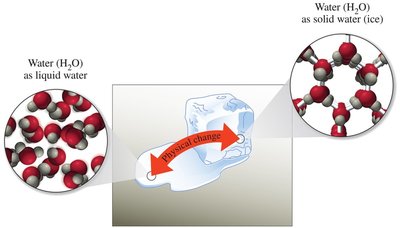
Physical Change: Alters the form but not the identity of a substance (e.g., melting ice).
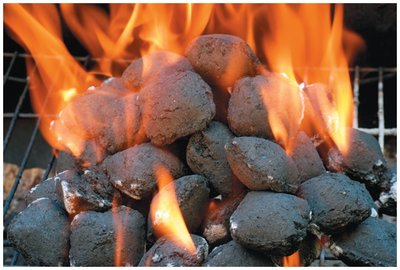
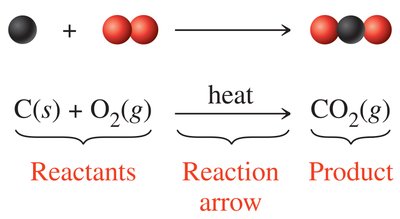
Chemical Change: Alters the chemical identity; new substances are formed (e.g., burning charcoal).
Chemical Equation: Represents a chemical reaction, showing reactants, products, and their physical states.
Balancing Equations: The number of atoms of each element must be equal on both sides, following the law of conservation of mass.
Steps to Balance Equations:
Examine the equation for balance.
Add coefficients to balance one element at a time.
Check that all elements are balanced with the smallest set of coefficients.
Example: Balancing methane combustion:
1.4 Math Counts
Chemistry relies on precise measurements and mathematical conversions. The SI (metric) system is used for consistency.
SI Units: Mass (kilogram, kg), volume (liter, L), length (meter, m).
Prefixes: Indicate powers of ten (e.g., milli- = 10-3, kilo- = 103).
Conversion Factors: Used to convert between units (e.g., 1 mg = 1 × 10⁻³ g).
Dimensional Analysis: Systematic approach to unit conversion using conversion factors.
Significant Figures: Digits known with certainty plus one estimated digit; rules determine which digits are significant.
Scientific Notation: Expresses numbers as where 1 ≤ C < 10.
Percentages:
Example: Convert 10,000 cg to g:
Example: 0.0055 has 2 significant figures; 1.030 has 4 significant figures.
1.5 Matter: The “Stuff” of Chemistry
Understanding the properties of matter is fundamental in chemistry. Key properties include mass, volume, density, and temperature.
Mass: Amount of material in an object, measured in grams (g).
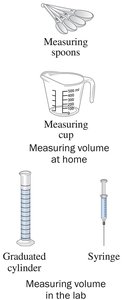
Volume: Space occupied by matter, measured in liters (L) or milliliters (mL).
Density (d): Ratio of mass to volume, , units: g/mL or g/cm3.
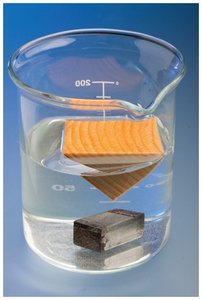
Specific Gravity: Ratio of the density of a sample to the density of water (unitless).
Temperature: Measured in Celsius (°C), Kelvin (K), or Fahrenheit (°F).
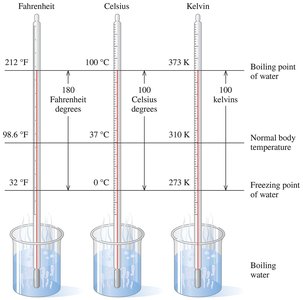
Temperature Conversions:
States of Matter: Solid, liquid, and gas differ in particle arrangement, energy, and properties.
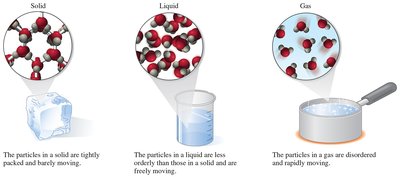
Property | Solid | Liquid | Gas |
|---|---|---|---|
Shape | Definite | Adopts container | Adopts container |
Volume | Definite | Definite | Fills container |
Kinetic Energy | Lowest | Intermediate | Highest |
Particle Arrangement | Closely packed | Loosely packed | Far apart |
Attraction | Very strong | Strong | Weak |
1.6 Measuring Matter
Accurate and precise measurements are essential in chemistry and health sciences. Understanding unit conversions and calculations is critical for safe and effective practice.
Accuracy: Closeness to the true value.
Precision: Consistency among repeated measurements.
SI vs. U.S. Customary Units: Health professionals must convert between systems (e.g., 1 inch = 2.54 cm).
Dosing Calculations: Use dimensional analysis to ensure correct medication dosages.
Drop Units (gtt/mL): Used in IV medication delivery; drip rates calculated using drop factors.
Percents in Health: Used for active ingredient, dosing, and nutrition labeling.
Example: Calculate acetaminophen dose for a 42 lb child at 7.5 mg/kg:
Example: IV drip calculation: 1.0 L fluid, 60 gtt/mL, 100 gtt/min:
