 뒤로
뒤로Chapter 4: Introduction to Organic Compounds – Structured Study Notes for GOB Chemistry
스터디 가이드 - 스마트 노트
 자료에 맞춘 맞춤형 노트, 핵심 정의, 예시, 맥락을 확장해 제공합니다.
Introduction to Organic Compounds
Overview
Organic compounds are central to biological chemistry, consisting mainly of carbon and hydrogen, with possible inclusion of oxygen, nitrogen, sulfur, phosphorus, and other elements. Biomolecules such as proteins, carbohydrates, lipids, and DNA are all organic compounds.
Representing the Structures of Organic Compounds
Types of Structural Representations
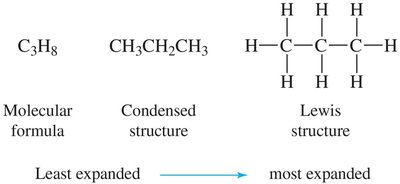
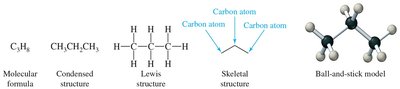
Molecular Formula: Shows the number of each atom in the molecule (e.g., C3H8).
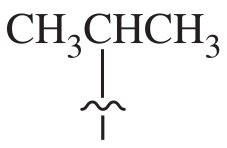
Condensed Structural Formula: Shows all atoms but as few bonds as possible (e.g., CH3CH2CH3).
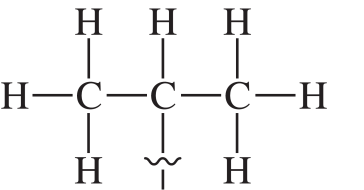
Lewis Structure: Shows complete connectivity—all atoms and all bonds.
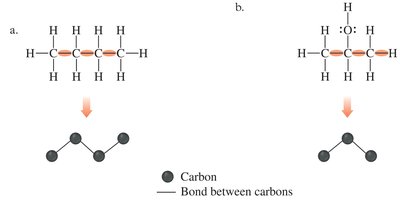
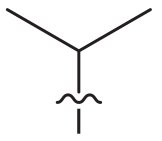
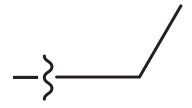
Skeletal Structure: Shows bonds between carbon atoms as lines; bonds to hydrogen are implied, and bonds to other atoms are shown explicitly.
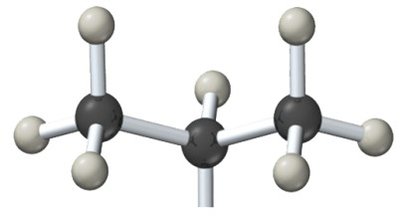
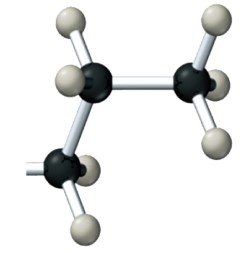
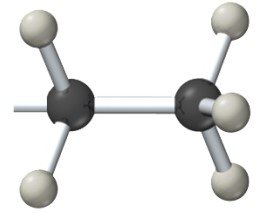
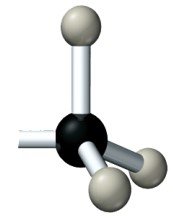
Ball-and-Stick Model: 3D representation of atoms and bonds.
Rules for Drawing Skeletal Structures
Bonds to carbon are shown as lines.
Bonds between carbon and hydrogen are not shown but are implied.
Other elements bonded to carbon are drawn at the end of the bond using their symbol.
Lone pairs of electrons are not shown.
Alkanes: The Simplest Organic Compounds
Properties and Classification
Alkanes are saturated hydrocarbons, containing only single-bonded carbon and hydrogen atoms. Each carbon atom is bonded to the maximum number of hydrogen atoms.
Straight-chain alkanes: Continuous, unbranched chains of carbon atoms.
General formula:
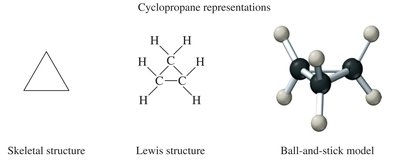
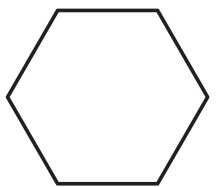
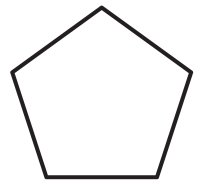
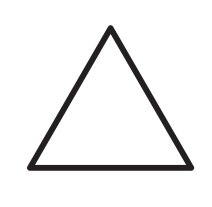
Cycloalkanes: Ring-form alkanes, named by adding the prefix 'cyclo' to the alkane name.

Alkanes Are Nonpolar Compounds
Carbon and hydrogen have similar electronegativities, resulting in nonpolar covalent bonds.
Alkanes are nonpolar and do not mix well with polar solvents like water.
Alkanes as Fuel Sources
Alkanes undergo combustion with oxygen to produce carbon dioxide and water.
Combustion equation:
Families of Organic Compounds—Functional Groups
Functional Groups and Classification
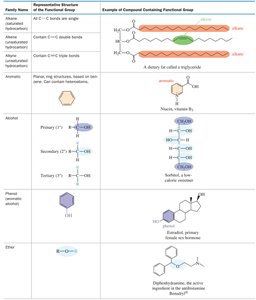
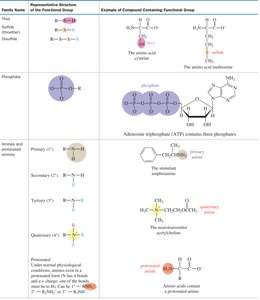
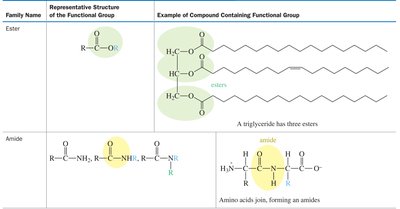
Functional groups are specific groups of atoms bonded in a particular way, determining the chemical reactivity and properties of organic compounds. Elements other than carbon and hydrogen in organic compounds are called heteroatoms.
Common functional groups include alkanes, alkenes, alkynes, aromatics, alcohols, ethers, aldehydes, ketones, carboxylic acids, esters, amides, and more.
R is used to represent the 'rest' of the molecule, focusing on the functional group.
Hydrocarbon Families
Alkanes: Only single bonds.
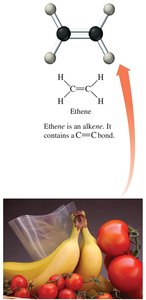
Alkenes: At least one carbon–carbon double bond; unsaturated and more reactive than alkanes.
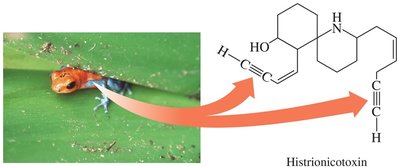
Alkynes: At least one carbon–carbon triple bond; even more reactive than alkenes.
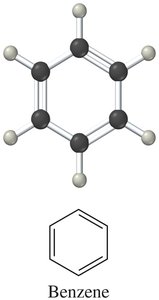
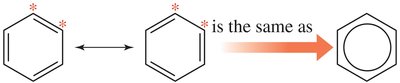
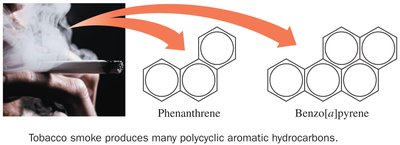
Aromatics: Cyclic structures with resonance, such as benzene; unusually stable.
Fatty Acids and Lipids
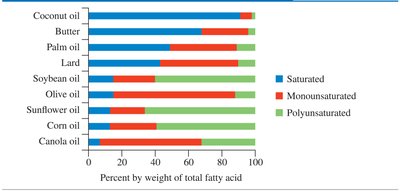
Saturated fatty acids: Long, straight-chain alkane-like compounds with a carboxylic acid group.
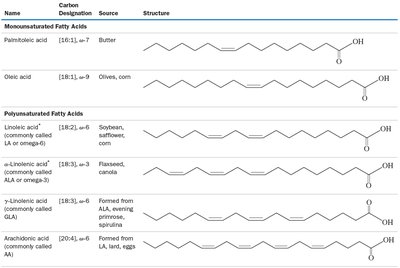
Monounsaturated: One double bond.
Polyunsaturated: Two or more double bonds.
Most biologically important fatty acids have 12–22 carbon atoms and are even-numbered.





Nomenclature of Simple Alkanes
Rules for Naming Alkanes
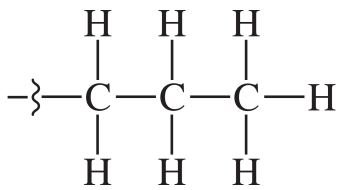
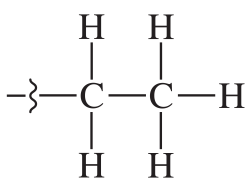
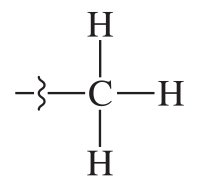
Find the longest continuous chain of carbon atoms (parent chain).
Identify groups bonded to the main chain but not included in it (substituents).
Number the carbons of the parent chain starting at the end nearer to a substituent.
Assign a number to each substituent based on location, listing them in alphabetical order.
Use Greek prefixes (di-, tri-, tetra-) for multiple identical substituents.

Haloalkanes
Halogens (fluoro, chloro, bromo, iodo) are common substituents on alkane chains.
Named using the same rules as branched-chain alkanes, with the halogen as the substituent.
Isomerism in Organic Compounds
Types of Isomers
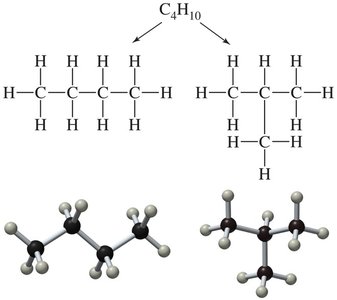
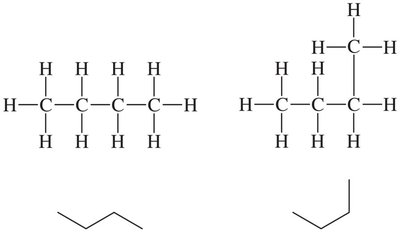
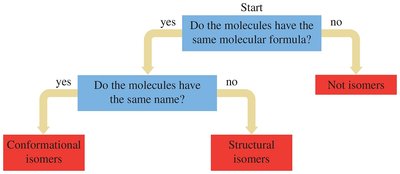
Structural Isomers: Same molecular formula, different connectivity of atoms.
Conformational Isomers (Conformers): Different arrangements of the same compound; not different compounds.
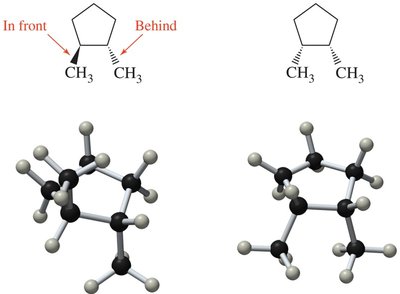
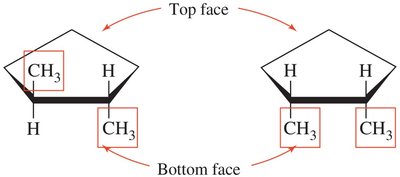
Stereoisomers: Same molecular formula and connectivity, different spatial arrangement.
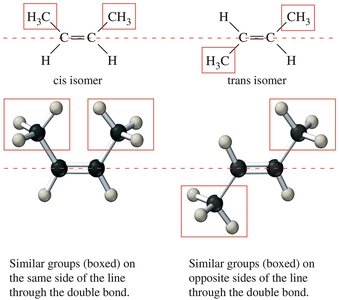
Cis–Trans Isomers: In cycloalkanes and alkenes, substituents are on the same (cis) or opposite (trans) sides.
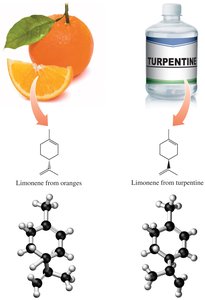
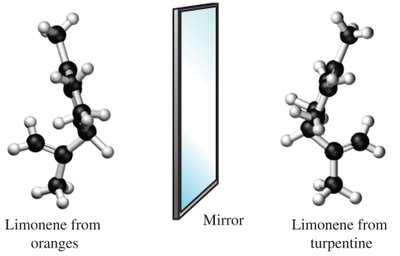
Chiral Molecules and Enantiomers: Nonsuperimposable mirror images; contain a chiral center (tetrahedral carbon bonded to four different groups).
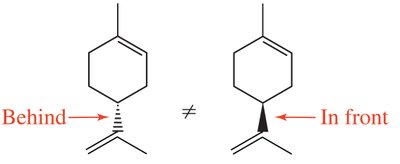
Identifying Chiral Carbons
Locate tetrahedral carbons (four atoms bonded).
Determine if the four groups attached are different.
Assign chiral centers (often marked with an asterisk).
Biological Consequences of Chirality
Biological receptors are "handed" and only fit complementary chiral molecules.
Pharmaceuticals often require a single enantiomer for activity; the other may be inactive or harmful (e.g., thalidomide).
Summary Table: Straight-Chain Alkanes
Number of Carbon Atoms | Prefix | Name of Alkane | Molecular Formula | Condensed Structure |
|---|---|---|---|---|
1 | Meth- | Methane | CH4 | CH4 |
2 | Eth- | Ethane | C2H6 | CH3CH3 |
3 | Prop- | Propane | C3H8 | CH3CH2CH3 |
4 | But- | Butane | C4H10 | CH3CH2CH2CH3 |
5 | Pent- | Pentane | C5H12 | CH3CH2CH2CH2CH3 |
6 | Hex- | Hexane | C6H14 | CH3CH2CH2CH2CH2CH3 |
7 | Hept- | Heptane | C7H16 | CH3CH2CH2CH2CH2CH2CH3 |
8 | Oct- | Octane | C8H18 | CH3CH2CH2CH2CH2CH2CH2CH3 |
9 | Non- | Nonane | C9H20 | CH3CH2CH2CH2CH2CH2CH2CH2CH3 |
10 | Dec- | Decane | C10H22 | CH3CH2CH2CH2CH2CH2CH2CH2CH2CH3 |
Summary Table: Common Fatty Acids
Name | Carbon Atoms | Source |
|---|---|---|
Lauric acid | 12 | Coconut |
Myristic acid | 14 | Nutmeg |
Palmitic acid | 16 | Palm |
Stearic acid | 18 | Animal fat |
Arachidic acid | 20 | Peanut |
Behenic acid | 22 | Canola |
Additional info: These notes expand on brief points from the original slides, providing definitions, examples, and context for GOB Chemistry students.
