 뒤로
뒤로Chemical Equilibrium: Principles, Calculations, and Applications
스터디 가이드 - 스마트 노트
 자료에 맞춘 맞춤형 노트, 핵심 정의, 예시, 맥락을 확장해 제공합니다.
Chemical Equilibrium
The Concept of Equilibrium
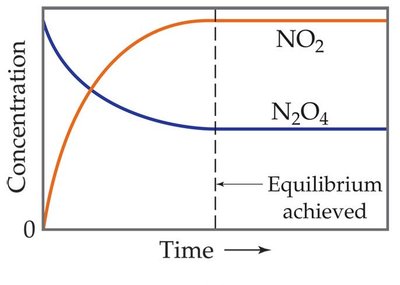
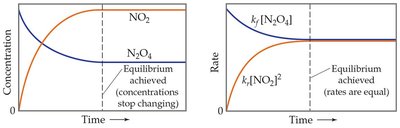
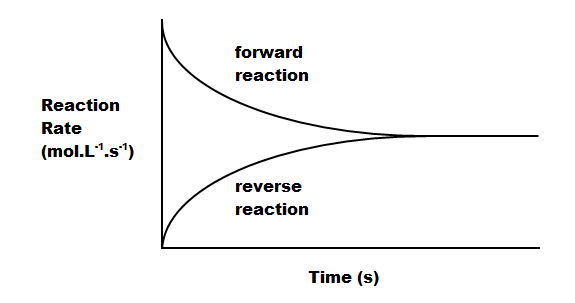
Chemical equilibrium is a fundamental concept in chemistry describing a state in which the rates of the forward and reverse reactions are equal, resulting in constant concentrations of reactants and products. This state is dynamic, meaning reactions continue to occur, but there is no net change in the amounts of substances.
Reversible reactions are indicated by the symbol ⇌ and can proceed in both directions.
At equilibrium, the rate of the forward reaction equals the rate of the reverse reaction.
The concentrations of reactants and products remain constant, though not necessarily equal.
Equilibrium can be achieved in both closed and open systems, but only in closed systems are reactants and products prevented from escaping.
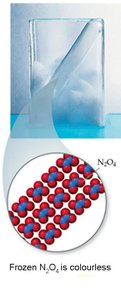
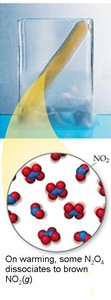
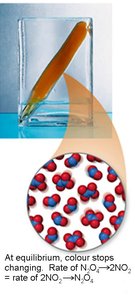
Example: The equilibrium between dinitrogen tetroxide (N2O4) and nitrogen dioxide (NO2):
N2O4 (g) ⇌ 2 NO2 (g)
N2O4 is colourless, NO2 is brown.
At equilibrium, the colour stops changing, indicating constant concentrations.
Dynamic Equilibrium
Dynamic equilibrium refers to the ongoing nature of chemical reactions at equilibrium. Products and reactants are continuously formed at equal rates, so their total amounts remain unchanged.
Neither reactant nor product can escape the system.
There is a constant ratio of concentration terms.
The Equilibrium Constant
Defining the Equilibrium Constant (Kc)
The equilibrium constant, Kc, quantifies the ratio of product concentrations to reactant concentrations at equilibrium, each raised to the power of their stoichiometric coefficients.
For a general reaction: aA + bB ⇌ cC + dD
The equilibrium constant expression is:
Kc is unitless and only includes gases and aqueous species (not pure solids or liquids).
Kc varies with temperature.
If Kc > 1, products are favored; if Kc < 1, reactants are favored; if Kc ≈ 1, appreciable amounts of both are present.
Equilibrium Constants in Terms of Pressure (Kp)
For reactions involving gases, equilibrium can also be expressed in terms of partial pressures:
Partial pressure is proportional to concentration for gases in a closed system.
The equilibrium constant in terms of pressure is:
Relationship Between Kc and Kp
The relationship between Kc and Kp is derived from the ideal gas law:
Where Δn = moles of gaseous products - moles of gaseous reactants
Properties of Equilibrium Constants
K is only meaningful if the reaction and temperature are specified.
If a reaction is multiplied by n, the equilibrium constant is raised to the power n.
The equilibrium constant for an overall reaction made up of steps is the product of the equilibrium constants for the individual steps.
For the reverse reaction,
Relationship to thermodynamics:
Heterogeneous Equilibria
Equilibria Involving Solids and Liquids
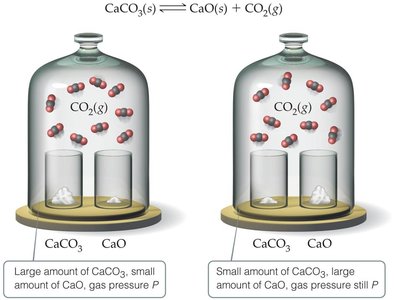
In heterogeneous equilibria, pure solids and pure liquids are not included in the equilibrium constant expression. Their activity is considered to be 1.
Example: CaCO3 (s) ⇌ CaO (s) + CO2 (g)
Kc = [CO2], Kp = PCO2
Calculating Equilibrium Constants
Steps for Calculation
To calculate equilibrium constants from experimental data:
Tabulate all known initial and equilibrium concentrations.
Calculate the change for species with known initial and equilibrium concentrations.
Use stoichiometry to find changes for other reactants and products.
Calculate equilibrium concentrations for all species.
Calculate the equilibrium constant using the equilibrium concentrations.
Reaction Quotient (Qc)
Comparing Qc and Kc
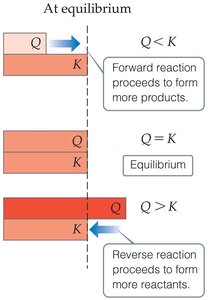
The reaction quotient, Qc, is calculated using current concentrations and is compared to Kc to determine the direction of the reaction:
If Q < K, the reaction proceeds forward to form more products.
If Q = K, the system is at equilibrium.
If Q > K, the reaction proceeds in reverse to form more reactants.
Le Chatelier’s Principle
Predicting Shifts in Equilibrium
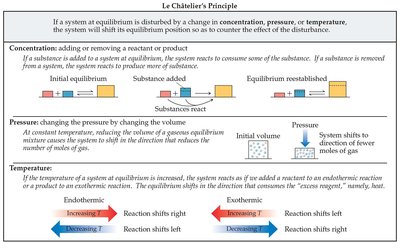
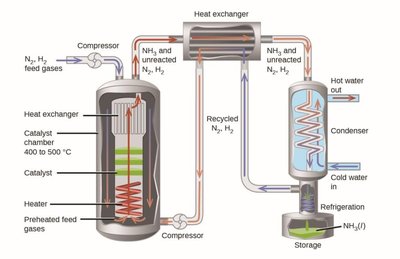
Le Chatelier’s Principle states that if a system at equilibrium is disturbed by a change in temperature, pressure, or concentration, the system will shift its equilibrium position to counteract the disturbance.
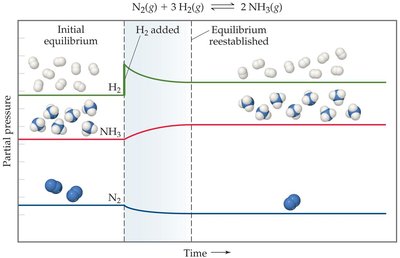
Concentration: Adding a reactant or product shifts equilibrium to consume the added substance; removing shifts to produce more.
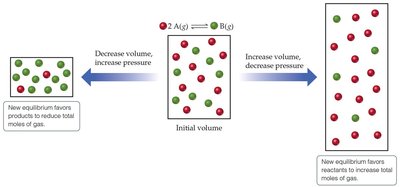
Pressure/Volume: For gaseous reactions, increasing pressure (decreasing volume) favors the side with fewer moles of gas; decreasing pressure (increasing volume) favors the side with more moles.
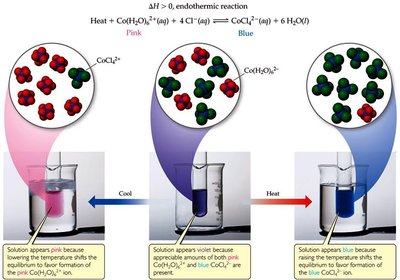
Temperature: For exothermic reactions, increasing temperature shifts equilibrium toward reactants; for endothermic reactions, toward products.
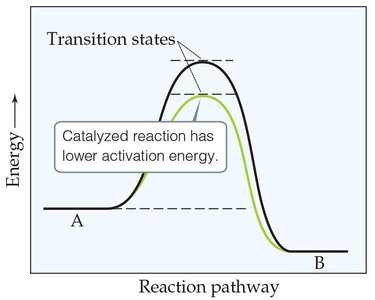
Catalysts: Catalysts increase the rate of both forward and reverse reactions, allowing equilibrium to be achieved faster, but do not affect the equilibrium composition.
Summary of Learning Outcomes
Explain the concept of equilibrium.
Write equilibrium expressions for chemical and heterogeneous processes.
Calculate equilibrium constants and concentrations.
Describe and apply Le Chatelier's Principle to predict shifts in equilibrium.
