 뒤로
뒤로GOB Chemistry: Hydration and Hydrogenation Reaction Mechanisms and Products
스터디 가이드 - 스마트 노트
 자료에 맞춘 맞춤형 노트, 핵심 정의, 예시, 맥락을 확장해 제공합니다.
Q1. Draw the products of the following reactions in skeletal formula (Hydration Reactions)
Background
Topic: Organic Reaction Mechanisms – Hydration of Alkenes
This question tests your ability to predict the products of hydration reactions, where water (H2O) adds across a double bond in the presence of acid, converting alkenes to alcohols. You are expected to draw the skeletal structures of the products.
Key Terms and Concepts:
Hydration Reaction: Addition of water (H2O) to an alkene, usually in the presence of an acid catalyst, resulting in an alcohol.
Markovnikov's Rule: In the hydration of unsymmetrical alkenes, the hydrogen atom from water adds to the carbon with more hydrogens, and the OH group adds to the carbon with fewer hydrogens.
Skeletal Formula: A simplified organic structure showing bonds between carbon atoms as lines and omitting hydrogen atoms bonded to carbons.
Step-by-Step Guidance
Identify the double bond in the reactant structure. This is where the hydration will occur.
Determine the orientation of addition using Markovnikov's Rule: the OH group will attach to the more substituted carbon of the double bond.
Add an H atom to the less substituted carbon and an OH group to the more substituted carbon of the double bond.
Redraw the molecule in skeletal form, showing the new alcohol group at the correct position.
Repeat this process for each reaction in the set, making sure to check for possible rearrangements if a more stable carbocation intermediate can form.
Try solving on your own before revealing the answer!
Final Answer:
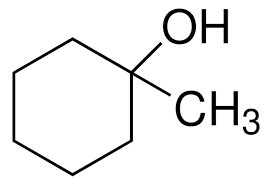
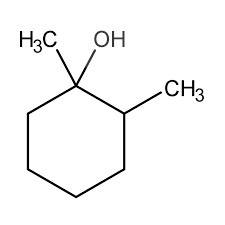
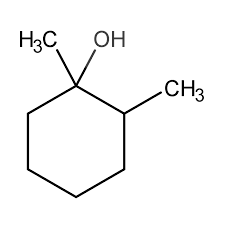
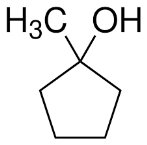
The products for each hydration reaction are as follows (skeletal formulas):
a.
b.
c.
d.
e.
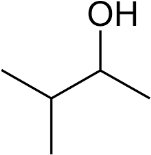
f.
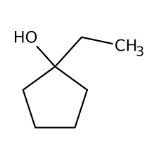
g.
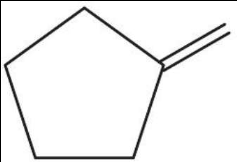
Each product is an alcohol, formed by the addition of H and OH across the double bond according to Markovnikov's rule.
Q2. Each reaction in number 1 is the same kind of reaction. What is the name of this reaction? What functional group must be present in the reactants for this kind of reaction to occur?
Background
Topic: Reaction Types and Functional Groups in Organic Chemistry
This question asks you to identify the type of reaction and the functional group required for it to occur.
Key Terms:
Hydration: Addition of water to a molecule, specifically to an alkene to form an alcohol.
Alkene: A hydrocarbon with at least one carbon-carbon double bond (C=C).
Step-by-Step Guidance
Review the reactions in question 1 and note the reactants all contain a C=C double bond.
Recall that the addition of water (H2O) in the presence of acid to an alkene is called a hydration reaction.
Identify the functional group present in all reactants that allows this reaction: the alkene group.
Try solving on your own before revealing the answer!
Final Answer:
The reaction is called hydration. The functional group required in the reactant is an alkene (C=C double bond).
Q3. Draw the products of the following reactions in skeletal formula (Hydrogenation Reactions)
Background
Topic: Organic Reaction Mechanisms – Hydrogenation of Alkenes
This question tests your ability to predict the products of hydrogenation reactions, where hydrogen (H2) adds across a double bond in the presence of a metal catalyst, converting alkenes to alkanes. You are expected to draw the skeletal structures of the products.
Key Terms and Concepts:
Hydrogenation Reaction: Addition of hydrogen (H2) to an alkene, usually in the presence of a palladium (Pd), platinum (Pt), or nickel (Ni) catalyst, resulting in an alkane.
Skeletal Formula: A simplified organic structure showing bonds between carbon atoms as lines and omitting hydrogen atoms bonded to carbons.
Step-by-Step Guidance
Identify the double bond in the reactant structure. This is where the hydrogenation will occur.
Add one hydrogen atom to each carbon of the double bond, converting it to a single bond.
Redraw the molecule in skeletal form, showing the new alkane structure.
Repeat this process for each reaction in the set.
Try solving on your own before revealing the answer!
Final Answer:
The products for each hydrogenation reaction are as follows (skeletal formulas):
a.
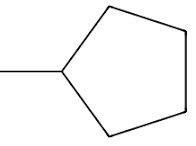
b.
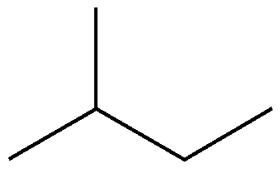
c.
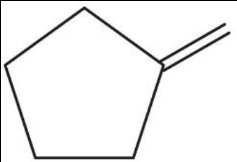
d.
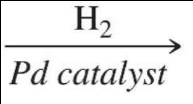
e.
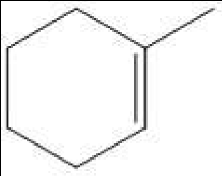
f.
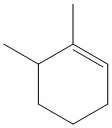
g.
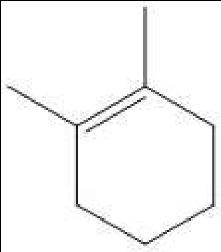
Each product is an alkane, formed by the addition of H2 across the double bond.
Q4. Each reaction in number 3 is the same kind of reaction. What is the name of this reaction? What functional group must be present in the reactants for this kind of reaction to occur?
Background
Topic: Reaction Types and Functional Groups in Organic Chemistry
This question asks you to identify the type of reaction and the functional group required for it to occur.
Key Terms:
Hydrogenation: Addition of hydrogen to a molecule, specifically to an alkene to form an alkane.
Alkene: A hydrocarbon with at least one carbon-carbon double bond (C=C).
Step-by-Step Guidance
Review the reactions in question 3 and note the reactants all contain a C=C double bond.
Recall that the addition of hydrogen (H2) in the presence of a metal catalyst to an alkene is called a hydrogenation reaction.
Identify the functional group present in all reactants that allows this reaction: the alkene group.
Try solving on your own before revealing the answer!
Final Answer:
The reaction is called hydrogenation. The functional group required in the reactant is an alkene (C=C double bond).
Q5. Complete the following reactions using skeletal formula AND identify what kind of reaction is happening.
Background
Topic: Recognizing and Completing Organic Reactions (Hydration and Hydrogenation)
This question tests your ability to recognize the type of reaction (hydration or hydrogenation), complete the reaction by drawing the product in skeletal formula, and identify the reaction type.
Key Terms and Concepts:
Hydration: Addition of water (H2O) to an alkene to form an alcohol.
Hydrogenation: Addition of hydrogen (H2) to an alkene to form an alkane.
Skeletal Formula: A simplified organic structure showing bonds between carbon atoms as lines and omitting hydrogen atoms bonded to carbons.
Step-by-Step Guidance
For each reaction, identify the reactant and the reagent (H2/Pd or H2O/acid) to determine if it is a hydrogenation or hydration reaction.
For hydrogenation: Add H2 across the double bond, converting it to a single bond (alkane).
For hydration: Add H and OH across the double bond, following Markovnikov's rule (alcohol product).
Draw the skeletal formula for the product.
Label the reaction type for each.
Try solving on your own before revealing the answer!
Final Answer:
a. Hydrogenation:
b. Hydration:
c. Hydrogenation:
d. Hydration:
e. Hydrogenation:
f. Hydration:
Each reaction is completed by adding the appropriate group(s) across the double bond and identifying the reaction type.
