 뒤로
UM BIO Exam 1: Practice with Molecular Structure, Isomerism, and Functional Groups
스터디 가이드 - 스마트 노트
 자료에 맞춘 맞춤형 노트, 핵심 정의, 예시, 맥락을 확장해 제공합니다.
Q21. Structural Isomers: Which compound is a structural (constitutional) isomer of n-pentane?
Background
Topic: Hydrocarbons & Isomerism
This question tests your ability to recognize structural isomers—compounds with the same molecular formula but different connectivity of atoms. n-Pentane is a straight-chain alkane with five carbon atoms.
Key Terms:
Structural (constitutional) isomer: Same formula, different connectivity.
n-Pentane: , straight chain.
Step-by-Step Guidance
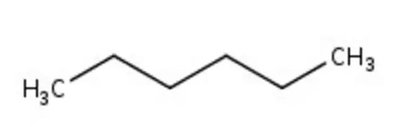
Recall the structure of n-pentane: a straight chain of five carbon atoms.
Compare each option to see if it has five carbons and twelve hydrogens, but a different connectivity (branching or arrangement).
Look for a molecule that is not a straight chain, but still has the same formula as n-pentane.
Check the line-angle structures for branching or rearrangement of the carbon skeleton.
Try solving on your own before revealing the answer!
Final Answer: The structural isomer is the branched compound (isopentane).
The correct isomer has the same formula () but a different connectivity, such as a branched chain.
n-Pentane and isopentane are structural isomers because they have the same number of carbons and hydrogens, but the carbon atoms are connected differently.
Q22. Cis–Trans Isomerism: Which alkene can exist as a pair of cis–trans isomers?
Background
Topic: Hydrocarbons & Stereoisomerism
This question tests your understanding of cis–trans (geometric) isomerism in alkenes. Cis–trans isomerism occurs when each carbon of a double bond has two different substituents.
Key Terms:
Alkene: Hydrocarbon with a carbon–carbon double bond.
Cis–trans isomerism: Occurs when rotation is restricted and each double-bonded carbon has two different groups.
Step-by-Step Guidance
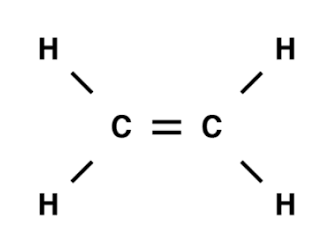
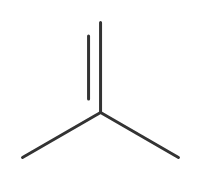
Identify the structure of each alkene option and check the groups attached to each double-bonded carbon.
Determine if both carbons in the double bond have two different substituents.
If both carbons have two different groups, cis–trans isomerism is possible.
Draw or visualize the possible cis and trans forms for the eligible alkene.
Try solving on your own before revealing the answer!
Final Answer: 2-butene can exist as a pair of cis–trans isomers.
Each double-bonded carbon in 2-butene has two different groups, allowing for cis and trans forms.
Ethene and 1-butene do not have two different groups on both carbons, so they cannot form cis–trans isomers.
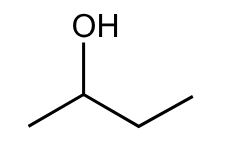
Q26. Alcohol Oxidation: What is the main oxidation product of 2-butanol?
Background
Topic: Alcohols & Carbonyls
This question tests your knowledge of alcohol oxidation. The product depends on whether the alcohol is primary, secondary, or tertiary. 2-butanol is a secondary alcohol.
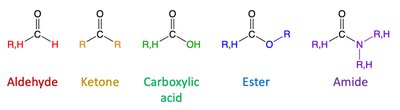
Key Terms and Functional Groups:
Secondary alcohol: Alcohol with the OH group on a carbon attached to two other carbons.
Oxidation: Loss of electrons, often results in formation of a carbonyl group.
Ketone: Carbonyl group between two carbons.
Step-by-Step Guidance
Identify the structure of 2-butanol and classify it as a secondary alcohol.
Recall that secondary alcohols are oxidized to ketones.
Draw the structure of the ketone formed by oxidizing 2-butanol.
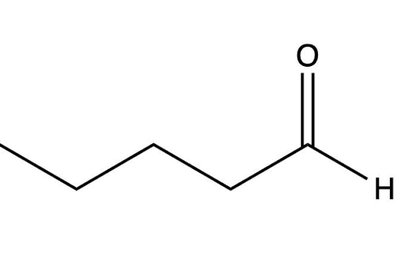
Compare the product to the options given and match the correct ketone structure.
Try solving on your own before revealing the answer!
Final Answer: The main oxidation product of 2-butanol is 2-butanone (a ketone).
Secondary alcohols like 2-butanol are oxidized to ketones, so the correct product is 2-butanone.
This is a classic reaction in organic chemistry, and recognizing the functional group is key.
