 뒤로
뒤로GOB Chemistry Study Notes: Ionic and Covalent Compounds, Bonding, and Molecular Geometry
스터디 가이드 - 스마트 노트
 자료에 맞춘 맞춤형 노트, 핵심 정의, 예시, 맥락을 확장해 제공합니다.
Chapter 3: Ionic Compounds
Ions and Ion Formation
Ionic compounds are formed when metals and nonmetals combine, resulting in the transfer of electrons. This process creates ions: metals lose electrons to become cations (positively charged), while nonmetals gain electrons to become anions (negatively charged).
Cation: An ion with a positive charge, formed by the loss of electrons (e.g., Na+, Al3+).
Anion: An ion with a negative charge, formed by the gain of electrons (e.g., Cl-, O2-).
Example: Sodium (Na) loses one electron to become Na+; chlorine (Cl) gains one electron to become Cl-.
Ionic Bonds and Properties
Ionic bonds occur between metals and nonmetals, where electrons are transferred from the metal to the nonmetal.
Bonding Types:
Metallic: Metal + metal
Covalent: Nonmetal + nonmetal
Ionic: Metal + nonmetal
Properties of Ionic Solids:
High melting points
Brittle
Good electrolytes when dissolved in water
Writing Formulas for Ionic Compounds
The formula for an ionic compound reflects the simplest whole-number ratio of cations to anions that results in a neutral compound.
Charge Balance: The total positive charge must equal the total negative charge.
Formula Examples:
Al3+ + F- → AlF3
Al3+ + O2- → Al2O3
Al3+ + N3- → AlN
Swap & Drop Method: Swap the charges and use them as subscripts for the opposite ion.
Naming Ionic Compounds
The cation is named first and retains the element name.
If the cation is a transition metal, its oxidation number is indicated in parentheses with Roman numerals (e.g., FeCl3: iron(III) chloride).
The anion name ends in -ide (e.g., chloride, oxide).
Examples:
NaCl: sodium chloride
AuCl3: gold(III) chloride
PbO2: lead(IV) oxide
Polyatomic Ions
Polyatomic ions are groups of atoms that carry a charge and act as a single unit in compounds.
Examples:
Phosphate: PO43-
Acetate: C2H3O2-
Carbonate: CO32-
Ammonium: NH4+
When writing formulas, polyatomic ions are treated as a unit and their charge is used for balancing.
Naming Ionic Compounds with Polyatomic Ions
The cation (element or ammonium) is named first.
The polyatomic anion retains its name (e.g., calcium sulfate, ammonium chloride).
Chapter 4: Covalent Bonding
Covalent Bonds and Properties
Covalent bonds form when two nonmetals share electrons.
Bond Formation: Electrons are shared between atoms.
Properties:
Low boiling points
Soft solids or liquids
Electrons are localized between nuclei
Example: H2O (water) is formed by sharing electrons between hydrogen and oxygen.
Lewis Dot Structures
Lewis dot structures represent the arrangement of valence electrons in molecules.
Central atom is usually the least numerous in the formula.
Pair up unpaired electrons to form bonds.
Check electron count to satisfy the octet rule (exceptions: H needs 2e-, B needs 6e-).
Example:
H2O: 2(1) + 6 = 8 valence electrons
BF3: 3 + 3(7) = 24 valence electrons
Octet Rule and Exceptions
Atoms gain, lose, or share electrons to achieve a full set of eight valence electrons.
Hydrogen only needs 2 electrons.
Boron only needs 6 electrons.
Multiple Bonds and Unpaired Electrons
Double and triple bonds are formed when atoms share more than one pair of electrons.
Example: O2 has a double bond; N2 has a triple bond.
The Seven Diatomic Elements
H2, N2, O2, F2, Cl2, Br2, I2
Naming Covalent Molecules
The first element retains its name; the second element ends in -ide.
Prefixes indicate the number of each element (mono-, di-, tri-, etc.).
Example: CO2 is carbon dioxide; N2O4 is dinitrogen tetroxide.
Molecular Geometry and VSEPR Theory
VSEPR Theory
Valence Shell Electron Pair Repulsion (VSEPR) Theory predicts the shape of molecules based on minimizing repulsion between electron pairs.
Molecules adopt shapes that minimize electron-electron repulsions.
AXE notation:
A = central atom
X = number of atoms bonded to central atom
E = number of lone pairs on central atom
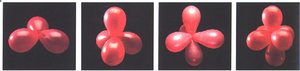
Main Molecular Shapes
Linear: 180°
Trigonal planar: 120°
Tetrahedral: 109.5°
Trigonal bipyramidal: 120°, 180°
Octahedral: 90°, 180°
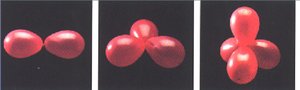
Determining Molecular Geometry
Draw the Lewis structure.
Apply AXE notation to determine geometry.
Examples:
PH3: AX3E (trigonal pyramidal)
H2S: AX2E2 (bent)
Hybrid Orbitals
Hybridization
Hybrid orbitals are formed by blending atomic orbitals to accommodate the number of electron pairs around a central atom.
AXE notation helps determine the number and type of hybrid orbitals.
Examples:
AX2: sp hybridization
AX3: sp2 hybridization
AX4: sp3 hybridization
Bond Types: Sigma and Pi Bonds
Sigma Bonds
Formed by end-on overlap of atomic orbitals.
Single bonds are always sigma bonds.
Pi Bonds
Formed by side-to-side overlap of atomic orbitals.
Double and triple bonds contain one sigma bond and one or more pi bonds.
Polarity of Bonds and Molecules
Polar and Nonpolar Covalent Bonds
Electrons are not always shared equally; differences in electronegativity cause polarity.
Polar bonds have permanent positive and negative charges (e.g., HF).
Nonpolar bonds share electrons equally (e.g., F2).
Polarity of Molecules
Asymmetric molecules (e.g., H2O) are polar.
Symmetric molecules (e.g., CO2) are nonpolar.
Acids and Bases
Acid and Base Characteristics
Acids: sour taste, corrosive, react with indicators, increase [H3O+]
Bases: bitter taste, slippery feel, corrosive, react with indicators, increase [OH-]
pH Scale
pH = 7: neutral
pH < 7: acidic
pH > 7: basic
Acid Examples
HC2H3O2: acetic acid (vinegar)
HNO3: nitric acid
H2CO3: carbonic acid
HCl: hydrochloric acid
H3PO4: phosphoric acid
H2SO4: sulfuric acid
Base Examples
Al(OH)3: aluminum hydroxide
Ca(OH)2: calcium hydroxide
Mg(OH)2: magnesium hydroxide
NaOH: sodium hydroxide
NH3: ammonia
Acid and Base Strength
Strong acids: dissociate completely in water.
Weak acids: only partially dissociate.
Strong bases: ionize completely in water.
Weak bases: only partially ionize.
Naming Acids
Binary acids: hydro- + root + -ic (e.g., hydrochloric acid)
Oxyacids: root of anion + suffix + acid (e.g., nitric acid, nitrous acid)
Additional info:
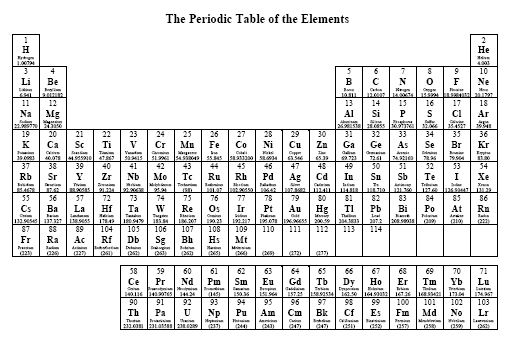
Some images (e.g., image_1, image_2, image_11) were not included as they are not directly relevant to the chemistry concepts explained.
Tables and periodic tables (image_5, image_6) are referenced where appropriate for element and ion information.
