 뒤로
뒤로Ionic Compounds: Structure, Formation, and Nomenclature
스터디 가이드 - 스마트 노트
 자료에 맞춘 맞춤형 노트, 핵심 정의, 예시, 맥락을 확장해 제공합니다.
Ch.3 Ionic Compounds
Concept: Ions and Their Formation
Ions are atoms or groups of atoms that have gained or lost electrons, resulting in a net electrical charge. The formation of ions allows elements to achieve a stable electron configuration, often resembling that of the noble gases.
Cation: A positively charged ion formed when a metal loses electrons.
Anion: A negatively charged ion formed when a non-metal gains electrons.
Isoelectronic: Species with the same number of electrons.
Example: Sodium (Na) loses one electron to become Na+, while chlorine (Cl) gains one electron to become Cl–.
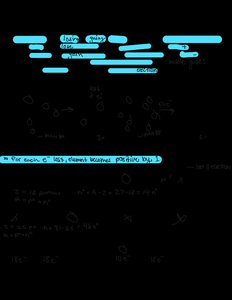
Concept: The Octet Rule and Electron Configurations
Main group elements tend to gain or lose electrons to achieve eight valence electrons (an octet), resulting in a stable outer shell. Metals lose electrons to resemble the noble gas before them, while non-metals gain electrons to resemble the noble gas after them.
Electron configurations for cations: Remove electrons from the highest principal quantum number (n).
Electron configurations for anions: Add electrons to the available orbitals.
Example: Magnesium (Z = 12) loses two electrons to form Mg2+ with a noble gas configuration.
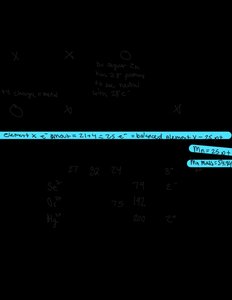
Concept: Periodic Table and Ion Charges
The periodic table helps predict the charges of ions formed by elements. Main group metals typically form cations with predictable charges, while transition metals (Type II) can form multiple cations with different charges.
Type I metals: Fixed charge (e.g., Na+, Ca2+).
Type II metals: Variable charge (e.g., Fe2+, Fe3+).
Non-metals: Tend to gain electrons and form anions (e.g., O2–).
Example: Gallium forms Ga3+; Selenium forms Se2–.
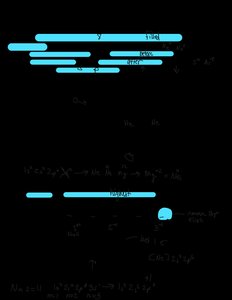
Concept: Periodic Trends – Ionization Energy and Electron Affinity
Ionization Energy (IE): The energy required to remove an electron from a gaseous atom. IE increases across a period and decreases down a group.
Lowest IE: Alkali metals (Group 1A).
Highest IE: Noble gases (Group 8A).
Electron Affinity (EA): The energy change when an electron is added to a neutral atom. EA becomes more negative (more favorable) across a period and less negative down a group.
High EA: Halogens (Group 7A).
Low EA: Noble gases and Group 2A elements.


Concept: Naming Monatomic Ions
Cations: Named by the element name followed by 'ion' (e.g., sodium ion). For metals with variable charges, a Roman numeral indicates the charge (e.g., iron(III) ion).
Common names: Lesser charge uses '-ous' (e.g., ferrous), greater charge uses '-ic' (e.g., ferric).
Anions: Named by changing the ending of the element to '-ide' (e.g., chloride, oxide).

Concept: Polyatomic Ions
Polyatomic ions are groups of atoms covalently bonded together with an overall charge. Oxyanions are polyatomic ions containing oxygen.
'-ate' suffix: More oxygens (e.g., sulfate SO42–).
'-ite' suffix: Fewer oxygens (e.g., sulfite SO32–).
Prefixes: 'per-' (most oxygens), 'hypo-' (least oxygens).
Polyatomic cations: Ammonium (NH4+), mercury(I) (Hg22+).
Example: NO2– is nitrite; PO43– is phosphate.
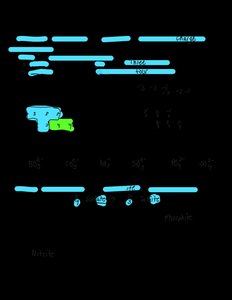
Concept: Ionic Bonding and Properties of Ionic Compounds
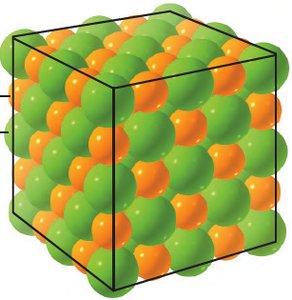
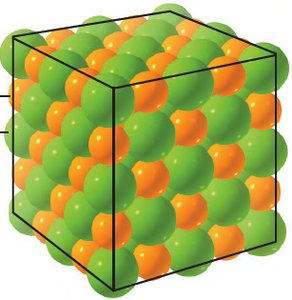
Ionic bonding is the electrostatic attraction between oppositely charged ions. Ionic compounds are typically formed between metals and non-metals.
High melting and boiling points.
Solid at room temperature.
Conduct electricity when dissolved in water (as ions are mobile).
Brittle due to the rigid crystal lattice structure.
Concept: Naming Ionic Compounds
Ionic compounds are named by stating the cation first, followed by the anion. If the cation has variable charge, a Roman numeral is used. Polyatomic ions retain their names.
Cation (metal or polyatomic cation) + Anion (nonmetal with '-ide' or polyatomic anion).
Example: CaCl2 is calcium chloride; Al(BrO4)3 is aluminum perbromate.
Concept: Writing Formula Units of Ionic Compounds
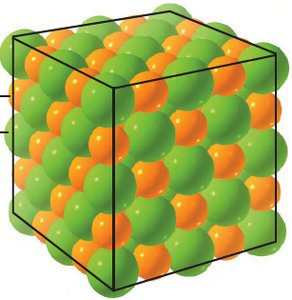
The formula unit represents the simplest ratio of ions in an ionic solid that results in electrical neutrality. The crystal lattice is a repeating three-dimensional arrangement of ions.
Balance charges to ensure neutrality.
Example: Mg2+ and SO42– combine to form MgSO4.
Concept: Naming Acids
Acids are compounds that release H+ ions in solution. They are named based on their composition:
Binary acids: 'Hydro-' prefix + base name of nonmetal + '-ic acid' (e.g., HCl is hydrochloric acid).
Oxyacids: Based on the polyatomic ion:
'-ate' ion: '-ic acid' (e.g., H2SO4 is sulfuric acid).
'-ite' ion: '-ous acid' (e.g., H2SO3 is sulfurous acid).
Example: HNO3 is nitric acid; HNO2 is nitrous acid.
Summary Table: Common Ions and Their Charges
Ion | Symbol | Charge |
|---|---|---|
Sodium | Na+ | +1 |
Calcium | Ca2+ | +2 |
Chloride | Cl– | –1 |
Sulfate | SO42– | –2 |
Ammonium | NH4+ | +1 |
Additional info: The images included are directly relevant to the explanation of ionic bonding, crystal lattice structure, and the properties of ionic compounds. The tables and examples provided reinforce the systematic approach to naming and writing formulas for ionic compounds, as well as understanding periodic trends in ion formation.
