 뒤로
Metabolism & ATP: Energy Production and Utilization in Biochemical Systems
스터디 가이드 - 스마트 노트
 자료에 맞춘 맞춤형 노트, 핵심 정의, 예시, 맥락을 확장해 제공합니다.
Metabolism and Energy in Living Systems
Ultimate Source of Energy
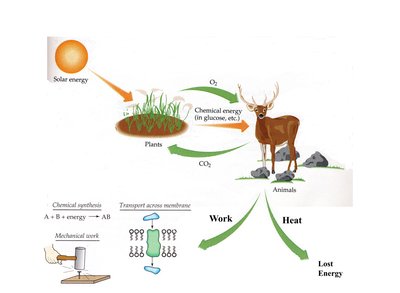
The ultimate source of energy for life on Earth is the Sun. Solar energy is captured by plants through photosynthesis and converted into chemical energy, which is then transferred to animals through food consumption.
Interdependence of Plants and Animals
Plants and animals are interdependent for energy. Plants convert solar energy into chemical energy (glucose), which animals use for metabolic processes. Animals release carbon dioxide, which plants use for photosynthesis, creating a cycle of energy and matter.
Energy Requirements for Life
Gradual Release: Energy must be released from food gradually to prevent waste and maintain homeostasis.
Accessible Storage: Energy must be stored in forms that are readily accessible, such as ATP.
Controlled Release: Energy release must be finely regulated to meet cellular demands.
Temperature Maintenance: Sufficient energy must be released to maintain body temperature.
Driving Unfavorable Reactions: Energy must be available in forms other than heat to drive nonspontaneous chemical reactions.
Metabolism: An Overview
Definition and Types
Metabolism encompasses all chemical reactions in an organism. It is divided into two main types:
Anabolism: Energy-requiring processes that build large molecules from smaller ones.
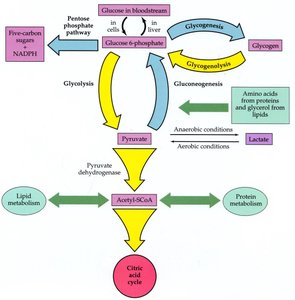
Catabolism: Energy-producing processes that break down food molecules (lipids, carbohydrates, proteins).
Stages of Catabolism
Catabolism occurs in four stages:
Stage I: Digestion of macromolecules into subunits.
Stage II: Breakdown of subunits into oxidized forms (e.g., acetyl-CoA).
Stage III: Oxidation of acetyl-CoA to produce CO2 and reduced coenzymes.
Stage IV: Oxidative phosphorylation to produce ATP and H2O.
Exergonic and Endergonic Reactions
Definitions and Differences
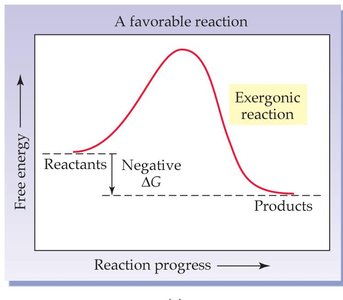
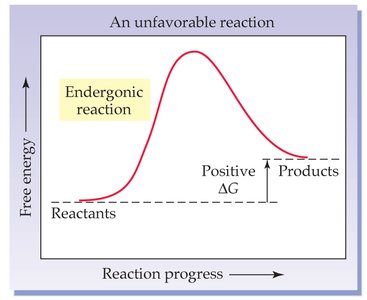
Chemical reactions are classified based on their energy changes:
Exergonic Reactions: Release energy; products have less energy than reactants; spontaneous; .
Endergonic Reactions: Require energy input; products have more energy than reactants; nonspontaneous; .
Coupling of Reactions
Endergonic reactions are often coupled with exergonic reactions to make the overall process energetically favorable. This is essential for driving nonspontaneous reactions in cells.
Principles of Metabolic Pathways
Four Principles
Highly Exergonic and Irreversible: Metabolic pathways are directional due to large energy differences.
Committed Step: Each pathway has a regulated, often irreversible step.
Regulation: Pathways are controlled to prevent waste and maintain balance (allosteric, feedback, covalent regulation).
Cellular Localization: Pathways occur in specific cellular locations (e.g., glycolysis in cytosol, TCA cycle in mitochondria).
Types of Metabolic Pathways
Classification
Linear Sequence: Reactions proceed in a straight line from substrate to product.
Cyclic Sequence: The final product is used as a substrate for the first reaction (e.g., citric acid cycle).
Spiral Sequence: Enzymes break down polymers one monomer at a time (e.g., protein digestion).
High Energy Molecules and Coenzymes
Key Molecules
Acetyl-CoA: Central molecule in metabolism; carries acetyl groups into the TCA cycle.
NADH and FADH2: Reduced coenzymes that store energy for ATP production.
ATP: Universal energy currency in cells.
Coenzymes: Oxidized and Reduced Forms
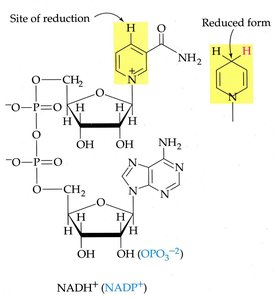
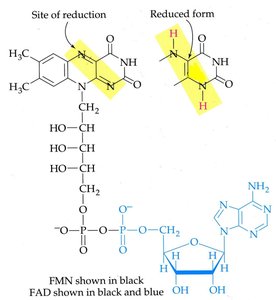
Coenzymes are organic molecules required for enzyme catalysis, often derived from vitamins.
NAD+ (oxidized) / NADH (reduced): Involved in redox reactions; derived from niacin (B3).
FAD (oxidized) / FADH2 (reduced): Involved in redox reactions; derived from riboflavin (B2).
Role of Vitamins
Vitamins are essential for energy production as they are precursors to coenzymes. For example, niacin forms NAD+, and riboflavin forms FAD.
ATP: The Energy Currency of the Cell
Structure and Hydrolysis
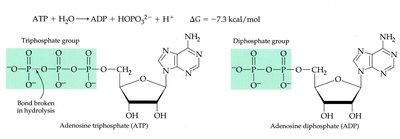
ATP (adenosine triphosphate) contains high-energy phosphate bonds. Hydrolysis of ATP releases energy:
ATP + H2O → ADP + HOPO32- + H+
Why ATP is a Good Energy Store
Produces a moderate amount of energy, preventing waste.
Stable at physiological pH.
Requires enzymes for hydrolysis, allowing regulation.
Easy to cleave due to repulsion between phosphate groups.
Precursor for other high-energy molecules.
Universal energy carrier in all cells.
Coupled Reactions in Metabolism
Mechanism and Importance
Coupled reactions allow endergonic (energy-requiring) processes to occur by pairing them with exergonic (energy-releasing) reactions. The overall free energy change must be negative for the process to proceed spontaneously.
Example:
Endergonic: Glucose + HPO32- → Glucose-6-P + H2O ( kcal)
Exergonic: ATP + H2O → ADP + HPO32- + H+ ( kcal)
Overall: Glucose + ATP → Glucose-6-P + ADP + H+ ( kcal)
Coupled reactions are catalyzed by the same enzyme, ensuring simultaneous occurrence.
Summary Table: High Energy Molecules
Compound | Function | (kcal/mol) |
|---|---|---|
Phosphoenol pyruvate | Final intermediate in glycolysis | -14.8 |
1,3-bisphosphoglycerate | Intermediate in glycolysis | -11.8 |
Creatine phosphate | Energy storage in muscles | -10.3 |
ATP → ADP | Principal energy carrier | -7.3 |
Glucose-1-phosphate | First intermediate in starch breakdown | -5.0 |
Glucose-6-phosphate | First intermediate in glycolysis | -3.3 |
Conclusion
Metabolism is a complex network of energy transformations essential for life. ATP serves as the universal energy currency, and metabolic pathways are tightly regulated and compartmentalized. Coupled reactions enable cells to perform necessary endergonic processes by harnessing the energy from exergonic reactions.
