 뒤로
Proteins and Their Amino Acid Building Blocks: Structure, Function, and Classification
스터디 가이드 - 스마트 노트
 자료에 맞춘 맞춤형 노트, 핵심 정의, 예시, 맥락을 확장해 제공합니다.
Proteins and Their Amino Acid Building Blocks
Biochemistry: The Chemistry of Life
Biochemistry is the study of the chemical processes and substances that occur within living organisms. It bridges biology and chemistry, focusing on the molecular mechanisms that underpin life, including metabolism, cellular structure, and genetic information.
Key Point: Biochemistry examines all chemical reactions in living organisms.
Key Point: It is foundational for fields such as medicine, physiology, pharmacology, and cell biology.
The Four Classes of Biomacromolecules
Biomacromolecules are large molecules essential for life, classified into four main types:
Proteins: Polymers of amino acids, responsible for structure, function, and regulation of tissues and organs.
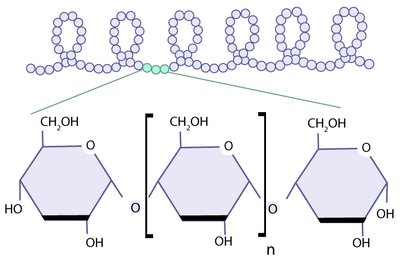
Carbohydrates: Polymers of sugars, serve as energy sources and structural components.
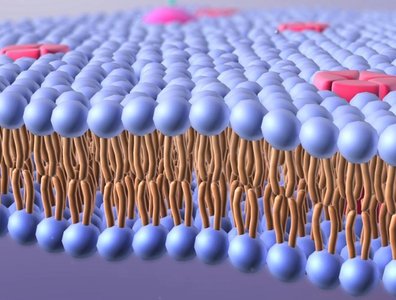
Lipids: Fatty acids and their derivatives, form membranes and store energy.
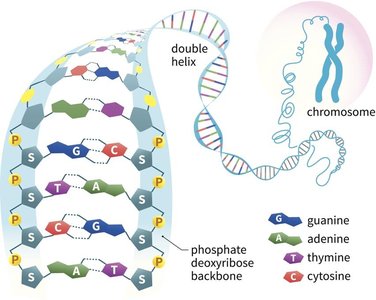
Nucleic Acids: DNA and RNA, carry genetic information.
Roles of Proteins in the Body
Proteins are versatile biomolecules with diverse functions:
Enzymes: Biological catalysts that accelerate biochemical reactions.
Hormones: Chemical messengers regulating physiological processes.
Storage Proteins: Store essential substances (e.g., ovalbumin, ferritin).
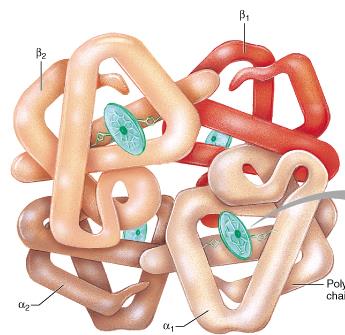
Transport Proteins: Move substances across membranes and in blood (e.g., hemoglobin).
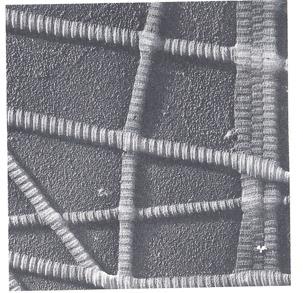
Structural Proteins: Provide support and shape (e.g., collagen, keratin).
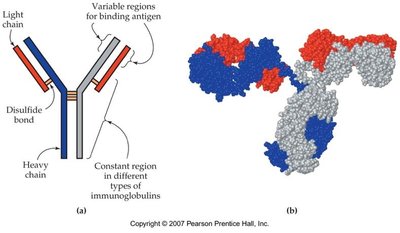
Protective Proteins: Defend against pathogens (e.g., antibodies).
Contractile Proteins: Enable movement (e.g., actin, myosin).
Protein Structure: Importance and Determination
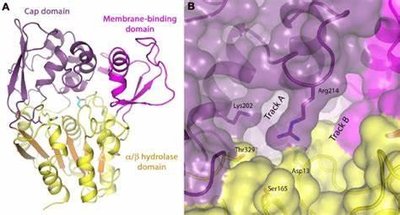
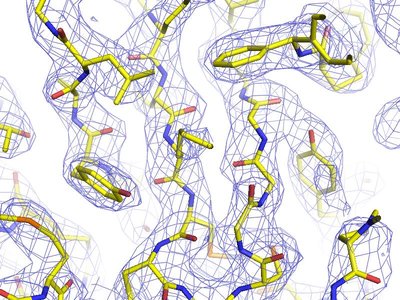
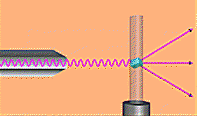
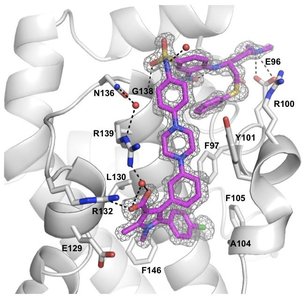
Understanding protein structure is crucial for elucidating function, designing drugs, and diagnosing diseases. Protein structure is determined using techniques such as X-ray crystallography, which reveals atomic arrangements.
Key Point: Structure determines function; misfolded proteins can cause disease.
Key Point: Proteins vary in size and shape, from small peptides to large complexes.
Amino Acids: Structure and Classification
Amino acids are the building blocks of proteins. Each amino acid contains an alpha carbon (Cα), a carboxylic acid group, an amine group, and a unique side chain (R group).
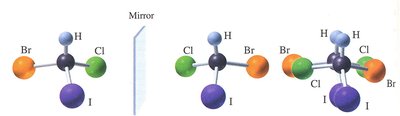
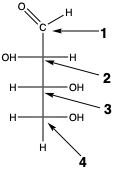
Chiral Carbon: The alpha carbon is chiral if it is bonded to four different groups, giving rise to stereoisomers.
Isomers: Constitutional isomers differ in bonding order; stereoisomers differ in spatial arrangement. Enantiomers are mirror images; diastereomers are not.
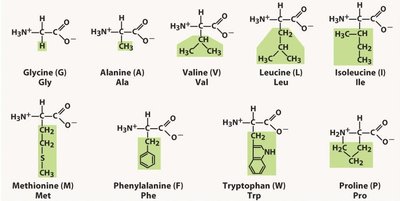
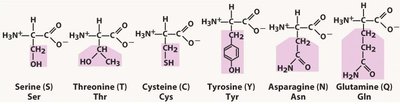
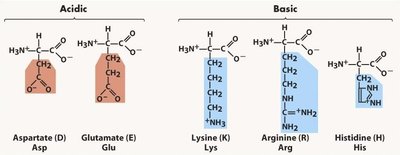
Classification of Amino Acids
Amino acids are grouped based on the properties of their side chains:
Nonpolar: Hydrophobic, side chains are alkanes or arenes.
Neutral Polar: Hydrophilic, side chains contain hydroxyl, thiol, or amide groups.
Acidic: Side chains have carboxylic acid groups, negatively charged at pH 7.
Basic: Side chains have amine groups, positively charged at pH 7.
Zwitterions and Charged Side Chains
At physiological pH (~7), amino acids exist as zwitterions, carrying both positive (amine) and negative (carboxylate) charges. Acidic and basic amino acids have charged side chains, contributing to protein structure and function.
Zwitterion: A molecule with both positive and negative charges.
pH Dependence: The charge state of amino acids changes with pH.
Primary Structure of Proteins
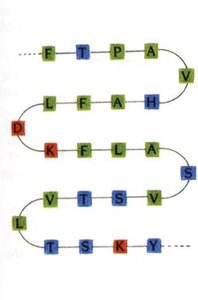
The primary structure is the sequence of amino acids in a protein, linked by peptide bonds. It is written from the N-terminus (amine end) to the C-terminus (carboxyl end).
Peptide Bond: Covalent bond formed between the carboxyl group of one amino acid and the amine group of another.
Convention: Sequence is unique for each protein and determines higher-order structure.
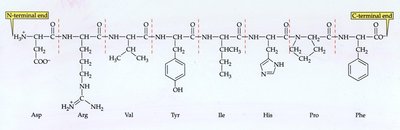
Shape-Determining Amino Acids
Glycine, proline, and cysteine are critical for protein shape:
Glycine: Small, flexible, often found in turns.
Proline: Rigid, induces bends and turns.
Cysteine: Forms disulfide bonds, stabilizing structure.
Protein Folding: Secondary, Tertiary, and Quaternary Structure
Proteins fold into complex structures stabilized by various interactions:
Secondary Structure: Includes α-helices and β-sheets, stabilized by hydrogen bonds between backbone amide groups.
Tertiary Structure: Overall 3D shape, stabilized by hydrophobic interactions, hydrogen bonds, ionic bonds, and disulfide bonds.
Quaternary Structure: Assembly of multiple polypeptide chains.
Stabilizing Interactions in Protein Structure
Protein structure is stabilized by:
Covalent Bonds: Peptide bonds (primary), disulfide bonds (tertiary/quaternary).
Noncovalent Interactions: Hydrogen bonds, ionic bonds (salt bridges), van der Waals forces, hydrophobic effect.
Secondary Structure: α-Helix and β-Sheet
The α-helix is a right-handed coil stabilized by hydrogen bonds between amide groups four residues apart. The β-sheet consists of β-strands, stabilized by hydrogen bonds between adjacent strands.
α-Helix: 3.6 residues per turn, side chains project outward.
β-Sheet: Strands can be parallel or antiparallel, side chains alternate above and below the sheet.
Tertiary and Quaternary Structure
Tertiary structure is the folded shape of a single polypeptide, while quaternary structure involves multiple chains. Hydrophobic side chains pack together in the protein's interior, and disulfide bonds further stabilize the folded structure.
Hydrophobic Effect: Drives folding by excluding water from nonpolar residues.
Disulfide Bonds: Covalent bonds between cysteine residues.
Summary Table: Amino Acid Classification
Class | Side Chain Properties | Example Amino Acids |
|---|---|---|
Nonpolar | Hydrophobic, alkanes/arenes | Glycine, Alanine, Valine |
Neutral Polar | Hydrophilic, hydroxyl/thiol/amide | Serine, Threonine, Cysteine |
Acidic | Carboxylic acid, negative charge | Aspartate, Glutamate |
Basic | Amine, positive charge | Lysine, Arginine, Histidine |
Additional info: These notes expand on brief lecture points to provide a comprehensive overview of protein structure and function, suitable for GOB Chemistry students.
